Collaborative robots in manufacturing are moving from pilot cells into everyday production. The International Federation of Robotics reported 541,302 industrial robots installed worldwide in 2023. That figure includes traditional and collaborative systems, but it shows the scale of automation pressure. Interact Analysis reported a decline in collaborative robot shipments during 2023, reflecting slower investment and uncertain demand. The market is growing unevenly. Small manufacturers may still hesitate when integration costs, training needs, and cycle-time limits become visible. That hesitation is reasonable.
This guide presents 10 practical tips for using collaborative robots in manufacturing, from selecting suitable tasks to validating safety, reach, payload, and operator interaction. ISO 10218-1 and ISO/TS 15066 provide important safety guidance for robot applications and collaborative operations. However, certification alone does not make a workplace safe. A technician still needs to check pinch points, unexpected restarts, tool edges, and changing workpieces. The U.S. National Institute for Occupational Safety and Health also emphasizes risk assessment and worker involvement when introducing advanced automation. Good results depend on the cell, not merely the robot arm. In one production area, a cobot may place parts beside an operator; in another, a guarded machine may be more appropriate. The wrong assumption can waste months. These tips therefore connect published industry guidance with practical manufacturing experience, while acknowledging an uncomfortable truth: collaborative automation is not automatically simple, cheap, or safe. It requires measurement, supervision, and continuous review after installation.
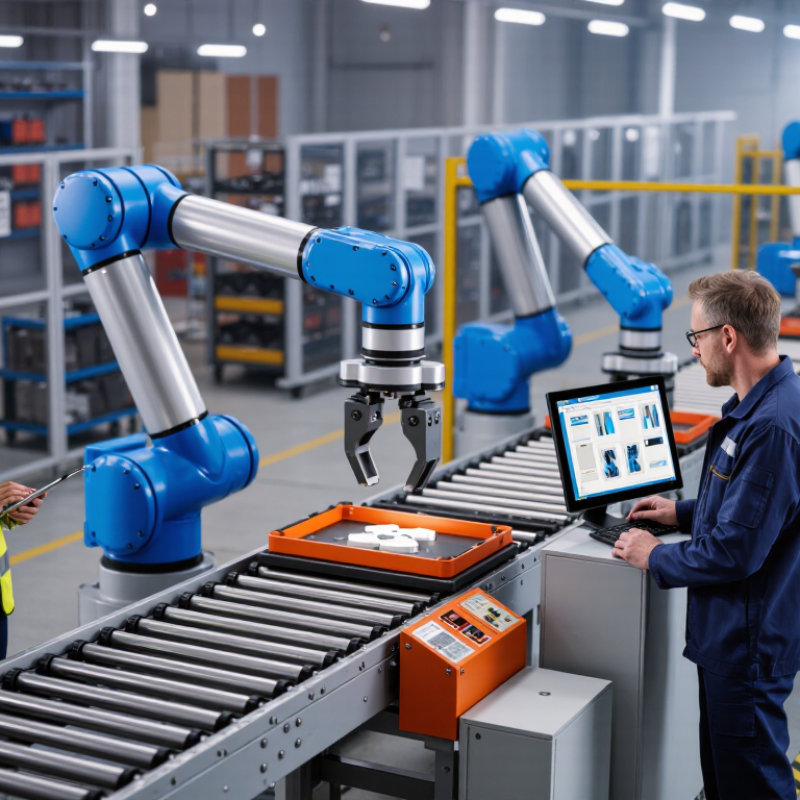
Collaborative robots are designed to work near people, but “collaborative” does not mean risk-free. Their capabilities depend on payload, reach, speed, sensing, and the task itself. A robot carrying a sharp tool requires different controls than one moving soft parts. Begin with a documented risk assessment. Check pinch points, unexpected restarts, tool edges, and human access. Set suitable speed and force limits, then verify them during real production, not only in simulation.
Choose applications with stable, repetitive motions. Pick-and-place, machine tending, inspection, packaging, and screwdriving are common starting points. Match the gripper to the material; slippery components can fall and create hazards.
Measure cycle time honestly, including pauses, handovers, and quality checks. Keep the work area clear. Label changing fixtures. Provide reachable emergency stops. Train operators to pause, reset, and report abnormal behavior. Their feedback often reveals problems engineers miss.
Use vision when part orientation changes, but test poor lighting and reflective surfaces. Plan for tool changes, cleaning, calibration, and preventive maintenance. Protect cables from sharp bends and moving joints.
Record faults and near misses without blaming workers. A collaborative robot may reduce strain, yet it can also add awkward loading if the workstation is poorly positioned. The first deployment may feel slower than manual work. That is not failure; it is evidence that the process needs adjustment.
Recheck safety settings after every layout, software, or tooling change.
Collaborative robots can improve manufacturing, but safety depends on task selection, not appearance. The International Federation of Robotics reported 541,302 industrial robot installations worldwide in 2023. That figure includes all industrial robots, not only collaborative systems. The growth makes careful workplace assessment increasingly important.
Begin with a documented risk assessment under applicable ISO 10218 and ISO/TS 15066 guidance. Observe the real process, including loading, cleaning, maintenance, and shift changes. A task may seem suitable when the robot moves slowly. However, sharp fixtures, heavy parts, unexpected restarts, and pinch points can create serious hazards. Keep people away from high-energy operations whenever possible. Choose repetitive handling, machine tending, or light assembly only after testing force, speed, reach, and stopping distances.
Do not rely on the robot’s sensors alone. The U.S. Bureau of Labor Statistics recorded about 2.6 million nonfatal workplace injuries and illnesses in private industry during 2023. This figure does not prove robots caused those incidents, but it shows why broader workplace controls still matter. Use guarding, floor markings, training, lockout procedures, and clear hand signals. A pilot test is not proof. I would reassess the task after a full production week, especially when operators hurry, wear gloves, or work around clutter. Some assessments fail because they measure normal motion, not human behavior under pressure.
Before assigning tasks to a collaborative robot, review the baseline risk of the manufacturing environment. The chart shows recordable nonfatal occupational injury and illness rates per 100 full-time equivalent workers in selected U.S. manufacturing subsectors. Lower rates do not eliminate risk; task-specific risk assessments, safeguarding, training, and validation are still required.
Source: U.S. Bureau of Labor Statistics, Survey of Occupational Injuries and Illnesses, 2023.
Installing a collaborative robot starts with the workspace, not the robot. The International Federation of Robotics reported 541,302 industrial robots installed worldwide in 2023. This scale reflects strong demand, but automation still fails when planning is rushed. Measure operator reach, material flow, lighting, floor strength, and emergency access. Leave clear space around loading points and maintenance panels. A simple cardboard mock-up can expose awkward movements before installation.
Tip 1: Map every handoff. Place the robot close to the task, but never block walking routes. Tip 2: Calculate the full payload, including the gripper and part. Tip 3: Test cycle time with real materials. Lightweight parts can still create unstable movements. Our first layout might look efficient on paper, yet force operators to twist repeatedly. That small mistake deserves attention.
Integration needs equal care. Connect the robot with conveyors, sensors, production software, and safety controls through documented interfaces. The National Institute for Occupational Safety and Health recommends risk assessment throughout collaborative application design, not only during commissioning. Tip 4: Define safe stop conditions and restart procedures. Tip 5: Train operators beside the cell, using normal faults and empty-part scenarios. Tip 6: Record tool changes, inspection checks, and maintenance intervals. Deloitte’s 2024 Smart Manufacturing and Operations Survey found that 86% of manufacturers view smart manufacturing as important for competitiveness. However, software readiness and worker capability often lag behind equipment purchases. Plan for that gap. It is easy to underestimate integration work.
Begin by mapping each task, including loading time, hand positions, and material weight. Define the robot’s workspace and identify pinch points before writing code. Program slow movements first. Keep backups. Use clear variable names and comments, so another operator can adjust the sequence safely. Add recovery routines for missed parts, empty grippers, and interrupted cycles. Early drafts will be imperfect.
Test every motion without production materials, then repeat with representative parts. Check reach, force limits, tool alignment, and emergency stopping behavior. Test slowly. A successful dry run does not prove safe operation under pressure. Record results with dates, program versions, and observed faults. Review the risk assessment whenever the product, tooling, or workstation changes. Ask operators. Their practical observations often reveal awkward access, glare, noise, or confusing prompts.
Training should combine a short explanation with supervised practice at the actual cell. Teach operators how to start, pause, reset, isolate energy, and report abnormal behavior. Use simple scenarios, such as a misplaced component or a gripper fault. Require trainees to explain each recovery step before working independently. Refresher training is useful after software changes or long absences. Do not treat completion signatures as proof of competence. A trainee may pass a checklist and still hesitate during a real stoppage. Observe performance, provide correction, and document what needs more practice.
10 Tips for Using Collaborative Robots in Manufacturing
Performance monitoring should begin with a clear baseline. Record cycle time, stoppages, payload, joint temperature, and safety interruptions. The International Federation of Robotics reported 541,302 industrial robots installed worldwide in 2023 (World Robotics 2024). That growth makes reliable data discipline more important. A dashboard should show trends, not just alarms. Watch repeated pauses near the same workstation. They may indicate fixture movement, poor lighting, or inconsistent materials. Small clues matter.
Maintenance needs physical attention. Inspect grippers, cables, fasteners, and protective devices during scheduled shifts. Clean sensors carefully; dust can create false stops. Lubrication intervals should follow validated service instructions, not guesswork. Keep a simple record of replaced parts and unusual noise. Predictive tools can help, but they are not magic. A healthy-looking graph can hide a loose connector. The U.S. Department of Energy’s Industrial Assessment data consistently identifies maintenance and operational improvements as practical sources of industrial energy savings.
Process improvement should connect robot data with human observations. Ask operators which motions feel awkward or unsafe. Compare planned cycle times with real production records. Then test one change at a time. The International Organization for Standardization’s collaborative robot guidance emphasizes risk assessment for each application, not the robot alone. Recheck reach, speed, tooling, and nearby worker movement after every layout change. We sometimes optimize speed too early. That creates noise, fatigue, and avoidable rework. A slower process with stable quality may be the better result.
| No. | Practical Tip | Key Action | Primary KPI | Suggested Operating Target | Monitoring Frequency | Maintenance or Process Indicator | Expected Improvement |
|---|---|---|---|---|---|---|---|
| 1 | Define a clear collaborative-robot workcell scope | Document the task, payload, reach, cycle time, operator interaction, and foreseeable hazards before deployment. | Workcell task-completion rate | 100% of intended tasks documented and validated | Before commissioning and after any process change | Approved risk assessment and work instructions are available at the cell. | Reduces scope changes, unsafe assumptions, and commissioning delays. |
| 2 | Track cycle time and utilization separately | Record productive robot motion, waiting time, material shortages, changeovers, and operator delays. | Cycle time and utilization | Cycle time within ±5% of the validated standard; utilization reviewed against demand | Per shift, with weekly trend review | Repeated waiting periods or abnormal motion indicate balancing or programming issues. | Identifies hidden idle time without confusing high utilization with high productivity. |
| 3 | Monitor quality at the source | Capture first-pass yield, defect type, rework, and scrap by product and process step. | First-pass yield | At or above the established manual-process baseline, with a downward defect trend | Each batch or production order | A sudden defect increase triggers a check of gripper alignment, part presentation, and program parameters. | Prevents automation from repeating defects at a faster rate. |
| 4 | Use condition-based maintenance signals | Review alarms, motor temperature, unusual vibration, collision events, and abnormal joint loads. | Unplanned downtime | Downward monthly trend; all recurring alarms investigated | Each shift and after every significant alarm | Repeated alarms or rising vibration can indicate wear, misalignment, or interference. | Moves maintenance from reactive repair toward planned intervention. |
| 5 | Inspect end-of-arm tooling regularly | Check gripper fingers, vacuum cups, fittings, cables, fasteners, and tool-center-point accuracy. | Tool-related stoppages | Zero unresolved tool defects at shift start | Start of shift and during scheduled preventive maintenance | Dropped parts, poor gripping, air leakage, and increasing pick errors require immediate inspection. | Improves handling reliability and reduces product damage. |
| 6 | Keep safety functions verified | Test emergency stops, protective stops, enabling devices, safety scanners, and collaborative-force limits according to the approved procedure. | Safety-check completion rate | 100% of scheduled checks completed and recorded | At commissioning, after changes, and at the site-defined interval | Any failed safety function requires controlled shutdown and corrective action. | Maintains the intended protective measures for human-robot interaction. |
| 7 | Standardize operator training | Train operators on normal operation, safe recovery, program selection, inspection, and escalation procedures. | Training-completion rate | 100% of authorized users trained and competency-verified | Before authorization and during periodic refresher training | Frequent incorrect resets or repeated recovery calls indicate a training gap. | Reduces recovery time and prevents unsafe workarounds. |
| 8 | Control program and configuration changes | Back up validated programs, record revisions, approve changes, and test modifications before production release. | Change-related incident rate | Zero unapproved production changes | Every change, with a monthly backup audit | Missing backups, undocumented edits, or version confusion indicate weak change control. | Improves repeatability, traceability, and recovery after faults. |
| 9 | Optimize material presentation | Use consistent fixtures, part orientation, feeder height, lighting, and replenishment procedures. | Pick success rate | Stable rate at or above the validated process baseline | Per shift and after material or fixture changes | Mis-picks, double picks, and frequent operator repositioning signal presentation problems. | Reduces interruptions and makes robot performance more predictable. |
| 10 | Review trends and improve the process continuously | Use weekly KPI reviews and structured root-cause analysis to prioritize the largest losses. | Overall equipment effectiveness (OEE) | Continuous improvement against the validated baseline | Daily data capture and weekly cross-functional review | Recurring top losses should have an owner, corrective action, and due date. | Converts performance data into measurable reliability, quality, and productivity gains. |