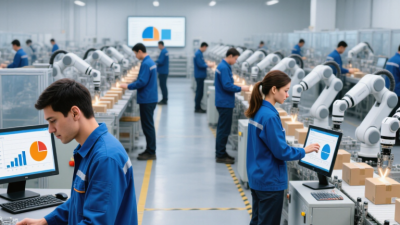
China has become a serious source of collaborative robots for global manufacturing buyers. The International Federation of Robotics (IFR) reported 541,302 industrial robot installations worldwide in 2023. China accounted for more than half of these installations. Its manufacturing robot density also reached 470 robots per 10,000 employees, according to the IFR’s World Robotics 2024 report. These figures show scale, but scale alone does not identify the best cobots in manufacturing.
A reliable evaluation must examine payload, reach, repeatability, safety functions, software, and service coverage. A cobot lifting a 20-kilogram gearbox needs different capabilities from one handling small electronic components. Buyers should request cycle-time tests using their actual parts, not only showroom demonstrations. TÜV-certified safety functions, ISO 10218 and ISO/TS 15066 alignment, and documented risk assessments also matter. So does integration support. A low-cost arm may become expensive when programming delays, gripper changes, or spare-part shortages interrupt production.
The data has limits. Industry reports often group collaborative robots differently, making market-size comparisons inconsistent. Some vendors also highlight theoretical payloads rather than sustained performance. That deserves careful reflection. The strongest Chinese suppliers combine competitive pricing with tested reliability, clear documentation, local integration partners, and responsive international support. This guide compares those practical factors for global buyers. It focuses on measurable production value, not marketing language. Expect trade-offs. The “best” cobot may not be the cheapest or the most powerful. It may be the model that runs steadily beside workers, completes a repeatable task, and remains supportable five years later.
A Chinese cobot becomes suitable for global manufacturing when its performance is proven beyond a sales brochure. Global buyers need more than competitive pricing and attractive cycle-time claims. They need evidence from a real production cell.
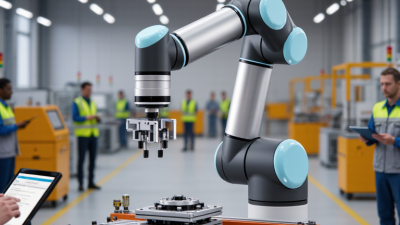
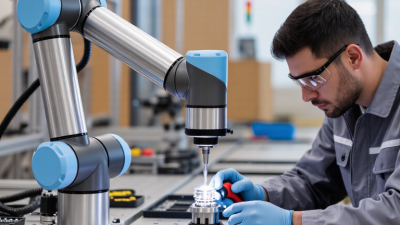
In practical factory trials, engineers should watch repeatability, stopping distance, surface finish, and recovery after an emergency stop. A cobot lifting eight kilograms may perform well at the start of a shift. Heat, vibration, and uneven floor conditions can expose weaknesses later. Small details matter. Technical credibility appears in verified test records and clear engineering documents. Ask for repeatability data, payload limits, cycle-time assumptions, and recommended maintenance intervals. Documentation should explain software updates, electrical requirements, safety functions, and spare-part availability. Support matters after installation.
A globally suitable system should communicate with common industrial equipment through documented interfaces. Its controller should connect reliably with cameras, grippers, conveyors, and factory networks. Safety functions require independent validation and a risk assessment for each application. Regional conformity requirements also need checking before shipment. A supplier may provide useful certificates, but the buyer still carries responsibility for local integration. This is where some purchasing teams move too quickly. I would not approve a cobot after a short demonstration alone. A pilot should run through repeated shifts, operator training, fault recovery, and planned maintenance. One weakness deserves attention: documentation can be technically correct yet difficult for local technicians to use. Clear translations and practical service instructions often determine whether the installation remains reliable.
China Best Cobots in Manufacturing for Global Buyers?
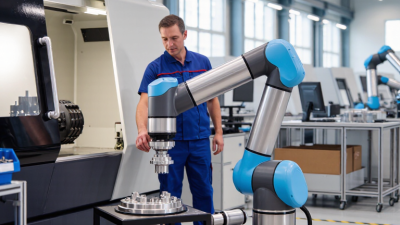
Collaborative robots, or cobots, now support varied manufacturing work. In production assessments, the standard six-axis arm remains the most flexible option. It can load CNC machines, screw components, dispense adhesive, or inspect surfaces with a camera. Compact arms fit beside operators without consuming a full work cell. Payload and reach must match the real tool, fixture, and part weight.
Dual-arm cobots handle coordinated work, such as holding a housing while fastening its cover. Their two grippers can reduce handoffs during assembly. Mobile cobots add wheels or autonomous bases for material delivery between stations. Palletizing cobots use programmed patterns to stack cartons, trays, or containers. Their value depends on stable packaging and predictable floor conditions. Wet floors and narrow aisles remain practical concerns.
Manufacturers should test cycle time using actual parts, not sample videos. A cobot may repeat a motion accurately but still struggle with flexible cables or variable components. The first trial is rarely perfect. That is normal. Operators often reveal problems engineers miss, especially around reach, loading height, and tool changes. Safety assessment, guarding decisions, and emergency procedures require local professional review. A slower cobot with simple programming can outperform a faster system that workers avoid. Mistakes happen when buyers compare arm speed alone. Calibration, maintenance access, training, and spare-part support deserve equal attention.
A practical comparison of collaborative robot configurations and their typical manufacturing applications
| Cobot Type | Typical Payload Range | Typical Reach Range | Degrees of Freedom | Manufacturing Tasks Supported | Best-Fit Production Scenario | Important Integration Requirements |
|---|---|---|---|---|---|---|
| Six-Axis Articulated Cobot | Approximately 3–20 kg | Approximately 600–1,800 mm | 6 axes | Machine tending Assembly Palletizing Welding Dispensing Inspection | Flexible workstations requiring multiple approach angles and frequent product changeovers. | End-of-arm tooling, machine signals, safety assessment, fixture design, and vision when part orientation varies. |
| Seven-Axis Articulated Cobot | Approximately 3–15 kg | Approximately 800–1,700 mm | 7 axes | Complex assembly Screwdriving Cable routing Surface finishing Part handling | Work areas with obstacles, restricted access, or tasks that benefit from human-like arm positioning. | Careful collision-zone planning, force or torque control for contact tasks, and precise tool calibration. |
| Collaborative SCARA Cobot | Approximately 3–12 kg | Approximately 400–1,000 mm | Usually 4 axes | High-speed assembly Pick-and-place Screwdriving Testing Packaging | Repetitive tabletop operations that require fast horizontal movement and consistent vertical insertion. | Stable workholding, accurate part presentation, controlled insertion force, and appropriate guarding or safety measures. |
| Dual-Arm Collaborative Robot | Approximately 2–10 kg per arm | Approximately 700–1,300 mm per arm | Typically 12–14 axes in total | Two-handed assembly Kitting Packaging Part transfer Quality checks | Processes where two coordinated arms hold, position, or manipulate components at the same time. | Coordinated motion programming, synchronized tooling, balanced workcell layout, and risk assessment for shared spaces. |
| Collaborative Delta or Parallel Cobot | Approximately 1–5 kg | Approximately 400–1,200 mm working diameter | Usually 3–4 axes | Sorting High-speed picking Inspection Light packaging Feeding | Lightweight products requiring rapid pick-and-place from a conveyor or organized presentation area. | Conveyor tracking, machine vision, hygienic or cleanable tooling where applicable, and consistent product presentation. |
| Mobile Manipulator Cobot | Approximately 3–10 kg arm payload | Approximately 600–1,500 mm arm reach | Usually 6–7 arm axes | Intralogistics Machine tending Material delivery Inspection rounds Line replenishment | Factories where one robot must serve several stations or move materials between production areas. | Navigation mapping, fleet or traffic coordination, battery management, safety scanners, and clear travel routes. |
| Welding Cobot Cell | Approximately 5–20 kg, depending on torch and positioner load | Approximately 800–1,800 mm | Usually 6 axes | Arc welding Seam tracking Tack welding Part positioning | Repeatable small-batch or medium-volume welding with stable joint geometry and frequent product variation. | Welding power source, torch package, grounding, fume extraction, fire prevention, screens, and dedicated safety validation. |
| High-Payload Collaborative Cobot | Approximately 16–30 kg | Approximately 900–1,700 mm | Usually 6 axes | Heavy machine tending Palletizing Box handling Fixture loading Material transfer | Handling heavier components while retaining easier redeployment than a conventional industrial robot cell. | Payload calculations must include gripper weight and inertia; additional separation, speed, and safeguarding measures may be required. |
Note: Payload and reach values are indicative industry ranges rather than specifications for a particular product. Actual performance depends on tool weight, load center, speed, accuracy, workpiece geometry, local regulations, and the completed application-specific safety assessment.
Chinese collaborative robot manufacturers now serve several clear product categories for global buyers. Their portfolios commonly include six-axis cobots for assembly, seven-axis models for flexible positioning, and compact units for laboratory or electronics work. Higher-payload systems support machine tending, palletizing, and material handling. Some suppliers also offer welding packages with torches, positioners, and safety controls.
Product selection should begin with the task, not the catalog. A 5 kg payload may suit screwdriving, while a 20 kg model may handle cartons or metal parts. Check reach, repeatability, cycle time, mounting options, and controller language support. Integrated vision can locate irregular components. Force sensing helps with insertion and polishing. These features are useful, but they can increase setup effort and maintenance needs.
Reliability depends on more than the robot arm. Global buyers should request test data, safety documentation, spare-parts plans, and remote service procedures. Factory trials should measure real cycle times with actual products. Marketing videos rarely show jams, dust, or changing operators. A lower purchase price may hide integration costs. That deserves careful review. Chinese cobot suppliers can provide strong value, yet performance still depends on application engineering, software stability, and local support. Small pilot projects often reveal weaknesses before full production begins.
China Best Cobots in Manufacturing for Global Buyers?
Comparing cobots requires more than payload and cycle-time figures. In factory trials, we watch repeatability beside the actual machine, not in a clean showroom. A cobot may handle a 10-kilogram load, yet move slowly when the arm reaches full extension. Measure cycle time with the real gripper, fixture, product, and operator movement. Small delays matter.
Safety needs practical testing. Review force and speed limits, emergency stops, protective separation, and restart behavior. Check whether the system supports risk assessment under relevant international standards, such as ISO 10218 and ISO/TS 15066. Then test a hand near the workspace, without treating the person as a laboratory tool. Guards, scanners, and safe zones must match the factory floor. Paper compliance is not enough.
Integration often decides the investment. Confirm communication with the existing PLC, vision equipment, end-of-arm tools, and production software. Ask for documented interfaces, fault codes, training materials, and spare-part response times. Our early evaluations focused too heavily on arm specifications. That was a mistake. Programming quality and technician confidence affected uptime more than expected. A useful trial should record setup hours, recovery time after faults, and product changeover effort. Perfect data is unlikely. Honest gaps are more useful than polished claims.
Global buyers should judge Chinese cobots by evidence, not factory photographs or attractive prices. The International Federation of Robotics reported 541,302 industrial robots installed worldwide in 2023. China accounted for 276,288 installations, showing its manufacturing scale and supply depth. Yet scale does not guarantee stable performance. Request task-based trials using your real parts, grippers, cycle times, and workspace limits.
Check payload, reach, repeatability, stopping distance, and recovery after an emergency stop. Ask for measured results, not only catalog claims. Review risk assessments and technical files against ISO 10218 and ISO/TS 15066 requirements. Local certification may not satisfy every destination market. This detail is often missed. A cobot that performs well in a clean showroom may struggle with oil, dust, vibration, or changing operators.
Service capability deserves equal attention. Interact Analysis has identified software, application engineering, and after-sales support as important drivers in collaborative robot adoption. Confirm spare-part locations, remote-support procedures, firmware policies, and technician response times. Test communication with your PLC, vision system, and safety circuits before purchase. Cybersecurity should include access control, update records, and network separation. Do not accept vague promises. Ask for uptime data from comparable installations, although suppliers may provide limited samples. That limitation needs careful reflection. A lower purchase price can become expensive when integration takes weeks instead of days.
Independent evaluation framework based on practical manufacturing, safety, integration, and lifecycle requirements
Use this five-point checklist to compare suppliers consistently. A higher score means the supplier provides stronger, better-documented evidence. Verify payload and reach under the intended working conditions, conformity with applicable machinery-safety requirements such as ISO 10218 and ISO/TS 15066, software and PLC compatibility, local service capability, and the full cost of ownership.