How to Choose Cobots in Manufacturing for Your Business?
Choosing cobots in manufacturing is not simply a matter of selecting the fastest robot. It requires matching automation with real production conditions, worker skills, available space, and measurable business goals. The International Federation of Robotics reported approximately 541,000 industrial robots installed worldwide in 2023. Collaborative robots represented a smaller, but rapidly developing, part of this market. Interact Analysis has also identified continued growth in cobot shipments, especially among small and medium-sized manufacturers.
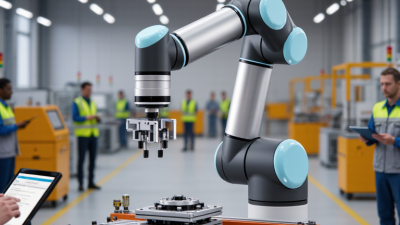
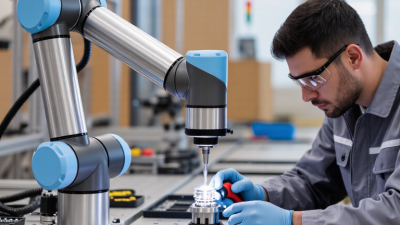
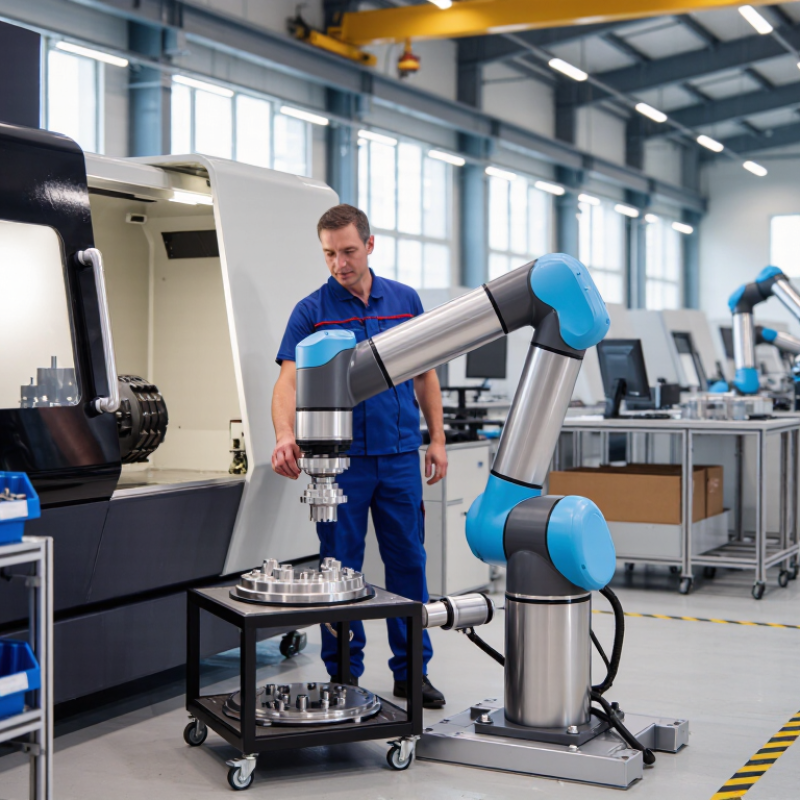
The practical question is more specific: can a cobot load a machine, inspect a part, or handle packaging consistently during an entire shift? Esben Østergaard, Universal Robots’ co-founder and a recognized cobot industry expert, has said, “Cobots are designed to work alongside humans, not replace them.” That principle matters on a busy factory floor. An operator may guide a cobot beside a CNC machine, adjust a gripper, and monitor quality without entering a separate robot cell. Safety still requires risk assessment, guarding decisions, training, and documented operating procedures.
Price alone can mislead. A lower-cost arm may need expensive integration, custom tooling, or repeated programming. The spreadsheet may still lie. Measure cycle time, changeover effort, payload, reach, precision, software usability, and expected uptime. Consider the operator’s experience, too. A technically impressive system can fail when nobody trusts it or knows how to troubleshoot it. This guide examines those decisions carefully, using industry data and practical manufacturing experience. Some recommendations will remain imperfect, because every factory has different products, people, and constraints. That uncertainty deserves attention before investment.
Define Your Manufacturing Needs and Cobot Objectives
Choosing a cobot should begin with your manufacturing needs, not a catalog specification. Walk through the production line and record each repetitive task. Note cycle time, payload, reach, product variation, and available floor space. A worker lifting a 12-kilogram fixture needs different support from an operator sorting small components. Observe the task during busy and quiet shifts. Average performance can hide real production pressure.
Define one clear objective for the cobot. It might reduce ergonomic strain, maintain output overnight, or improve process consistency. Set measurable targets, such as a 15-second cycle, 98% task completion, or fewer manual lifts per shift. Include quality requirements and changeover time. A fast cobot may still fail if its gripper damages delicate parts. Small details matter.
Speak with operators before selecting equipment. They understand awkward access points, frequent jams, and unofficial workarounds. Test the proposed workflow beside the actual machine, using representative materials and tools. A risk assessment should cover guarding, access, pinch points, and emergency procedures. My early production plans often focused too heavily on speed. That was a mistake. Integration time, training, maintenance access, and downtime can determine the real return. A pilot may expose weaknesses that a polished demonstration conceals. Keep those findings visible when refining the objectives.
How to Choose Cobots in Manufacturing for Your Business?
Define Your Manufacturing Needs and Cobot Objectives
This planning baseline ranks the main objectives to clarify before selecting a collaborative robot.
Task suitability and payload or reach usually receive the highest priority, while safety, integration,
and return on investment help validate whether the proposed application is practical for production.
Compare Payload, Reach, Speed, Precision, and Ease of Use
How to Choose Cobots in Manufacturing for Your Business?
Choosing a cobot starts with the real task, not the advertised maximum. Measure the workpiece, gripper, sensors, and cables together. Their combined weight must stay below the rated payload. Leave a safety margin for acceleration and sudden stops. A six-kilogram load may require a higher-rated arm. Reach also matters. Sketch the workstation, fixture, conveyor, and operator zone. A long arm can reach farther, but it may need more floor space and create unwanted movement.
Speed should match the process and the working environment. Faster motion can improve cycle time, yet it may increase vibration, stopping distance, and safety concerns. Test the complete sequence, including picking, placement, and tool changes. Precision is not the same as repeatability. A cobot may return accurately to the same point while missing the intended location because the fixture is misaligned. Check both measurements. Small errors become costly during tight assembly or inspection work.
Ease of use often decides whether a project succeeds after installation. Look for clear programming, simple teaching methods, accessible diagnostics, and practical training support. Ask operators to create a basic routine during the trial. Can they adjust a waypoint without waiting for a specialist? That test is revealing. Integration can still be difficult. Software settings, gripper compatibility, and network connections may require more time than expected. I would not ignore maintenance access either. A machine that is powerful but frustrating to adjust may deliver disappointing value. Teams sometimes overestimate speed and underestimate everyday usability.
How to Choose Cobots in Manufacturing for Your Business? - Compare Payload, Reach, Speed, Precision, and Ease of Use
| Cobot Category |
Typical Payload |
Typical Reach |
Typical TCP Speed |
Typical Repeatability |
Best-Fit Applications |
Ease of Use |
Selection Guidance |
| Compact / Light-Duty |
3–5 kg |
500–900 mm |
Up to approximately 1.0 m/s |
Typically ±0.02–0.05 mm |
Small-part assembly, inspection, laboratory work, dispensing, and light pick-and-place |
Very easy |
Choose when workpieces are light, floor space is limited, and fast deployment is more important than high lifting capacity. |
| General-Purpose Medium-Duty |
6–10 kg |
800–1,400 mm |
Up to approximately 1.5 m/s |
Typically ±0.02–0.05 mm |
Machine tending, packaging, palletizing light cartons, screwdriving, and assembly |
Easy |
A practical starting point for mixed production lines requiring a balance of payload, reach, speed, and cost. |
| Long-Reach Production |
8–12 kg |
1,300–1,900 mm |
Up to approximately 1.5 m/s |
Typically ±0.03–0.08 mm |
Large-area machine tending, material transfer, packaging, and multi-station operations |
Moderate |
Select when the robot must cover several work areas. Check mounting stability, cable routing, and workspace safety carefully. |
| Heavy-Payload Cobot |
16–25 kg |
900–1,700 mm |
Up to approximately 1.0 m/s |
Typically ±0.03–0.10 mm |
Heavy machine tending, palletizing, metal handling, welding, and large-part loading |
Moderate |
Use when payload is the primary constraint. Include the gripper, tooling, adapters, and workpiece in the payload calculation. |
| High-Precision Assembly |
3–10 kg |
700–1,300 mm |
Approximately 0.5–1.5 m/s |
Typically ±0.01–0.03 mm |
Precision assembly, optical inspection, testing, dispensing, and controlled insertion |
Moderate |
Prioritize repeatability, fixture quality, end-effector accuracy, and process control rather than maximum speed. |
| Mobile / Flexible Cell |
5–12 kg |
800–1,400 mm |
Up to approximately 1.2 m/s |
Typically ±0.03–0.08 mm |
Low-volume production, shared workstations, temporary lines, and frequent product changeovers |
Easy to moderate |
Choose a compact, easily redeployed system with quick setup, intuitive programming, and suitable integrated safety functions. |
Important:
The figures above are typical market ranges for collaborative robot configurations and are not specifications for a particular product. Actual payload, reach, speed, repeatability, safety performance, and cycle time depend on the robot configuration, tooling, mounting method, workpiece, software, and application environment. Always verify the original technical datasheet and conduct an application-specific risk assessment before purchase.
Evaluate Safety, Integration, Programming, and Workforce Requirements
Choosing a cobot starts with the task, not the product brochure. The International Federation of Robotics reported 541,302 industrial robot installations worldwide in 2023. That figure signals strong automation demand, but adoption alone does not prove suitability. Observe the workstation: sharp parts, changing loads, restricted access, and workers reaching across the cell. Complete a documented risk assessment against ISO 10218 and ISO/TS 15066. Test force, speed, stopping distance, and unexpected contact. A shared workspace still needs physical safeguards.
Integration can decide whether a cobot creates value or another bottleneck. Check communication with existing controllers, sensors, production software, and quality systems. Measure the complete cycle, including gripper changes and inspection delays. A polished demonstration may hide weak data exchange. It happens. Programming should support teaching by hand, readable logic, permissions, backups, and rapid fault recovery. Ask an operator to repeat a setup after limited training. If only a specialist succeeds, the deployment is not yet practical.
Workforce requirements deserve equal attention. Deloitte and The Manufacturing Institute’s 2024 analysis projected 3.8 million U.S. manufacturing jobs could emerge by 2033, with 1.9 million potentially unfilled. Training should cover safe restart procedures, tooling checks, basic programming, and escalation rules. In real plants, people change roles frequently. Design for that reality. Budget paid learning time, maintenance capability, and ergonomic reviews, not only the robot and installation. The weakest assumption may be your training plan.
Calculate Total Costs and Select the Best Cobot for Your Business
Choosing a cobot should begin with total cost, not the catalog price. In practice, early estimates are often too low. The International Federation of Robotics reported 541,302 industrial robots installed worldwide in 2023. This signals strong automation demand, but it does not guarantee a return on investment. Your production needs matter more.
Calculate the full investment carefully. Include the cobot, gripper, vision equipment, software, installation, safety assessment, training, maintenance, and production downtime. Add electricity and future programming hours. A simple formula is total cost divided by annual labor savings and extra output. For example, a 35,000-dollar system may require another 20,000 dollars for integration and tooling. If it saves 28,000 dollars yearly, the simple payback is about two years. Check the assumptions.
Compare cycle time, payload, reach, repeatability, changeover time, and operator interaction. The International Federation of Robotics’ World Robotics 2024 report also shows that robot density reached 162 units per 10,000 manufacturing employees globally in 2022. Competition is increasing, yet higher automation levels can create training and maintenance gaps. A cobot that moves slowly may still be wrong for a fast packaging line. A spreadsheet can lie. Test the hardest task with real parts, imperfect lighting, and normal operator behavior. Recalculate costs after the pilot. That uncomfortable second estimate may be the more reliable one.