Why Is Cobot Automation the Future of Manufacturing?
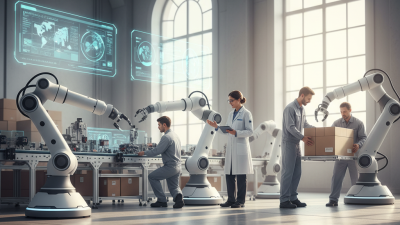
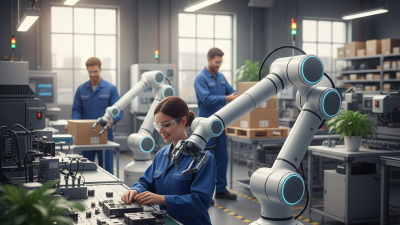
Manufacturing is entering a more human-centered automation era. Cobot automation combines robotic precision with human judgment, flexibility, and problem-solving. Unlike traditional robots, collaborative robots can support workers near assembly benches, inspection stations, and packaging lines, when proper risk assessments and safeguards are applied.
The International Federation of Robotics reported 541,302 industrial robots were installed worldwide in 2023. The global operational stock reached approximately 4.28 million units. These figures cover all industrial robots, not only cobots, but they show a clear direction: automation is becoming standard infrastructure. IFR also recorded a global robot density of 162 robots per 10,000 manufacturing employees in 2023. The competition is real.
Labor pressures strengthen this trend. The World Economic Forum’s Future of Jobs Report 2023 found that employers expect 44% of workers’ core skills to change within five years. Cobot automation can help employees handle repetitive lifting, machine tending, and visual inspection. A worker may load a fixture, adjust a process, and review quality data while the cobot repeats precise movements beside them.
The promise is practical, not magical. Small factories may still face integration costs, training gaps, and uncertain returns. Safety validation also requires careful engineering, not optimistic marketing. A cobot can be fast. It cannot replace thoughtful production design.
That limitation matters. The future will likely favor hybrid workplaces where people manage exceptions, creativity, and accountability, while cobots deliver consistency. Evidence from robotics adoption supports this transition, but each factory must prove value through measurable improvements in safety, quality, uptime, and total operating cost.
What Is Cobot Automation and How Does It Work?
Why Is Cobot Automation the Future of Manufacturing?
What Is Cobot Automation and How Does It Work?
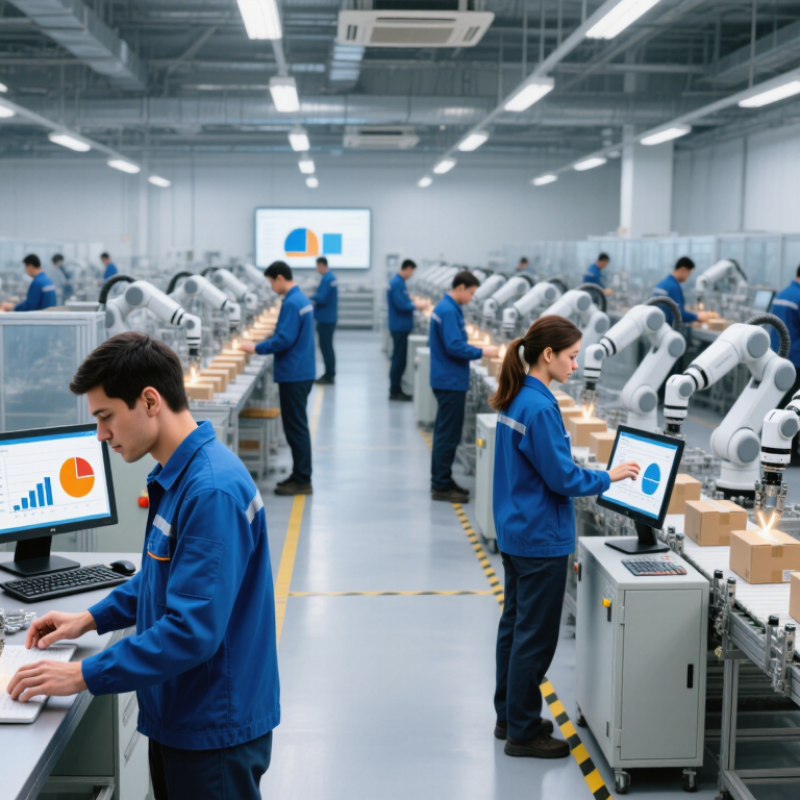
Cobot automation combines robotic arms with human workers on the same production floor. Unlike traditional robots, cobots are designed for flexible tasks near people. They use force sensing, speed limits, and safety-rated monitoring to reduce contact risks. A technician usually teaches the arm through hand-guiding or a graphical interface. The cobot then repeats actions such as picking parts, tightening fasteners, or inspecting surfaces.
The process depends on sensors, software, tooling, and clear task boundaries. A vision system can locate a component, while force feedback helps control insertion pressure. If an unexpected resistance appears, the arm can stop quickly. It is not magic. Safe operation still requires risk assessments, guarding decisions, worker training, and regular maintenance.
Industry data shows why interest is rising. The International Federation of Robotics reported 541,302 industrial robots installed worldwide in 2023, with more than 4.2 million operating globally. Collaborative robots represent a growing part of this ecosystem, especially where product variety makes fixed automation expensive. A Deloitte smart manufacturing survey found that 86% of manufacturers expect smart production to become important for competitiveness within five years. Yet the term “collaborative” is sometimes oversold. Cobots do not remove every ergonomic risk, and poor workstation design can create new problems. Actual results depend on cycle time, payload, programming quality, and the people using the system.
Why Are Cobots Transforming Modern Manufacturing?
Collaborative robots are reshaping modern manufacturing by working beside people, not replacing every task. A worker can guide a cobot to lift a 12-kilogram fixture, repeat the motion, and then inspect the finished part. This practical partnership reduces strain and keeps skilled employees involved.
The International Federation of Robotics reported 541,302 industrial robot installations worldwide in 2023. That record shows continuing automation demand. Deloitte’s 2023 Smart Manufacturing survey found that 86% of manufacturing leaders expect smart operations to strengthen competitiveness within five years. Cobots support this shift because they usually require less floor space, simpler deployment, and faster task changes than traditional robotic cells.
Still, automation is not effortless. A poorly designed workstation can create new delays, even when the robot works accurately. Safety assessments, operator training, and regular maintenance remain essential. ISO 10218 guidance also reinforces the need for risk-based integration and controlled robot behavior. In daily production, a cobot may handle repetitive screwdriving while an employee checks alignment, surface quality, and unexpected defects. The system learns from real workflows, but it does not understand every human judgment. That limitation matters. Companies should measure cycle time, injury exposure, error rates, and worker feedback before expanding deployment. Small pilot cells often reveal overlooked problems, such as awkward reach distances or frequent pauses.
How Do Cobots Improve Workplace Safety and Productivity?
Cobots are changing manufacturing by working beside people, not simply replacing them. In a typical assembly cell, a worker may position a small part while the cobot handles repetitive fastening. This reduces awkward wrist movements and lowers fatigue during long shifts. Force sensors can detect unexpected contact and stop motion quickly. Rounded tooling and controlled speeds add another layer of protection.
Productivity improves through steady, repeatable support. A cobot can lift components, apply consistent pressure, or move finished pieces between stations. Workers then spend more time on inspection, problem-solving, and skilled adjustments. In practical trials, this division of work can reduce minor delays between tasks. It also helps maintain stable output when demand changes suddenly. The best results come from careful programming and realistic cycle-time testing.
The first workplace layout is rarely perfect. Operators may find that a sensor blocks access or that a task feels too slow. Their feedback should guide every adjustment. Safety reviews must include stopping distances, hand positions, maintenance access, and emergency procedures. Training also matters. People need to understand the cobot’s movement limits, not just press a start button. Productivity figures can look impressive, yet hidden setup time may reduce the real gain. Regular observation keeps the system honest.
Why Is Cobot Automation the Future of Manufacturing?
Collaborative robots are helping manufacturers automate repetitive tasks while allowing people and machines to work safely in the same production environment.
Global industrial robot installations increased from approximately 422,000 units in 2018 to 541,000 units in 2023. This long-term growth reflects rising demand for automation, including collaborative robots designed to support workers with material handling, assembly, inspection, and other repetitive tasks.
Source: International Federation of Robotics, World Robotics reports. Figures represent annual industrial robot installations worldwide; industrial robots include collaborative robot systems.
Which Manufacturing Tasks Are Best Suited to Cobots?
Cobots are best suited to repetitive manufacturing tasks that demand consistency, not constant judgment. Machine tending is a strong example. A cobot can load parts, remove finished pieces, and repeat the cycle beside an operator. It can also handle screwdriving, dispensing, labeling, and basic assembly. These tasks often create wrist strain because workers repeat the same motion for hours.
Inspection and packaging
Inspection and packaging are also practical applications. A cobot can position a component under a camera, check visible defects, and separate approved parts from rejected ones. In packaging, it can place products into trays, cartons, or protective inserts. The work is predictable. Good fit.
The best results usually come from tasks with stable product dimensions, moderate speeds, and clear safety limits. A risk assessment still matters, even when people and robots share a workspace. Guards, sensors, force limits, and operator training must match the real process, not an ideal drawing. A cobot may struggle with oily parts, loose tolerances, or frequent product changes. That weakness is useful to notice. Automation should support skilled workers, not remove their judgment. In some cells, a simple fixture improves performance more than a smarter program. Teams should measure cycle time, error rates, stoppages, and worker comfort before expanding the system. Small trials reveal problems early. Production is rarely as clean as the proposal.
What Challenges Must Manufacturers Address Before Adoption?
Cobot automation may reshape manufacturing, but adoption is rarely a plug-and-play decision. Before installation, manufacturers must examine task safety, workflow fit, workforce readiness, and financial discipline. A cobot beside an operator still needs clearly separated operating zones, force limits, emergency procedures, and documented risk assessments. Small gaps matter. A loose fixture or reflective surface can disrupt reliable operation.
Integration creates another barrier. Existing machines may use inconsistent interfaces, outdated controllers, or incomplete production data. Engineers should map cycle times, handoff points, maintenance access, and failure responses before choosing equipment. A short pilot on one repetitive task can reveal hidden delays that a spreadsheet misses. That evidence is more useful than optimistic demonstrations. Yet pilots can mislead when tested under ideal lighting and stable material flow.
People remain central. Operators need hands-on training, not only a quick software lesson. Maintenance teams require access to diagnostics, spare components, and a clear escalation process. Managers should measure ergonomic improvement, quality consistency, downtime, and payback separately. Cost estimates often ignore retraining and process redesign. That is a weakness. Cybersecurity and software updates deserve the same attention as mechanical guards, especially when connected systems exchange production data. Some factories may discover that automation exposes poor process discipline instead of fixing it. That uncomfortable finding should guide the next engineering decision.