01302 246818

Best Cobots in Manufacturing from China for Global Buyers?

Choosing the best cobots in manufacturing from China requires more than comparing prices and payload ratings. Global buyers need reliable evidence about performance, safety, integration, and long-term support. A polished product video is not enough. Real factory conditions matter.

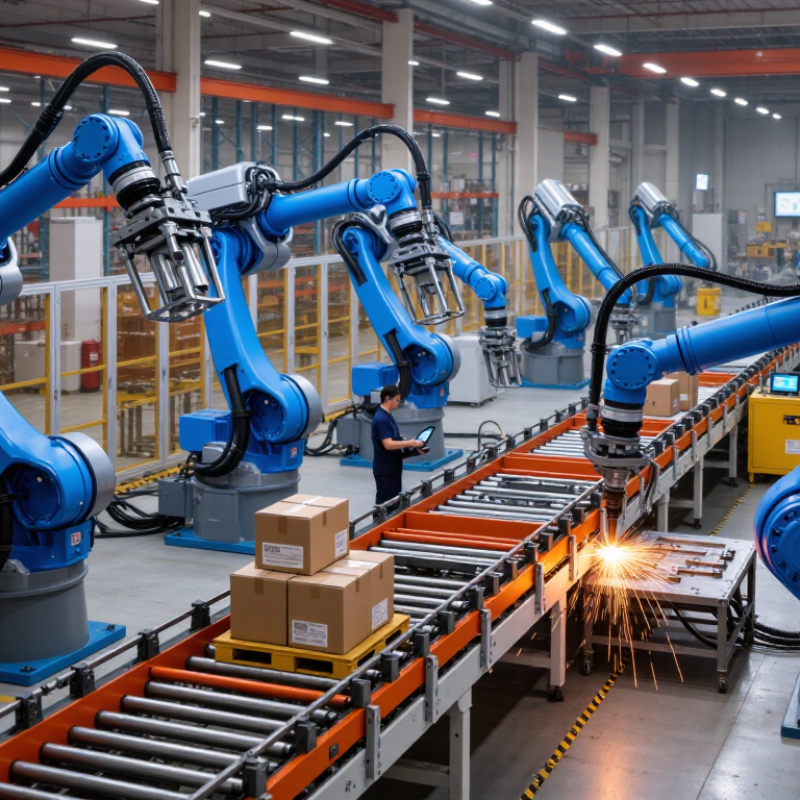
This guide examines Chinese collaborative robot suppliers through a practical buyer’s lens. It considers payload capacity, reach, repeatability, programming, vision compatibility, and end-of-arm tooling. It also reviews installation support, spare parts availability, software updates, and technical documentation. These details become important when a cobot must lift metal components, handle cartons, or repeat welding movements beside workers.

Safety deserves careful attention. Buyers should verify risk assessments, protective functions, emergency stopping, and applicable international requirements with qualified specialists. Certification claims should be checked against original documents, not copied brochures. Factory audits, sample testing, and reference projects can reveal weaknesses that specifications hide. Ask difficult questions.

A strong supplier should explain limitations honestly. Some models may perform well in assembly but struggle with dusty environments or changing product sizes. Others may offer attractive hardware but limited local service. That difference can affect downtime, training costs, and production targets. We will compare leading options using available technical evidence and realistic application needs. The ranking is not absolute. Your industry, workforce, budget, and integration partner may change the final decision. Careful evaluation remains essential, especially when purchasing across borders and supporting equipment for many years.
Best Cobots in Manufacturing from China for Global Buyers?

China’s Cobot Industry: 276,288 Robot Installations in 2023

China’s robot market reached 276,288 industrial robot installations in 2023, according to the International Federation of Robotics’ World Robotics 2024 report. This represented about 51% of global installations. However, the figure covers all industrial robots, not cobots alone. That distinction matters for global buyers comparing automation options.

Collaborative robots are gaining attention in assembly, packaging, inspection, and machine tending. Interact Analysis reports that China remains a leading collaborative robot market, supported by strong manufacturing demand and expanding domestic supply. Buyers can often find flexible payload options, integrated vision, and easier programming for smaller production lines. A technician may move a cobot between two workstations in one shift. That practical flexibility can matter more than maximum speed.

The picture is impressive. It is also incomplete. Installation volume does not automatically prove safety, uptime, or return on investment. Buyers should request cycle-time tests, repeatability data, safety documentation, and local service evidence. The IFR data shows market scale, while factory trials reveal operational reality. Prices may look attractive, yet training, integration, grippers, software, and maintenance can change the final cost. One overlooked issue is operator acceptance. A technically capable cobot may still underperform if workers find its interface confusing or its movements difficult to supervise.

Cobot Selection Metrics: 3–20 kg Payloads and ±0.02 mm Repeatability

For global manufacturers, cobot selection should begin with the task, not the catalogue. A 3 kg payload model may handle a camera, gripper, and 1 kg part. Calculate every moving kilogram. Cable routing and acceleration can change the real margin. A 20 kg cobot suits heavier machine tending, pallet layers, or welding fixtures. Bigger is not always better. It can consume more floor space and reduce flexibility.

The ±0.02 mm repeatability claim needs careful interpretation. Repeatability means returning to a taught position under defined conditions. It does not guarantee absolute accuracy across the workspace. Ask for test methods, payload, speed, temperature, and measurement equipment. Then run your own trial. Command the arm to pick a metal insert, place it into a nest, and repeat the cycle at least 30 times. Measure insertion errors, not only controller coordinates. A tool change may add several hundredths of a millimeter.

For Chinese suppliers serving global buyers, evaluation should include manuals, electrical documents, spare-part access, and remote support hours. Check whether software interfaces fit your PLC and safety architecture. Confirm local certification requirements before purchase. Sample testing can reveal cable drag near a wrist joint or gripper vibration at full reach. These details matter. My preference is to keep payload and precision headroom, although this increases cost. A strong specification on paper may still disappoint on a dusty factory floor.

Safety Standards for Export: ISO 10218-1 and ISO/TS 15066 Compliance

For global buyers, Chinese cobots should be evaluated through safety evidence, not appearance or advertised payload. ISO 10218-1 addresses robot design, protective measures, and control-system safety. ISO/TS 15066 adds guidance for collaborative applications, including force, speed, separation, and contact limits. Compliance is not a single sticker. The complete robot cell must be assessed.

A serious supplier should provide a risk assessment, safety-function validation, electrical diagrams, emergency-stop tests, and operating instructions. Ask how the cobot behaves after a protective stop. Does it hold position, release motion, or restart unexpectedly? These details matter beside a pallet, conveyor, or sharp workpiece. The integrator must also review tooling, fixtures, software, and the surrounding workspace. Standards help, but they do not replace destination-country requirements.

Tips: Request test records linked to the exact model and software version. Check whether measurements reflect your gripper and payload. Confirm safety distances at the real operating speed. Do not assume “collaborative” means safe in every task. A factory trial is useful, yet it can miss night-shift behavior or maintenance access. That gap deserves honest review.

Best Cobots in Manufacturing from China for Global Buyers? – Safety Standards for Export: ISO 10218-1 and ISO/TS 15066 Compliance
Buyer-oriented comparison framework for selecting a China-manufactured collaborative robot system without relying on company or brand names
Cobot Class Typical Payload Band Typical Reach Band Suitable Manufacturing Tasks Safety Functions to Verify Export-Buyer Evidence
Compact benchtop cobot Approximately 3–5 kg
Planning range, not a certification limit
Approximately 500–900 mm Small-part assembly, screwdriving, laboratory handling, light inspection and packaging Protective stop, emergency stop, reduced-speed mode, configurable force or power limits, safe restart behavior Technical file or equivalent compliance evidence, risk assessment, safety-function test records, user manual and electrical documentation
General-purpose collaborative arm Approximately 5–12 kg
Planning range, not a certification limit
Approximately 800–1,400 mm Machine tending, pick-and-place, material transfer, assembly, dispensing and quality inspection Monitored stop, speed and separation monitoring where applicable, power-and-force limiting, safety-rated I/O and configurable workspace limits Declaration of Conformity or applicable market equivalent, ISO 10218-1 conformity information, ISO/TS 15066-related validation records and integration instructions
Extended-reach production cobot Approximately 12–20 kg
Planning range, not a certification limit
Approximately 1,300–1,800 mm Palletizing, large-part handling, machine loading, packaging and end-of-line operations Validated protective devices, safe limited speed, safe limited position, protective separation distances and documented stopping performance Application-specific risk assessment, safety-distance calculations, stopping-time data, guarding recommendations and integration validation
High-payload collaborative cell Above 20 kg at the tool or through a dedicated collaborative application design Often above 1,500 mm Heavy machine tending, pallet handling and process automation requiring tooling or fixtures with substantial mass Cell-level safeguarding, presence sensing, safe motion monitoring, mechanical risk reduction and verified residual-risk controls Do not assume unrestricted hand-over operation; request a complete cell conformity assessment, tooling data, safety validation and operating limits
ISO 10218-1 and ISO/TS 15066 Export Compliance Checklist
Compliance Area What the Requirement Addresses Documents or Tests to Request Buyer Decision Point
ISO 10218-1 robot safety Safety requirements for the industrial robot itself, including design, protective measures, stopping functions, control systems and information for use. Applicable-edition conformity statement, safety specifications, operating manual, functional safety information and test documentation. Required
Confirm the exact edition and scope used by the supplier.
ISO/TS 15066 collaborative operation Additional guidance for collaborative robot systems, including collaborative operating modes, risk reduction and power-and-force-limiting considerations. Collaborative application risk assessment, contact-risk evaluation, force and pressure measurement method, validated operating parameters and limitations. Required for collaborative claims
Robot compliance alone does not approve every application.
Risk assessment Identification and reduction of hazards from the robot, tool, workpiece, fixtures, process, environment and foreseeable misuse. Documented risk assessment covering installation, commissioning, production, maintenance, cleaning and abnormal conditions. Required
Review the complete application, not only the robot arm.
Power and force limiting Limits motion energy and contact forces where human contact is possible; limits must be validated for the actual tool, payload, speed and contact location. Force/pressure test report, measurement equipment details, tested payload and tool configuration, speed settings and residual-risk controls. Application-specific
Do not rely on a generic “collaborative” label.
Safety-rated control functions Functions such as emergency stop, protective stop, safe speed, safe position, safe torque or equivalent monitoring functions, depending on system design. Safety circuit diagrams, safety function specifications, performance-level or safety-integrity information where applicable, and validation results. Verify before purchase
Check compatibility with the intended controller and cell architecture.
Tool and workpiece assessment Sharp edges, pinch points, hot surfaces, stored energy, suction hazards and workpiece movement can create risks independent of the arm. End-effector drawings, mass and center-of-gravity data, gripping-force data, guarding requirements and tool-specific test records. Mandatory for final validation
Use the production tool and representative workpiece.
Stopping performance and separation Where protective separation is used, the system must maintain the required separation distance based on speed, reaction time and stopping behavior. Stopping-time and stopping-distance measurements, sensor specifications, safety-zone layout and integration validation report. Cell-dependent
Revalidate after changing speed, payload, tooling or layout.
Electrical and machinery-market documents Export markets may require additional machinery, electrical, EMC, radio, cybersecurity or importer documentation beyond robot safety standards. Market-specific declaration, electrical schematics, EMC test evidence, installation requirements, firmware information and after-sales support terms. Market-specific
Confirm requirements in the destination country before shipment.
Important purchasing note: ISO 10218-1 and ISO/TS 15066 do not by themselves certify every completed manufacturing application. Final compliance depends on the complete system, including the robot, controller, end effector, workpiece, fixtures, software, layout, operating modes and risk-reduction measures. The buyer should request the applicable standard editions, a complete risk assessment and validation evidence for the intended production task.

Best Chinese Cobots by Application: Welding, Assembly, Palletizing, and Inspection

Chinese cobots are gaining attention among global manufacturers. The International Federation of Robotics reported 276,288 robot installations in China in 2023, representing 51% of global demand. Cobots fit smaller factories because they need less floor space and support frequent product changes.

For welding, choose a cobot with stable arc control, torch compatibility, and simple path teaching. A fixture test matters more than a catalogue specification.

For assembly, force sensing helps protect delicate parts, such as connectors and plastic housings. It also improves repeatability during long shifts.

Palletizing requires payload, reach, and cycle-time verification. A cobot may handle light cartons well, but heavier cases can reduce speed.

For inspection, consistent lighting and camera integration are essential. The robot alone cannot correct poor image quality.

IFR’s World Robotics 2024 report also recorded more than 541,000 industrial robot installations worldwide in 2023, showing the scale of automation competition.

Tips:

Ask for application samples using your actual parts. Check cycle time, recovery after an emergency stop, software language, spare-part access, and remote support. Require safety validation against applicable ISO standards.

Do not trust a perfect demonstration. Real factories have dust, variable cartons, imperfect fixtures, and rushed operators. A short pilot often reveals hidden integration costs.

One weakness remains: some low-cost systems offer attractive hardware, but documentation and training may feel unfinished. That concern deserves careful testing before international deployment.

Global Buyer Evaluation: CE Marking, Total Cost, Integration, and ROI

For global buyers, evaluating Chinese cobots starts with compliance, not brochure speed. A CE mark is a useful entry signal, but it is not automatic proof of safe deployment. Request the EU Declaration of Conformity, risk assessment, applicable standards, and technical file references. Confirm that the supplied configuration matches the assessed model. Ask who supports the importer’s obligations. This detail matters. A factory visit or live video test can reveal cable routing, emergency stops, and guarding gaps.

Total cost extends well beyond the robot arm. Include grippers, vision hardware, freight, duties, installation, training, spare parts, and software fees. A low purchase price can become expensive after six months. I would request a three-year cost sheet with realistic service hours and replacement assumptions. Still, forecasts are imperfect. Operators may need more coaching than planned, especially during shift changes. Integration deserves a practical test. Check communication with the PLC, safety circuit, conveyors, and existing MES. Measure setup time using the actual workpiece, not a sample box.

For ROI, record baseline cycle time, reject rate, labor allocation, uptime, and changeover losses. Then compare pilot results against promised figures. A 20 percent cycle improvement may disappear if gripper faults create ten minutes of daily stoppage. Use a conservative payback model, including downtime and engineering labor. One overlooked question remains: can local technicians diagnose faults without waiting days for remote support? That answer often shapes the real return more than the initial quotation.