How to Choose Robotics and Automation Suppliers in 2026
Choosing a robotics and automation supplier in 2026 is not a catalog exercise. It is a decision about uptime, integration risk, and how quickly a production team can recover when a cell stops. A polished demo can hide awkward cable routes, slow changeovers, or support that arrives too late. Ask to see the system handling your actual parts, tolerances, and shift pattern. Small details matter.
Robotics pioneer Rodney Brooks wrote, “The world is its own best model.” This reminder applies to supplier selection: simulation is useful, but real materials, lighting, vibration, and human workflows can expose gaps. Evaluate cycle-time data, safety documentation, software compatibility, spare-parts access, training, and service response. Request references from facilities with comparable workloads, then speak with operators—not only procurement teams. Evidence beats confident slides.
The right partner should explain trade-offs plainly, including what its system cannot do yet. Compare total operating costs, not just purchase prices, and define acceptance tests before signing. Check how upgrades, data access, cybersecurity, and maintenance responsibilities are handled. These questions may feel unglamorous. They prevent expensive surprises. No supplier is perfect, and one site visit cannot prove long-term reliability. Still, a disciplined evaluation gives decision-makers a clearer basis for choosing a partner that can adapt to changing demand. This guide examines practical criteria for selecting robotics and automation suppliers in 2026, focusing on measurable performance, integration, support, and honest fit.
Define Your Robotics and Automation Requirements
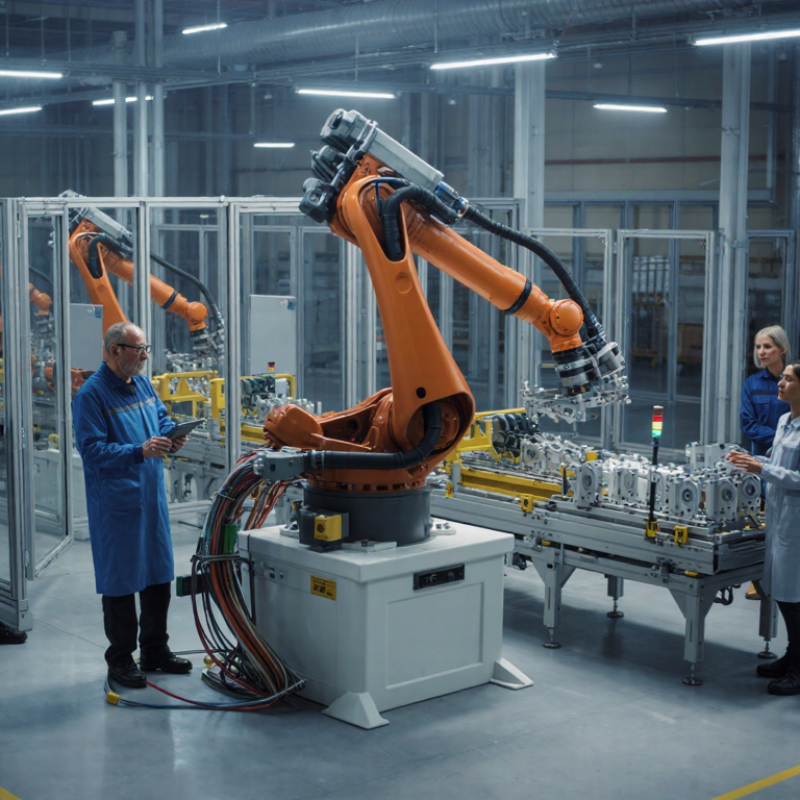
Before evaluating robotics and automation suppliers, describe the work the system must perform. List each task, the part dimensions, material, and expected production volume. Include the gripper, cables, and any other equipment when estimating payload. Small details matter. A robot handling a 4-kilogram component may need more capacity once its tooling is attached.
Measure the real workspace, not just a floor plan. Note aisle widths, machine access, ceiling height, and where operators stand during changeovers. Record target cycle times alongside current process times, including loading, inspection, and brief stoppages. These figures help distinguish a useful improvement from an optimistic estimate. They may be imperfect at first; revise them after observing several shifts.
Also define what happens when parts vary or production changes. Specify acceptable positioning accuracy, product changeover frequency, and the data the system must exchange with existing equipment. Describe required guarding, emergency stops, and operator training for the actual work area. A short site assessment can reveal constraints that a spreadsheet misses. Keep a written list of assumptions, such as stable lighting or consistent part presentation. Some assumptions will prove wrong. That is useful information, provided they are checked before supplier proposals are compared.
Identify Supplier Types and Relevant Capabilities
Robotics and automation suppliers generally fall into three groups: component makers, system integrators, and engineering or contract-manufacturing firms. Component suppliers provide items such as grippers, sensors, drives, and safety equipment. Integrators combine those parts with robots, conveyors, and control software. Engineering firms may help adapt a line when production needs are unusual. The categories overlap. That matters.
Match supplier capabilities to the task, not just the robot’s headline payload. A palletizing cell may need stable cycle times, accurate load data, and safe access for operators. A small assembly station may depend more on repeatability, camera performance, and quick changeovers. Ask for evidence. Request test results under conditions close to your own, including part variation and shift length. A polished demonstration may not reflect a dusty floor or frequent product changes.
Check who handles programming, installation, training, and repairs after handover. Confirm that drawings, spare-parts lists, and maintenance instructions are included. Ask how the supplier manages faults and how quickly a technician can respond. A low initial price can leave integration work unclear, though a higher quote does not prove stronger support. Site visits and conversations with comparable customers can expose gaps in a proposal. I would still leave room for uncertainty: early specifications often miss one awkward detail, such as a cable route or a fixture that slows changeovers.
Assess Technical Fit, Integration, and Scalability
When choosing a robotics supplier in 2026, match its equipment to the work your facility actually performs. Compare payload, reach, repeatability, and cycle time with real production data, not a polished demonstration. A robot moving empty trays may behave differently with warm, slippery parts arriving at uneven intervals. Ask how performance changes across shifts and product variations. Small details matter.
Integration can decide whether a capable machine becomes a useful system. Review communication protocols, controller access, data formats, and compatibility with existing conveyors and inspection tools. Ask the supplier to map the proposed cell, including handoff points, fault recovery, and operator access. Then test a representative task using your own parts. That test is imperfect. Still, it can expose a gripper that slips or a sensor that struggles with glare before installation.
Scalability means more than adding identical robots. Check whether software, spare parts, training, and maintenance support can keep pace as output grows. Request a clear estimate of expansion costs and the downtime each upgrade may require. A modular layout may help, but only if future stations fit the plant’s floor space and utilities. Keep some room for change. Production plans rarely stay fixed.
Verify Quality, Safety, Cybersecurity, and Support
A supplier’s brochure may promise precision, but production records show whether performance holds over time. Request inspection reports, calibration dates, and defect trends from comparable equipment. Small details matter. Observe an operator change a tool and restart the cell; repeatability should not depend on one expert. Ask how the supplier investigates recurring faults, and check that its answers match documented procedures.
Review risk assessments, machine guarding, emergency stops, interlocks, and maintenance instructions. Confirm who updates these documents after installation or a process change. Ask how safety functions are tested, not only whether they exist. Ask for evidence. A brief site visit can reveal practical gaps, such as an emergency stop blocked by stored materials. One visit is not enough, but it can shape useful follow-up questions.
For cybersecurity, request a simple network diagram, access-control details, update practices, backup steps, and a named incident contact. Check whether remote sessions can be approved, logged, and disabled after service work. Support matters too: clarify response times, spare-parts availability, operator training, and escalation routes. A polished policy may still miss the realities of a busy plant. A limited production trial, with agreed measures for downtime and recovery, can expose issues that presentations do not.
How to Choose Robotics and Automation Suppliers in 2026
Relevant standards editions by publication year
Use these standards as reference points when checking a supplier’s quality management, robot safety, industrial cybersecurity, and customer-complaint processes. Publication year alone does not indicate compliance or certify a supplier.
References:
ISO 9001:2015 ·
ISO 10218-1:2025 ·
IEC 62443-2-1:2024 ·
ISO 10002:2018
Compare Total Costs and Validate Your Supplier Choice
A supplier quote rarely shows the full cost of a robotics or automation system. Compare each proposal over the same period, such as five years, and use the same production assumptions. Include installation, line integration, operator training, spare parts, software fees, energy use, and planned maintenance. Downtime matters too. Ask suppliers to state expected service response times and which repairs require specialist support. A low purchase price can become expensive if a sensor failure stops a shift or replacement parts take weeks to arrive.
Build a cost table, but check the inputs with your own production team. A spreadsheet can still mislead. Then validate the supplier’s claims against your actual tasks: run representative parts, inspect cycle-time records, and test recovery after a stoppage. Request a factory acceptance test and define measurable pass criteria before signing. During a site visit, look for clear maintenance access, readable fault messages, and operators who can explain routine checks. Speak with reference customers using comparable equipment and workloads. No test removes every risk. A short pilot may also miss seasonal demand or unusual product changes, so record what it does not prove. Keep the results, assumptions, and open issues together; this makes later price and performance discussions more grounded.