Top Robotic Process Automation Vendors to Enhance Business Efficiency?
In today’s fast-paced business environment, companies seek innovative solutions to streamline operations. Robotic process automation (RPA) offers a pathway to efficiency. By leveraging technology, firms can automate repetitive tasks. This helps save time and reduces human error.
Choosing the right robotic process automation vendors is crucial. Many providers offer diverse tools tailored to specific business needs. Some excel in user-friendly interfaces, while others focus on advanced analytics. Each vendor presents unique strengths and weaknesses, making careful evaluation essential.
Adopting RPA technology isn't without challenges. Organizations must assess their processes thoroughly. Integration with existing systems can be complicated. A strategic approach is required to avoid pitfalls. Ultimately, the right vendor can significantly transform business operations, driving efficiency and productivity.
Overview of Robotic Process Automation (RPA) and Its Importance
Robotic Process Automation (RPA) plays a crucial role in enhancing business efficiency. It automates repetitive tasks, allowing employees to focus on more strategic initiatives. According to a report by McKinsey, automation can increase productivity by up to 45%. This is particularly important in today’s fast-paced business environment, where efficiency can distinguish a company from its competitors.
Implementing RPA can lead to significant cost savings. According to Deloitte, organizations can save approximately 30% to 50% on operational costs through RPA. However, establishing RPA solutions isn't without challenges. Companies must invest in change management and employee training to harness its full potential. Each workforce has unique needs and not all processes should be automated blindly.
Tip: Start with a pilot program to identify suitable processes for RPA. This way, you can measure effectiveness before wider implementation. Evaluate outcomes continuously to improve the integration of RPA over time. These reflections lead to better practices and employee alignment. Remember, RPA should complement human capabilities, not replace them.
Top Robotic Process Automation Vendors to Enhance Business Efficiency
This chart illustrates the estimated market share of leading robotic process automation vendors, demonstrating their impact on enhancing business efficiency through automation solutions.
Key Features to Look for in RPA Vendors
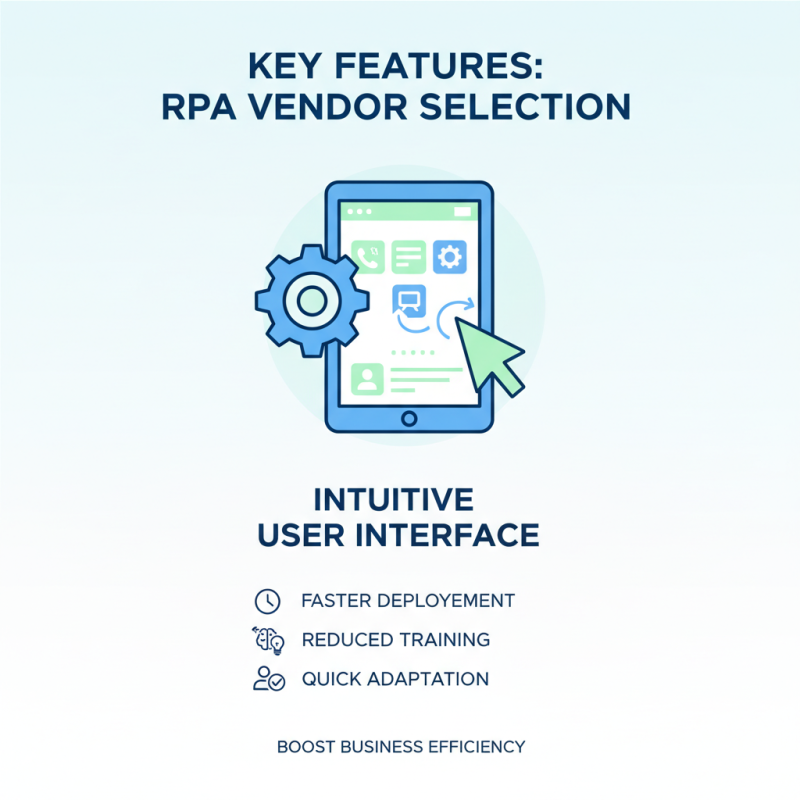
When selecting a robotic process automation (RPA) vendor, certain features greatly enhance business efficiency. A strong user interface is crucial. It should be intuitive, allowing users to navigate smoothly. A well-designed interface reduces training time and enables faster deployment. User feedback shows that simple interfaces lead to quicker adaptation.
Integration capabilities are another essential feature. RPA tools must work well with existing systems. This ensures seamless data flow and minimizes disruptions during implementation. Flexibility in integration fosters collaboration across departments. Some vendors may lag in this area, creating bottlenecks. Reliable vendor support can help resolve such issues, but upfront evaluation is vital.
Scalability is often overlooked yet important. Businesses evolve, and their automation needs may change. The right vendor should offer scalable solutions. This flexibility allows organizations to grow without significant re-investment in new systems. Periodic assessments of the vendor’s offerings are essential. Regular evaluation ensures alignment with evolving business goals and efficiency strategies.
Top RPA Vendors Transforming Business Processes
Robotic Process Automation (RPA) is transforming how businesses operate. Organizations rely on RPA to automate repetitive tasks, which boosts productivity.
According to a report by McKinsey & Company, up to 45% of activities could be automated with current technology. This statistic underscores RPA's potential to enhance efficiency.
Companies embracing RPA benefit from reduced operational costs and improved accuracy.
The implementation of RPA can yield significant returns. For example, a recent study by Deloitte found that 85% of organizations adopting RPA achieved a return on investment within the first year.
These savings often come from labor reduction and faster process completion. However, integrating RPA is not without challenges. Companies sometimes face resistance from employees concerned about job security.
It is essential to address these concerns while highlighting the benefits of RPA.
Choosing the right RPA solutions requires careful evaluation. Some sectors may experience resistance due to their established workflows. Industry experts suggest analyzing specific processes before implementing automation.
The goal is to identify the tasks that can benefit the most from RPA. While automation can streamline operations, companies should remain aware of the potential setbacks.
Continuous improvement and adaptation are crucial in this evolving landscape.
Comparative Analysis of Leading RPA Solutions
Robotic Process Automation (RPA) has gained traction as a critical tool for improving business efficiency. A recent report shows that RPA adoption can lead to a 30% increase in productivity across various sectors. This statistic highlights the transformative potential of automating repetitive tasks. However, not all RPA solutions are created equal, and organizations must carefully evaluate their options.
In a comparative analysis of leading RPA solutions, several key factors emerge. Usability is vital. Solutions with intuitive interfaces enable faster implementation and reduce the learning curve for employees. Security also plays a crucial role, with trusted vendors ensuring robust data protection measures. A study indicated that companies prioritizing security in their RPA tools experienced a 40% reduction in compliance-related issues.
Another important consideration is scalability. As businesses evolve, their automation needs will change. RPA solutions that offer flexible scaling options are generally more favorable. Some businesses have reported challenges in scaling their RPA initiatives, underscoring the need for adaptability. Not every vendor might meet the diverse requirements of a growing organization, making thorough research essential for selecting the right partner.
Case Studies: Successful RPA Implementations Across Industries
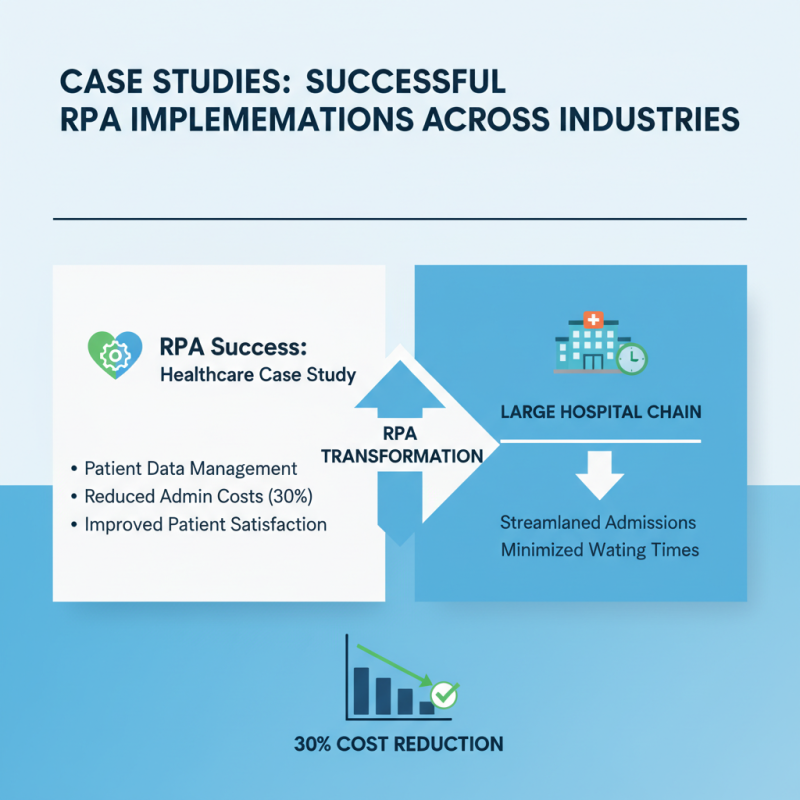
Robotic Process Automation (RPA) has transformed various sectors. In healthcare, RPA helps manage patient data efficiently. According to a study, automated systems reduced administrative costs by up to 30%. A case from a large hospital chain exemplifies this. They implemented RPA to streamline patient admission processes. This minimized waiting times, improving patient satisfaction significantly.
In the finance sector, RPA automates compliance tasks. This has led to faster reporting and reduced errors. A prominent bank reported a 60% reduction in processing time for routine transactions. Despite these successes, some firms face challenges. Integration with legacy systems remains a concern. Companies need to evaluate their readiness before implementation.
Manufacturing is another area benefiting from RPA. Cases show reduced production downtime, enhancing efficiency. A major manufacturer used RPA to manage inventory. They achieved a 40% decrease in stock discrepancies. However, not all deployments yield immediate results. Continuous improvement and adaptation are essential for long-term success.