What is an Automation Machine and How Does it Work?
The automation machine industry has witnessed remarkable growth in recent years. According to a report by Markets and Markets, the automation market is projected to reach $200 billion by 2026, driven by technological advancements and the need for efficiency. Experts agree that integrating automation machines is essential for maintaining a competitive edge. John Smith, a leading authority in automation technology, stated, “Automation machines not only enhance productivity but also reduce errors in manufacturing processes.”
An automation machine simplifies complex tasks. It uses programmed algorithms and robotics to perform functions with precision and speed. These machines are gaining traction in various sectors, including manufacturing, logistics, and agriculture. Despite the advantages, the transition to automation is not without challenges. Companies often face difficulties in integrating these systems with existing workflows. The key is to foster a culture that embraces change while addressing workforce concerns.
Companies must strategically implement automation machines. Decisions should not be based solely on cost-saving potential. A deeper understanding of how these machines integrate into larger systems is crucial. As the automation landscape evolves, organizations must continuously reassess their strategies. Balancing innovation with practicality is vital for success in this transformative era.
Definition of an Automation Machine and Its Key Components
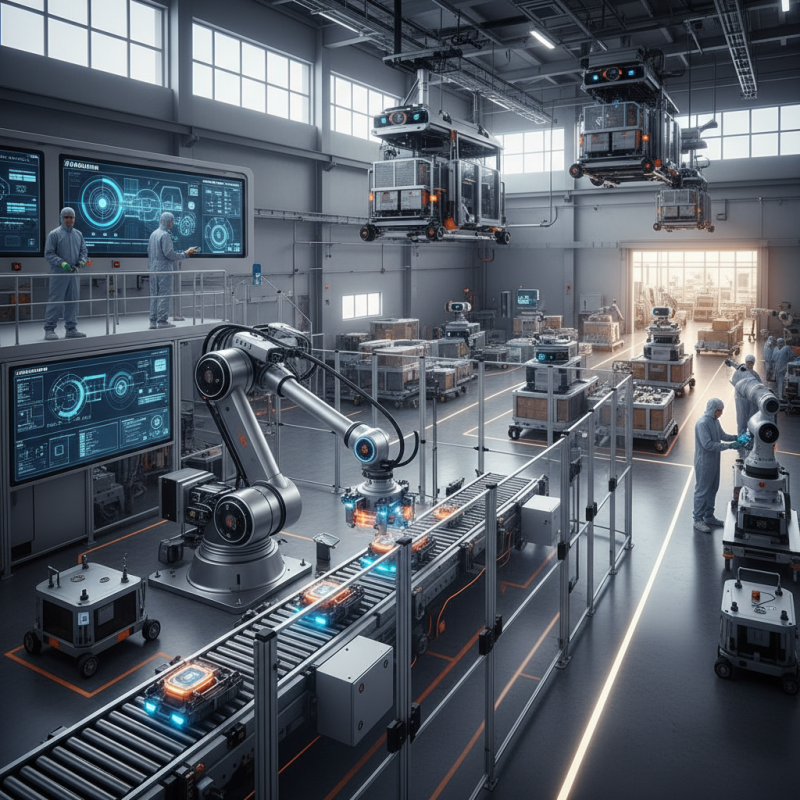
An automation machine is a sophisticated device designed to perform repetitive tasks autonomously. It typically consists of several key components, each playing a crucial role in its operation. The central processing unit (CPU) serves as the brain, processing inputs and executing commands.
Sensors are vital for detecting changes in the environment. They gather real-time data, enabling the machine to respond effectively. Actuators, on the other hand, perform the physical actions. They can move parts, switch on devices, and interact with other machinery.
Power supply is another critical component, providing the necessary energy for operation. Safety mechanisms ensure that the machine functions correctly and minimizes risks. However, these systems are not infallible and may require occasional adjustments or recalibrations.
Automation machines often rely on software for programming and updates. This allows for flexibility and adaptation to various tasks. Yet, software bugs or malfunctions can hinder performance.
Integrating these components effectively is essential for a machine's reliability. Complexity can lead to errors, and oversight in design can impact functionality. A well-designed automation machine balances efficiency with simplicity. Regular maintenance and monitoring can mitigate common issues, but the pursuit of perfection often reveals new challenges.
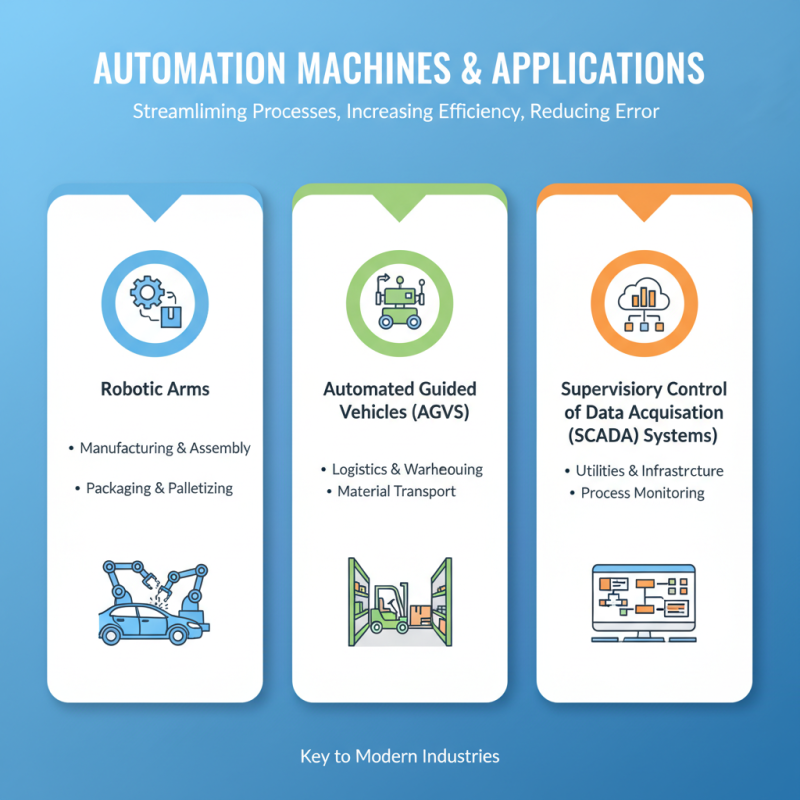
Types of Automation Machines and Their Applications in Various Industries
Automation machines play a crucial role in modern industries. They streamline processes, increase efficiency, and reduce human error. Various types of automation machines cater to differing needs across sectors.
In manufacturing, robotic arms are common. These machines assemble products with precision and speed. In agriculture, automated tractors optimize planting and harvesting. In healthcare, machines assist with surgical procedures. Each application demonstrates the versatility of automation. Industries are increasingly incorporating these machines for better productivity.
Tips: When considering automation, assess specific needs. Not every task requires automated machinery. Sometimes, a simple solution is more efficient. Regular maintenance is essential for optimizing performance. Neglecting this can lead to costlier issues down the line.
Principles of Operation: How Automation Machines Function Effectively
Automation machines play a critical role in modern industries. They utilize advanced technologies to perform repetitive tasks efficiently. These machines are designed to enhance productivity and reduce human error. A report by McKinsey suggests that automation could raise global productivity by up to 1.4% annually. This shift is significant as companies aim to streamline operations.
The principles behind automation machines hinge on sensors, control systems, and actuators. Sensors collect data in real-time, ensuring precise operations. Control systems then analyze this data, making quick decisions to adjust actions accordingly. Actuators receive these commands, physically performing tasks. Interestingly, while automation boosts efficiency, it also raises concerns about job displacement. A 2023 World Economic Forum report noted that 85 million jobs may be displaced by 2025, a reality that requires careful planning.
Beyond efficiency, some automation machines face challenges. They may struggle in unpredictable environments, limiting versatility. Maintenance can be complex, demanding skilled technicians. Additionally, implementation costs can deter smaller businesses. Despite these hurdles, the journey towards greater automation continues, changing how we work forever. The balance between embracing technology and addressing its challenges will shape the future of the workforce.
Benefits of Using Automation Machines in Modern Workplaces
Automation machines have become essential in modern workplaces. They enhance productivity by performing repetitive tasks efficiently. This allows employees to concentrate on more complex, creative work. With automation handling mundane activities, businesses can reduce errors and improve accuracy.
One significant benefit is time savings. Automation machines can complete tasks in a fraction of the time it takes humans. This efficiency leads to faster project delivery. Teams can respond to customer needs more quickly. However, it's crucial to ensure that the technology aligns with the company's goals.
**Tips:** When selecting automation tools, consider the specific needs of your team. Not every automation solution fits all scenarios. Regular training is vital for staff to adapt to new technologies. Monitor the impact of automation closely. Adjust your processes if they're not yielding the expected outcomes. Embracing automation is a journey, not just a destination.
Benefits of Using Automation Machines in Modern Workplaces
Future Trends and Innovations in Automation Machine Technology
Automation machine technology is evolving rapidly. New innovations aim to enhance efficiency and reduce human error. For instance, AI-driven systems are now able to learn from their operations, allowing for continuous improvement. This results in faster production times and better quality control. However, these advancements bring challenges. Companies must balance automation benefits with the need for skilled labor.
Another trend is the integration of IoT devices into automation machines. These connected systems provide real-time data on performance and maintenance needs. Such transparency can prevent costly downtimes. Yet, dependence on technology raises security concerns. Cyber threats can jeopardize entire operations, creating a need for robust cybersecurity measures.
Moreover, the rise of cobots (collaborative robots) reflects a shift towards human-robot collaboration. These machines enhance productivity without replacing workers. While this integration fosters innovation, it also requires careful planning. Training employees to work alongside robots is essential. Overall, the future of automation holds immense promise, but it demands ongoing reflection and adaptation.