What Are the Top 10 Robotics Engineering Courses?
Choosing the best robotics engineering courses requires more than comparing university names or glossy rankings. Strong programs connect theory with physical practice. Students should encounter sensors, actuators, embedded systems, robot vision, control theory, and machine learning. They should also test ideas on real machines, not only through simulations.
Rodney Brooks, a leading robotics engineer and former MIT professor, has said, “The robots are going to be in our lives, whether we like it or not.” His observation explains why careful training matters. The best robotics engineering courses prepare learners for systems that move, sense, fail, and interact with people. A useful course should include laboratory work, code reviews, design documentation, and safety procedures. Small details matter. A loose cable can stop an otherwise excellent project.
This guide examines ten respected learning options across undergraduate, graduate, online, and professional formats. It considers curriculum depth, instructor expertise, practical access, assessment quality, industry relevance, and student support. Accreditation and transparent learning outcomes also deserve attention. However, “top” remains partly subjective. A research-focused course may frustrate someone seeking industrial automation skills. An affordable online class may lack laboratory hardware. That is not always a failure, but it needs honest evaluation.
The comparison will highlight who each course suits, what students build, and which skills they may gain. Expect useful distinctions, not perfect rankings. Real learners have different budgets, backgrounds, and time limits. That makes reflection necessary.
What Robotics Engineering Courses Teach
What Robotics Engineering Courses Teach
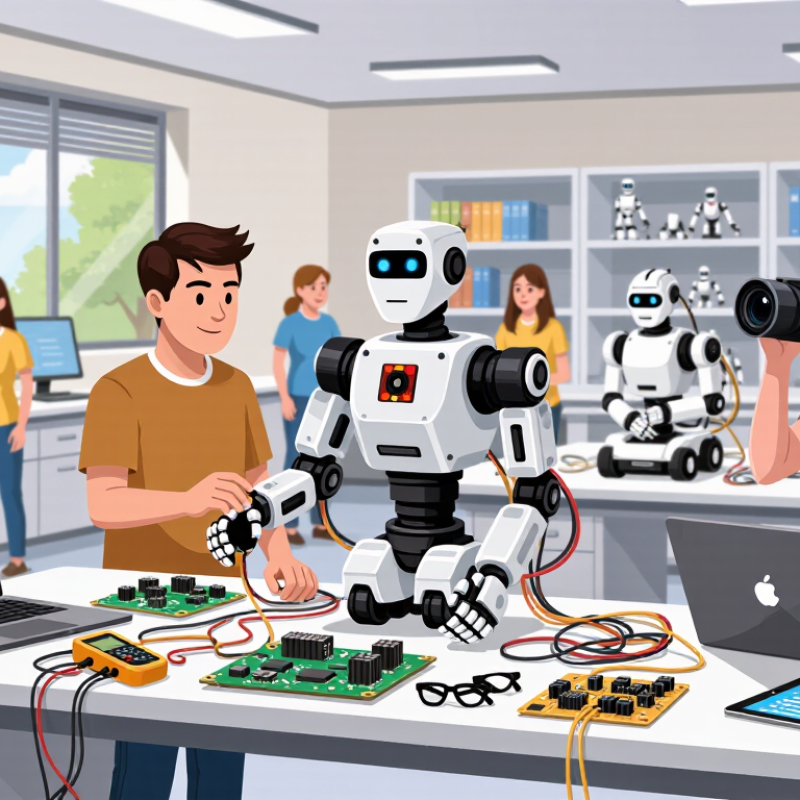
Robotics engineering courses teach students to connect mechanical design, electronics, and software. In a lab, that might mean assembling a small wheeled robot, wiring its motors, and writing code that helps it follow a line. Students study sensors, control systems, programming, and basic robot kinematics. They also learn how to test a design, read technical diagrams, and find faults when a motor turns the wrong way. Real projects rarely work perfectly on the first attempt. That can be frustrating, but it makes careful troubleshooting part of the learning.
Courses often include teamwork and project planning. A group may need to build a robot that picks up a foam block, then explain why its gripper slips. Students practice documenting measurements, comparing test results, and making changes based on evidence. Some programs also cover safety, human-robot interaction, and the limits of automation. The exact balance varies by school, so course descriptions are worth checking.
Tips: Look for courses with hands-on lab time, not only lectures. Ask what tools and programming languages students use. If you are new to robotics, review basic algebra and coding beforehand. Small gaps can slow you down. Still, curiosity matters more than arriving with every skill already mastered.
How the Top 10 Courses Are Evaluated
Evaluating the top ten robotics engineering courses requires more than counting lessons or certificates. A credible review examines what learners can build, test, and explain. I look for clear coverage of mechanics, electronics, programming, control systems, and applied mathematics. Short-term excitement fades quickly. Strong courses connect theory with practical work, such as calibrating sensors or correcting a robot’s unstable movement.
Each course is assessed through a consistent scorecard. Curriculum depth receives major attention, but teaching clarity matters equally. Practical assignments should demand more than copying instructions. Reviewers inspect whether projects include measurements, troubleshooting, documentation, and safe laboratory procedures. Assessment quality also matters. Are learners judged through working prototypes, technical reports, or only automated quizzes? Safety and responsible design cannot be optional. A course that ignores these areas may produce confident beginners with weak professional judgment.
Reliability depends on evidence from several sources. Instructor qualifications, course updates, project instructions, and learner feedback are compared carefully. Feedback can be uneven. Some learners value speed, while others need detailed explanations and accessible support. No ranking is perfectly objective, because different students need different learning paths. I also reduce scores when course pages make impressive claims without showing assessment methods or sample outcomes. That decision may overlook a worthwhile program, but transparent limits are better than unsupported praise. Past learner work, where available, receives additional weight because it reveals whether the promised skills appear in practice.
The Top 10 Robotics Engineering Courses
The Top 10 Robotics Engineering Courses
A strong robotics pathway usually includes ten connected courses.
Engineering Mathematics builds the language for motion, force, and uncertainty.
Programming Fundamentals develops clean code for real-time decisions.
Electrical Circuits explains voltage, current, and motor control.
Mechanical Design covers gears, frames, bearings, and load limits.
Control Systems teaches robots to correct errors instead of moving blindly.
Sensors and Instrumentation connects physical signals with useful measurements.
Embedded Systems introduces microcontrollers, timing, and reliable hardware interaction.
Computer Vision helps robots interpret edges, shapes, and changing light.
Artificial Intelligence supports planning, learning, and decision-making.
Robotics Integration brings every discipline together through testing and troubleshooting.
Practical quality matters as much as course titles. A useful program should include laboratory work, measured results, and supervised project reviews. Students might tune a small wheeled robot, record its stopping distance, and compare predicted motion with actual movement. Safety procedures should be explicit, especially around batteries, rotating parts, and automated movement. No course list is perfect. A computer vision class may be excellent but frustrating without strong programming skills. Control theory can also feel abstract until a motor shakes, overshoots, and finally stabilizes. That discomfort is valuable, although some curricula underestimate it.
Tips: Choose courses with physical labs, not only recorded lectures. Check assessment details carefully. Seek instructors with engineering project experience. Keep a test journal with dates, settings, failures, and photographs. Review mathematics weekly. Small omissions become expensive during integration.
Core Skills Developed Across These Courses
What Are the Top 10 Robotics Engineering Courses?
Core Skills Developed Across These Courses
Robotics courses build a practical mix of mechanical design, electronics, programming, and systems thinking. Students learn to connect sensors, motors, and controllers, then test how they behave together. A small mobile robot makes these skills visible: wheel speed changes, sensor readings drift, and a poorly tuned controller wobbles across the floor. Real systems are rarely as tidy as diagrams.
The International Federation of Robotics reported 4.28 million industrial robots operating worldwide in 2023, with 541,000 new units installed that year. This scale makes skills in automation, robot programming, and safe system integration increasingly relevant. The World Economic Forum’s Future of Jobs Report 2025 also identifies robotics and automation as technologies expected to reshape work. Good courses therefore teach more than code. They develop troubleshooting, measurement, teamwork, and the habit of documenting test results. Those habits matter when a robot works in a lab but struggles under different lighting or on a rough surface.
Strong programs also introduce simulation, machine vision, and human–robot interaction. Students should compare simulated results with physical tests and explain the gap. That part can be frustrating. It is also where learning becomes real. Course titles vary, so inspect project work, lab access, and assessment methods before choosing. A polished syllabus alone proves little.
How to Choose the Best Robotics Engineering Course
Choosing a robotics engineering course starts with your goal, not its ranking. Decide whether you want to build autonomous machines, program robot arms, or study sensors and control systems. Then inspect the syllabus closely. A useful course should connect mathematics, electronics, mechanical design, and programming through practical projects. Look for details such as labs, simulation work, assessment methods, and the amount of time spent building real systems. A polished course description is not enough.
Check the prerequisites before enrolling. Some programs assume experience with calculus or coding, while others teach these foundations along the way. Review instructor qualifications and whether students receive clear feedback on their designs. Small details matter: can you test a motor, read sensor data, and revise a faulty control routine? Ask about equipment access and project support, too. These questions reveal more than a broad promise of “hands-on learning.”
Match the workload to your schedule and learning style. A short online course may suit someone exploring the field, but it may offer limited access to physical hardware. A longer program can provide deeper practice, though its cost and pace may not fit everyone. Compare sample lessons, project requirements, and student work where available. Be honest about what you need. I would not choose a course only because it covers many topics; breadth can sometimes mean shallow practice.
What Are the Top 10 Robotics Engineering Courses?
How to Choose the Best Robotics Engineering Course
How to use this chart: These suggested evaluation weights add up to 100%. Prioritize hands-on projects, core robotics topics, and access to practical tools, then adjust the weights to match your goals and experience level. They are a selection rubric, not a ranking of specific courses.