China’s robotics sector is expanding across factory automation, logistics, education, healthcare, and research. This growth has increased demand for reliable robot design software. Engineers now need more than basic 3D modeling. They require motion simulation, collision detection, controller testing, digital twins, and smooth integration with sensors and production systems.
This guide examines ten Chinese robot design software suppliers serving different technical needs. Some focus on industrial robot programming. Others provide CAD tools, simulation platforms, or cloud-based engineering environments. Their strengths may appear in local support, customization, price, or compatibility with Chinese automation equipment. However, product quality cannot be judged by a website alone. A practical evaluation should include software stability, export formats, API access, training, data security, and after-sales response. Small details matter. Can the platform simulate a narrow welding cell accurately? Does it support a real robot controller? These questions often reveal more than impressive demonstrations.
Rodney Brooks, a respected robotics scientist and former MIT professor, observed, “Robots are not going to take over the world, but they are going to change it.” His point remains relevant to software selection. Design tools shape how safely and efficiently that change reaches factories. No ranking is flawless. A lower-cost platform may offer excellent local service, yet lack advanced simulation features. A powerful system may require expensive training and experienced engineers. Therefore, this overview combines technical capability, supplier credibility, user experience, and practical application value. Readers should still test each platform against their own workflows before making a final decision.
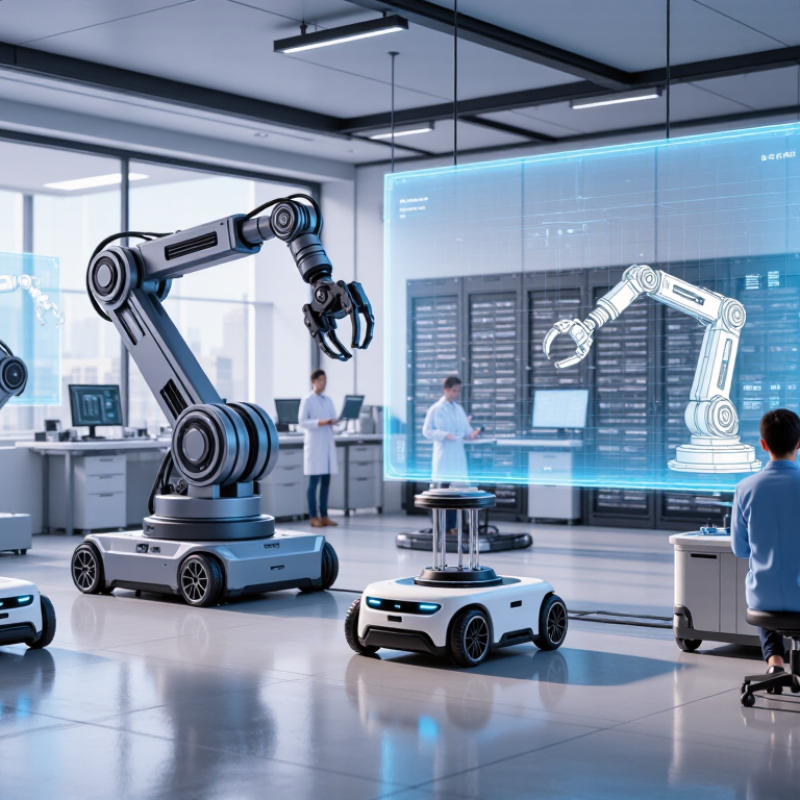
Robot design software is becoming the practical bridge between digital planning and industrial automation. Engineers can model a robot arm, test reach, and simulate collision risks before equipment arrives. A virtual cell may show a gripper missing a fixture by only three millimeters. That detail can prevent costly production delays.
The International Federation of Robotics reported 541,302 industrial robots were installed worldwide in 2023. It also recorded more than 4.28 million robots operating globally. These figures increase pressure on design teams to create safer, faster, and more adaptable automation systems. Effective software supports offline programming, motion analysis, production-line balancing, and digital-twin testing. It also helps engineers compare cycle times under different payloads and conveyor speeds. The National Institute of Standards and Technology emphasizes interoperable manufacturing data, which remains essential when equipment uses different communication standards.
Accuracy still has limits. A simulation cannot perfectly predict cable stiffness, surface vibration, or an operator’s unexpected movement. I have seen theoretical layouts fail because a maintenance door opened into the robot’s working envelope. That is why experienced teams combine software results with physical trials, risk assessments, and operator feedback. Better design is not always more complex. Sometimes, a simpler path is safer. Industry reports provide useful direction, but engineers must question assumptions before approving a cell for production.
Global industrial robot installations increased substantially from 2019 to 2023, highlighting the growing demand for digital engineering tools. Robot design software supports this expansion by enabling 3D layout planning, offline programming, cycle-time simulation, collision detection, and production-line optimization before equipment is deployed.
China Top 10 Robot Design Software Suppliers?
Evaluating China’s leading robot design software suppliers requires more than counting installed licenses. The International Federation of Robotics reported 276,288 industrial robot installations in China during 2023, representing about 51% of global installations. This scale increases demand for reliable design, simulation, and programming tools. A strong supplier should show verified projects across welding, assembly, logistics, and inspection. Project evidence matters more than polished demonstrations.
Technical capability should be scored against measurable criteria. Check support for 3D parametric modeling, offline programming, collision detection, kinematic analysis, and digital twin workflows. Test whether files transfer smoothly through common CAD and manufacturing formats. The software should also support recognized safety practices, including risk assessment aligned with ISO 10218 principles. Cybersecurity deserves equal attention. The 2024 International Federation of Robotics industry reports highlight connected automation as a growing operational priority, but connectivity can increase exposure. Ask about access control, audit logs, patch delivery, and local data handling.
Commercial evaluation needs practical tests. Measure simulation accuracy, training time, update frequency, and technical response speed. Compare licensing costs with integration and maintenance expenses. A low purchase price may hide expensive customization. Supplier stability, developer experience, and documented service cases should influence the score. No scorecard is perfect. A trial project can still reveal awkward workflows, missing functions, or weak support. Those imperfections deserve written records before selection.
China’s top ten robot design software suppliers serve different engineering needs. Several focus on 3D mechanical design, helping teams model arms, grippers, frames, and safety enclosures. Others specialize in motion simulation, where engineers test reach, speed, collisions, and cycle time before building hardware. These tools support automotive, electronics, warehousing, and general manufacturing projects.
The strongest suppliers usually combine design, offline programming, and digital-twin functions. Some provide robot path planning for welding, painting, palletizing, and assembly. Others add machine-vision modules that check object position under changing light. Cloud-based platforms can connect drawings, revisions, and production data. This is useful for teams working across Chinese factories and overseas engineering offices. Practical experience matters here. A clean interface cannot replace accurate kinematic models or reliable post-processors.
No software is perfect.
Buyers should test ten areas before selecting a supplier: geometry accuracy, simulation speed, controller compatibility, vision integration, collaboration tools, data security, training, technical support, update frequency, and total ownership cost. Chinese suppliers often offer strong customization and responsive local service. However, documentation quality and international support may vary between providers. Trial projects reveal hidden limits, especially with unusual tooling or mixed robot fleets. Engineers should measure real cycle times, not only attractive simulation results. That extra check may slow a purchase, but it can prevent expensive redesigns later.
China Top 10 Robot Design Software Suppliers?
China’s top ten robot design software suppliers are best compared by capability, not publicity. Their platforms typically cover 3D modeling, kinematic analysis, offline programming, digital twins, and production monitoring. The business case is substantial. The International Federation of Robotics reported 276,288 industrial robot installations in China during 2023. This represented 51% of global demand. Such growth increases pressure for faster commissioning and safer virtual testing. Good software turns a factory layout into a measurable workflow.
Core applications vary across industries. Automotive teams use synchronized robot paths for welding, painting, and material handling. Electronics manufacturers need motion control, vision calibration, and traceable version management. Warehouses often prioritize fleet orchestration, traffic simulation, and energy-aware scheduling. Many suppliers connect design tools with CAD files, PLC logic, sensor feeds, and cloud dashboards. The goal is continuity from concept to maintenance. Deloitte’s 2024 Smart Manufacturing survey found that 86% of respondents expect smart manufacturing to become a major competitiveness driver within five years.
Still, ranking software is difficult. A polished digital twin may fail when sensors drift or floor data is incomplete. Rendering quality can distract buyers from weak engineering support. That is a costly mistake. Buyers should test import accuracy, API openness, cybersecurity controls, training time, and local support. Some platforms remain immature. That deserves scrutiny. The strongest solutions show repeatable cycle-time gains, clear audit trails, and honest limitations.
| Capability Profile | Primary Software Orientation | Core Design and Modeling Features | Simulation and Validation | Programming and Control | Typical Industrial Applications | Key Data and Integration Support |
|---|---|---|---|---|---|---|
| Profile 01 | Offline programming for industrial robot cells | 3D workcell layout, robot reach analysis, tool and fixture positioning, collision checking, and cycle-path planning | Kinematic simulation, interference detection, reachability studies, and estimated cycle-time analysis | Robot-path generation, motion teaching, post-processing, and controller program export | Arc welding, spot welding, material handling, machine tending, and assembly | CAD import, common robot-controller post-processors, point-cloud references, and PLC signal mapping |
| Profile 02 | Mechanical design and engineering analysis for robotic equipment | Parametric 3D assemblies, sheet-metal design, mechanism definition, tolerance documentation, and engineering drawings | Structural analysis, motion studies, interference checks, and load-case evaluation for robot-supporting equipment | Engineering data preparation for robot, actuator, sensor, and safety-system integration | End-effectors, robotic fixtures, conveyor systems, inspection stations, and customized automation equipment | STEP, IGES, STL, DXF, DWG, product data management, and revision-control workflows |
| Profile 03 | Digital-twin and production-line simulation | Virtual factory layouts, robot-cell objects, conveyors, buffers, sensors, operators, and material-flow entities | Discrete-event simulation, throughput analysis, bottleneck identification, utilization measurement, and virtual commissioning | PLC logic emulation, robot sequence validation, event-based control, and production-state monitoring | Automotive production, electronics manufacturing, logistics, packaging, and high-volume assembly | PLC interfaces, OPC UA or equivalent industrial communication, CAD models, production databases, and simulation reports |
| Profile 04 | Robot motion planning and machine-vision integration | 3D scene reconstruction, robot-camera calibration, grasp-point definition, workpiece recognition, and tool-center-point setup | Collision-free path planning, camera-view validation, grasp feasibility checks, and sensor-noise testing | Vision-guided picking, pose correction, trajectory generation, and real-time sensor feedback | Bin picking, random-part handling, palletizing, depalletizing, sorting, and quality inspection | RGB and depth-camera data, point clouds, industrial Ethernet, robot APIs, and image-processing libraries |
| Profile 05 | Collaborative robot application design | Human-robot workspace layout, collaborative tool configuration, ergonomic reach studies, and simplified cell modeling | Workspace overlap analysis, speed-and-separation review, payload checks, and task-time estimation | Graphical task programming, waypoint teaching, force-control setup, and safety-zone configuration | Light assembly, screwdriving, dispensing, quality inspection, packaging, and machine tending | CAD import, sensor integration, digital I/O, safety-device signals, and recipe-based production parameters |
| Profile 06 | Welding and fabrication robot engineering | Weld-joint definition, torch orientation, fixture modeling, seam geometry, and multi-station cell arrangement | Torch-access checks, singularity detection, weld-sequence simulation, collision verification, and cycle estimation | Weld-path generation, weaving patterns, process-parameter assignment, and program post-processing | Structural steel, automotive components, metal furniture, agricultural machinery, and heavy equipment | CAD geometry, weld-process databases, robot-controller output, positioner synchronization, and I/O configuration |
| Profile 07 | Robot control, programming, and system commissioning | Cell configuration, coordinate-system management, tool and payload setup, I/O mapping, and sequence documentation | Offline motion verification, alarm-state testing, basic collision checks, and commissioning procedure support | Teach-pendant programming, structured robot code, PLC coordination, fieldbus configuration, and diagnostic monitoring | General-purpose handling, assembly, palletizing, machine tending, and automated inspection | Industrial Ethernet, fieldbus networks, digital and analog I/O, safety circuits, and controller backup files |
| Profile 08 | Robot simulation for education, research, and algorithm development | Flexible robot models, custom kinematic chains, virtual sensors, programmable environments, and reusable scene assets | Forward and inverse kinematics, trajectory evaluation, sensor simulation, physics-based testing, and algorithm benchmarking | Python or C++ scripting, robot operating-system connectivity, path-planning research, and custom control development | University laboratories, autonomous manipulation, mobile robotics, research prototypes, and workforce training | URDF or equivalent robot descriptions, mesh files, APIs, middleware interfaces, log data, and simulation scripts |
| Profile 09 | Factory layout, logistics, and intralogistics optimization | Warehouse layouts, autonomous mobile robot routes, storage locations, conveyors, stations, and traffic zones | Discrete-event modeling, fleet-performance analysis, congestion testing, order-flow simulation, and resource utilization | Fleet-management logic, dispatch rules, route planning, task allocation, and warehouse-control integration | Warehousing, order fulfillment, manufacturing logistics, kitting, material replenishment, and distribution centers | Warehouse-management systems, manufacturing-execution systems, barcode or RFID data, map files, and operational reports |
| Profile 10 | Cloud-connected robot engineering and lifecycle management | Browser-based cell visualization, equipment registries, digital work instructions, configuration records, and asset models | Remote status analysis, production monitoring, alarm review, performance dashboards, and predictive-maintenance indicators | Remote program management, software-version control, parameter distribution, API access, and fleet-level monitoring | Multi-site manufacturing, equipment service, production traceability, remote commissioning, and robot-fleet management | REST APIs, MQTT or equivalent messaging, OPC UA connectivity, time-series data, user permissions, and audit trails |
Choosing among China’s leading robot design software suppliers requires more than comparing feature lists. Match the supplier to the project’s risk, workflow, and production scale. A warehouse robot needs reliable simulation, sensor modeling, and route testing. An articulated arm may require offline programming, collision checking, and accurate digital twins. Ask for a live demonstration using your drawings, not generic slides. Real evidence matters. Check engineers’ experience with your robot type, controller, and factory conditions. Request references from projects with similar cycle times and safety requirements.
Review integration details before discussing price. Confirm file compatibility, API access, version updates, training, and response times. A low license cost can become expensive when engineers spend weeks correcting import errors. Test one sample model and measure setup time, simulation accuracy, and report quality. Keep the evaluation documented. Some suppliers promise broad compatibility, yet support may depend on one specialist. That weakness should be exposed early. Project evaluations often show that practical support matters more than impressive menus. Still, supplier claims need independent verification.
Tips:
Define acceptance tests before signing.
Ask who handles urgent technical issues.
Compare annual costs, not license fees alone.
Protect project data through clear access rules.
Leave time for operator training.
Do not ignore local language support.
A pilot may reveal uncomfortable gaps.