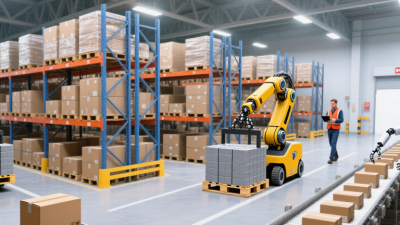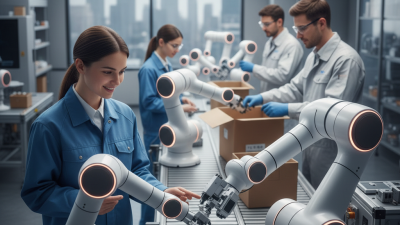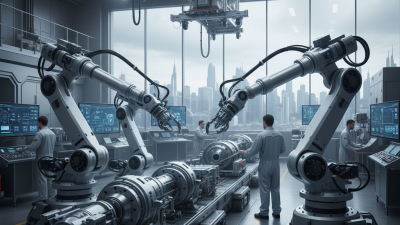
China’s factories and distribution centers are adopting material handling robots for repetitive, time-sensitive work. These systems include autonomous mobile robots (AMRs), automated guided vehicles (AGVs), robotic palletizers, and robotic arms that move cartons or components. The right choice depends on the task: a low-profile AMR navigating narrow aisles has different strengths from a palletizing arm beside a fixed conveyor.
The International Federation of Robotics reported 276,288 industrial robot installations in China in 2023, about 51% of global installations that year (World Robotics 2024). This figure covers industrial robots broadly; it is not a count of warehouse AMRs or material handling systems alone. That distinction matters. It shows the scale of China’s robotics market, but it cannot identify the best supplier for a particular site. No shortlist is perfect.
This guide compares leading options by practical criteria: payload, navigation method, fleet-management software, integration needs, service coverage, and performance in real operating conditions. A robot may look impressive in a demo, yet struggle with uneven floors, changing pallet dimensions, or crowded loading zones. Buyers should check verified case studies, safety features, uptime records, and total cost of ownership—not just advertised speed. Results vary by facility. The most suitable robot is the one that can handle the site’s actual routes, loads, and shift patterns reliably, with local technical support available when something goes wrong.
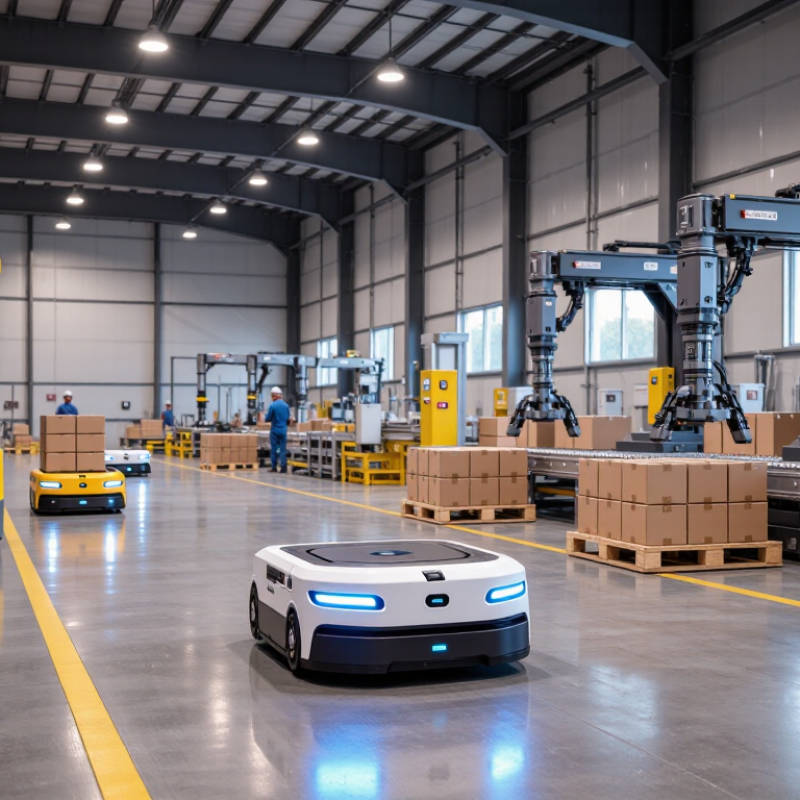
Material Handling Robots: Definition and Core Functions
Material handling robots move, lift, load, unload, and position goods inside factories and warehouses. They may transfer cartons between conveyors, stack pallets, or feed parts to a production line. Their core functions are movement, placement, and repeatable task execution. Some systems also use sensors to identify loads and adjust their path. The goal is simple: safer, steadier material flow.
The International Federation of Robotics reported 541,302 industrial robot installations worldwide in 2023 in its World Robotics 2024 report. This figure covers industrial robots broadly, not material handling units alone, but it shows the scale of factory automation. In practice, suitability depends on load weight, aisle width, floor condition, and how often routes change. A robot that handles heavy pallets may not suit narrow aisles or mixed, unpredictable orders. Not every task needs one.
Tip: Map a real shift before choosing a system. Record travel distances, waiting time, and load types. Check pickup points and turning space on the floor. Keep a manual fallback for exceptions; real workflows are rarely perfectly tidy.
Typical task coverage across common material handling robot categories. A score of 1 indicates a core function; 0 indicates it is not typically a core function. Capabilities vary by model and configuration.
Material handling robots in China usually fall into four practical groups. Automated guided vehicles follow fixed routes, moving pallets between receiving bays and production lines. Autonomous mobile robots use sensors and maps to navigate changing aisles; they suit mixed traffic, though crowded floors can still slow them down. Articulated arms handle machine tending, carton picking, and palletizing. Gantry robots serve wide, repetitive moves, such as transferring heavy components across a production cell. Each type solves a different bottleneck.
Scale matters, but totals need careful reading. The International Federation of Robotics’ World Robotics 2024 report records 276,288 industrial robot installations in China during 2023, or 51% of global installations. Its 2023 report records 290,258 installations in China for 2022. These figures cover industrial robots broadly, not material-handling systems alone. That distinction matters. In practice, site teams should check payload, travel distance, floor condition, and handoff points before choosing a system. A robot may move boxes quickly but still create queues at a narrow doorway. Some workflows also need human oversight. The best fit is not always the newest one.
There is no single best robot for every facility. The most suitable type depends on the load, route, floor conditions, throughput requirements, and the level of flexibility needed.
| Robot Type | Typical Material Handling Tasks | Indicative Payload Range | Navigation or Operating Method | Best Suited For | Key Considerations |
|---|---|---|---|---|---|
| Automated Guided Vehicle (AGV) | Moving pallets, containers, carts, or production materials along established routes. | About 100 kg to several tonnes, depending on vehicle design. | Often follows fixed routes using magnetic tape, reflectors, wires, or mapped guidance. | Repetitive, predictable transport between fixed production or storage points. | Reliable on stable routes; route changes or obstacles may require changes to the guidance system or traffic plan. |
| Autonomous Mobile Robot (AMR) | Transporting totes, shelves, carts, and work-in-process materials within warehouses and factories. | Common configurations handle roughly 100–1,500 kg; heavy-load models can exceed this. | Uses onboard sensors and mapped navigation to plan routes and respond to obstacles. | Facilities that need flexible routes, frequent layout changes, or point-to-point internal transport. | Requires suitable floor conditions, traffic management, charging provision, and integration with task-control software. |
| Autonomous Mobile Robot (AMR) with Shelf or Tote Handling | Carrying shelves, bins, or totes to picking, replenishment, or assembly stations. | Typically designed around the payload of the shelf, tote, or carried unit; capacity varies by system. | Mobile robot navigates through the facility and may lift, carry, or position a load at a workstation. | Goods-to-person picking, kitting, line-side supply, and small-item fulfillment. | Station design, container dimensions, picking workflow, and fleet coordination affect throughput. |
| Robotic Forklift | Picking up, transporting, and placing pallets at floor locations, conveyors, or rack positions. | Often around 500–3,000 kg, with capacity dependent on lift height and load center. | Uses sensors and mapped navigation; some operations include automatic pallet detection and load handling. | Pallet movement in warehouses, manufacturing plants, and loading or staging areas. | Pallet quality, rack clearances, aisle width, floor condition, and mixed pedestrian traffic must be assessed. |
| Industrial Robotic Palletizer or Depalletizer | Stacking or unstacking cartons, bags, cases, or other unit loads on pallets. | Robot payloads commonly range from tens to several hundred kilograms, depending on the arm and gripper. | Usually fixed-base articulated robot operating within a programmed cell, often with conveyors and vision systems. | High-volume, repetitive palletizing or depalletizing at production and packaging lines. | Layer patterns, product stability, gripper design, line speed, and pallet changeover requirements determine performance. |
| Mobile Parcel-Sorting Robot | Moving parcels or bins to designated chutes, stations, or sorting zones. | Generally suited to individual parcels or bins rather than heavy pallet loads; capacity varies by design. | Mobile units navigate a mapped sorting area and route items according to a control system. | Parcel distribution and e-commerce fulfillment operations with changing sorting destinations. | Performance depends on parcel size and weight limits, destination layout, scanning accuracy, and system-level coordination. |
| Industrial Articulated Handling Robot | Transferring components between machines, fixtures, conveyors, or workstations. | Ranges from a few kilograms to several hundred kilograms, depending on robot size and configuration. | Fixed-base robot follows programmed paths; sensors or vision may support part location and orientation. | Machine tending, loading and unloading, component transfer, and repetitive production-line handling. | Reach, cycle time, end-effector design, safety guarding, and integration with surrounding equipment are important. |
Note: Payload figures are indicative examples of ranges found across equipment categories, not market averages or specifications for every model. Actual capacity can depend on lift height, load center, end effector, speed, and operating conditions.
For material handling robots in China, judge performance against the work they will actually do. Check payload capacity, travel speed, positioning accuracy, and cycle time under realistic loads. A robot moving an empty tote may perform very differently from one carrying a full pallet. Ask for test results on your own routes, including narrow aisles and busy crossings.
Reliable performance is more than speed. Track completed moves per hour, charging time, recovery after a blocked path, and downtime across several shifts. Watch how the robot handles reflective floors, changing light, and unexpected obstacles. A polished demonstration can hide these issues. Even a good test may miss seasonal changes in traffic or stock levels, so leave room to reassess after deployment.
Tips: Record cycle times with full and empty loads. Compare planned moves with completed moves, not just peak speed. Check whether staff can clear a fault quickly. Test the full route, not only a short, open aisle. Keep the test conditions written down; otherwise, comparisons can become unreliable.
Chinese material-handling robot manufacturers serve different needs, from compact warehouse vehicles to heavy-load pallet movers. Many offer autonomous mobile robots that navigate with lidar or visual sensors and carry totes between storage zones and packing stations. Others build automated guided vehicles for fixed routes, where floor markings or reflectors support repeatable movement. These systems suit predictable workflows. They are not interchangeable.
For pallet handling, manufacturers may combine robotic arms, grippers, and conveyor interfaces to stack cartons or transfer loads. A typical cell needs clear pallet positions, stable carton dimensions, and guarding around moving equipment. Forklift-style robots can move palletized goods through wider aisles, but floor condition and traffic patterns matter. Details matter here. Chinese suppliers also provide controls, fleet software, and integration with warehouse systems, though the depth of support varies by project. Buyers should request payload, turning-radius, charging, and recovery data under realistic operating conditions. A polished demonstration is useful, but it cannot reveal every bottleneck. I would also check spare-parts availability and local service response before comparing prices. The right solution depends less on a robot’s headline speed than on how reliably it handles the actual routes, loads, and exceptions in a facility.
Choosing a material handling robot starts with the route, not the machine. Measure aisle widths, floor joints, turning space, load weight, and peak trips per hour. A 600-kilogram pallet needs different handling from a tote of small components. In mixed-traffic areas, record pedestrian crossings and interruptions from doors or lifts. Small details matter. A route that looks clear on a drawing may become congested beside a packing bench.
For changing routes and frequent line-side deliveries, autonomous mobile robots can offer flexibility. Automated guided vehicles may fit stable, repeated routes between fixed stations. Automated forklifts suit pallet movement where loads must be lifted or stacked. Match the robot to the task’s speed, payload, turning radius, and handoff method. Also check whether it can communicate with doors, conveyors, and warehouse software. A pilot can reveal awkward stops or slow handoffs. Sometimes the first layout needs revising.
Tips: Test with real loads during a busy shift. Check stopping distance, charging access, and recovery procedures. Ask operators where jams usually happen. Their feedback may challenge the plan—and that is useful.