01302 246818

2026 Top Material Handling Robots for Global Buyers?

As global warehouses face tighter delivery windows and persistent labor shortages, material handling robots are becoming practical investments rather than futuristic equipment. Buyers now compare autonomous mobile robots, automated guided vehicles, robotic pallet movers, and collaborative systems for specific workflows. A robot that performs well in a clean, flat facility may struggle on uneven floors, narrow aisles, or mixed pedestrian routes.

This guide examines leading solutions for 2026 through a buyer-focused lens. It considers payload capacity, navigation accuracy, battery runtime, charging methods, software integration, safety features, and after-sales support. Real operating details matter. A 1,000-kilogram pallet, a damaged barcode, or a five-minute traffic delay can change productivity results. Manufacturer specifications provide a useful starting point, but independent testing and customer references offer stronger evidence.

Some rankings remain difficult.

Global buyers should also assess installation requirements, local technical support, spare-parts availability, and workforce training. Total cost includes more than the robot’s purchase price. It may include mapping, warehouse modifications, system integration, maintenance, and future upgrades. Not every facility needs the most advanced platform. In some cases, a simpler vehicle with reliable service creates better value. This article highlights promising robot categories and leading models while recognizing an important limitation: performance claims can vary greatly between controlled demonstrations and busy warehouses. Careful site evaluation remains essential before any final decision.
2026 Top Material Handling Robots for Global Buyers?

What Are Material Handling Robots?

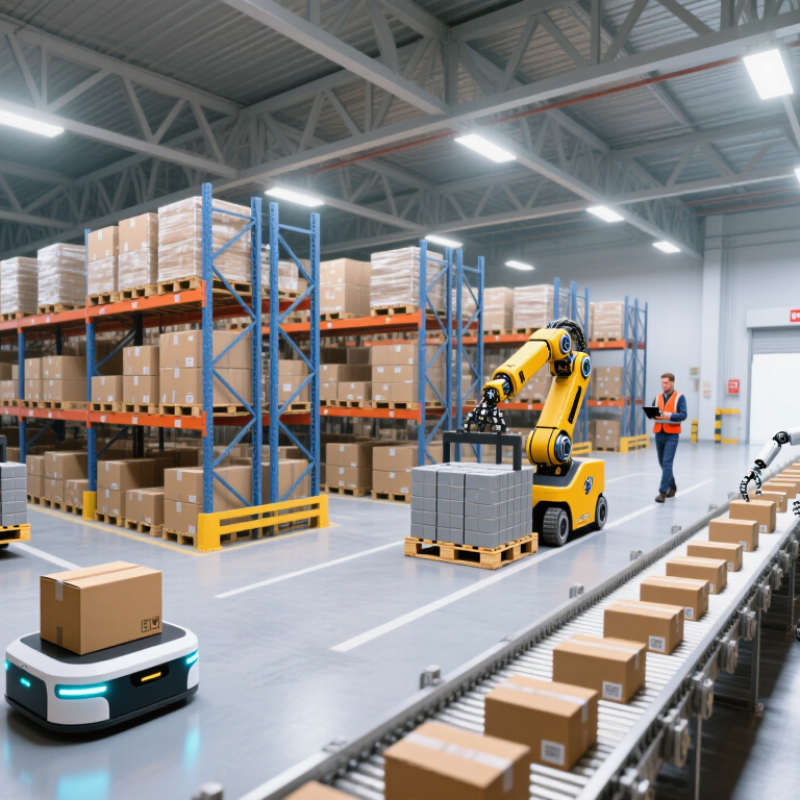
Material handling robots are machines designed to move, lift, sort, store, or position goods with limited human control. They work inside warehouses, factories, distribution centers, and fulfillment sites. Their tasks may include carrying totes, loading pallets, feeding production lines, and placing cartons into storage locations.

Some robots travel independently through mapped routes. Others use robotic arms, sensors, cameras, or grippers to handle products at fixed workstations. A complete system usually combines hardware, control software, safety sensors, and warehouse data. This connection matters. A fast robot cannot solve inaccurate inventory records or poorly planned traffic routes.

In practical warehouse evaluations, buyers should watch how robots behave around people, shelves, uneven floors, and changing workloads. Check payload limits, battery performance, navigation accuracy, maintenance access, and software compatibility. Ask for realistic test results, not only laboratory figures. Small details matter. A narrow aisle can reduce productivity more than a powerful motor improves it.

Automation is not automatically efficient. A rushed project may create new delays, especially when product sizes change often. Human workers still handle exceptions, inspections, and unusual packaging. That balance deserves careful review. In 2026, global buyers may prefer flexible robots that can be adjusted as layouts, labor needs, and order patterns change. The best choice is rarely the most advanced machine; it is the system that performs safely and consistently in the buyer’s actual environment.

How Material Handling Robots Are Classified in 2026

Material handling robots in 2026 are classified by more than their appearance. Global buyers should examine how each system moves, lifts, senses, and communicates. Autonomous mobile robots transport cartons across warehouse floors, while automated guided vehicles follow mapped routes or fixed markers. Robotic arms handle pallets, cases, and individual items at defined stations. Hybrid systems combine transport with lifting, scanning, or sorting.

Load capacity is another practical category. Some robots move small totes weighing under 50 kilograms. Heavy-duty units may carry pallets exceeding 1,000 kilograms. Navigation also matters. Laser-based systems suit changing layouts, while magnetic or visual guidance can perform well in stable aisles. Buyers should check turning radius, charging time, floor tolerance, and recovery behavior after an obstruction. A robot that stops safely is more valuable than one that only moves quickly.

Tips: Request a live trial with your real cartons, floor markings, lighting, and peak workloads. Measure completed moves per hour, not advertised speed. Confirm training, maintenance access, data security, and integration requirements. Safety validation should involve qualified local professionals. This framework is useful, but not perfect. Actual performance can change after software updates, seasonal congestion, or uneven packaging. My practical preference is simple: classify the robot by the task it completes repeatedly, not by its most impressive feature.

2026 Top Material Handling Robots for Global Buyers? – How Material Handling Robots Are Classified in 2026

Robot classification Primary handling task Typical load capacity Typical operating speed Navigation and positioning Best-fit environment Key buyer considerations Common safety framework
Tugger AGV Pulling carts, trailers, or multiple material trains between fixed points Approximately 1,000–50,000 kg total train capacity About 0.8–2.0 m/s Magnetic tape, wires, reflectors, QR markers, or mapped navigation Manufacturing plants, assembly lines, and repetitive milk-run routes Route repeatability, towing interface, floor quality, turning radius, and traffic management ISO 3691-4; local industrial vehicle and machinery safety requirements
Pallet-moving AMR Transporting pallets from receiving areas to storage, production, or shipping zones Approximately 500–2,000 kg About 1.0–2.5 m/s Simultaneous localization and mapping, laser scanning, cameras, and inertial sensors Warehouses and factories with changing routes or mixed pedestrian traffic Pallet dimensions, rack and floor clearance, fleet orchestration, charging strategy, and integration with warehouse software ISO 3691-4; ISO 13849-1; applicable electromagnetic compatibility rules
Unit-load AMR Moving totes, cartons, trays, and bins between workstations or storage locations Approximately 50–600 kg per load About 1.0–2.5 m/s Natural-feature mapping, laser scanners, cameras, and fiducial markers where required E-commerce fulfillment, spare-parts storage, electronics, and light manufacturing Throughput per hour, tote compatibility, lift or conveyor interface, fleet scalability, and aisle width ISO 3691-4; ISO 12100; risk assessment for collaborative work areas
Autonomous forklift Pallet pickup, transport, stacking, rack replenishment, and trailer loading support Approximately 1,000–3,000 kg; specialized models may be higher About 0.5–2.0 m/s, depending on load and site conditions Laser scanning, cameras, inertial measurement, rack sensors, and mapped navigation Distribution centers, cold-chain facilities, factories, and high-bay warehouses Lift height, pallet quality, rack tolerances, floor flatness, safety zones, and human-vehicle separation ISO 3691-4; ISO 3691-1; regional forklift and workplace safety regulations
Goods-to-person shelf AMR Delivering movable shelves, racks, or storage units to picking operators Approximately 250–1,500 kg per movable unit About 1.5–3.0 m/s Grid-based or mapped navigation with position feedback and obstacle detection Piece-picking operations with high SKU variety and predictable storage-unit geometry Storage density, operator ergonomics, lift accuracy, pick-station design, and order-management integration ISO 3691-4; ISO 13849-1; applicable machinery and workplace safety rules
Robotic picking arm Picking, placing, sorting, depalletizing, palletizing, and case handling Approximately 3–150 kg, depending on arm configuration and reach Cycle time commonly measured at 10–60 picks per minute Fixed-cell calibration, machine vision, force sensing, and programmed trajectories Distribution, food and beverage, consumer goods, and manufacturing cells Object variability, gripper selection, vision accuracy, reach, cycle time, guarding, and changeover requirements ISO 10218; ISO/TS 15066 for collaborative applications; ISO 13849-1
Autonomous mobile manipulator Mobile transport combined with machine tending, inspection, picking, or workstation loading Mobile base commonly 50–500 kg; arm payload commonly 3–20 kg Base speed about 0.5–1.5 m/s; manipulation speed varies by task SLAM, 3D vision, force sensing, and precision docking Flexible factories, laboratories, inspection routes, and low-volume/high-mix operations Docking repeatability, combined safety assessment, end-effector flexibility, battery life, and workflow integration ISO 10218; ISO 3691-4; ISO/TS 15066 where human-robot collaboration is intended
Automated storage and retrieval robot Storing and retrieving bins, cartons, or pallets from dense automated storage structures Approximately 30–1,500 kg per storage unit, depending on system design System throughput commonly specified in storage and retrieval cycles per hour Constrained rails, grid systems, shuttle paths, or guided mast navigation High-density warehouses with standardized bins, cartons, or pallets Storage density, peak throughput, fire protection, structural tolerances, redundancy, and warehouse-control integration ISO 12100; ISO 13849-1; regional warehouse, electrical, and fire-safety requirements
Note: Capacity and speed figures are representative industry ranges rather than limits for every system. Actual performance depends on payload geometry, floor condition, aisle width, battery configuration, traffic density, temperature, and the completed site risk assessment.

Which Robot Types Serve Different Material Handling Tasks?

Choosing the right material handling robot in 2026 starts with the task, not the machine. Autonomous mobile robots suit repetitive transport between storage, picking, and packing zones. They can follow mapped routes, avoid obstacles, and carry totes across changing workflows. Automated guided vehicles remain useful where routes are fixed and floor conditions are stable. They often fit pallet movement between receiving docks and storage lanes.

Robotic arms handle different pressures. Piece-picking systems support high-volume order fulfillment, while palletizing robots build stable loads at the end of production lines. Vision systems help identify uneven cartons, damaged labels, and mixed product sizes. The International Federation of Robotics reported 541,302 industrial robot installations globally in 2023, showing continued automation demand across manufacturing and logistics. Yet installation volume does not prove task suitability.

Data matters. The MHI 2024 Annual Industry Report found that 43% of supply chain professionals planned to adopt robotics and automation within the next two years. Buyers should compare payload, cycle time, aisle width, charging needs, safety functions, and integration effort. Interact Analysis has also identified strong growth in mobile robot deployments, especially for warehouse transport and picking support. A practical test should measure travel distance, waiting time, manual touches, and recovery after a blocked route. Small details matter. A robot may move quickly but lose hours near congested stations. Clean spreadsheets can mislead. Real operators should test the system during peak shifts, because quiet demonstrations rarely reveal every weakness.

2026 Top Material Handling Robots for Global Buyers

Which robot types serve different material handling tasks?

The chart compares representative lower and upper payload capacities commonly specified for major material-handling robot categories. Small-parts AMRs are suited to order picking and tote movement; pallet AMRs and tugger robots handle heavier loads and line-side replenishment; articulated palletizing robots automate case stacking; and collaborative robots support lighter, flexible handling tasks. Actual capacity depends on configuration, reach, speed, floor conditions, and safety requirements.

What Technologies Define the Top Robots for Global Buyers?

For global buyers in 2026, top material handling robots are defined by more than lifting speed. They must read changing warehouse conditions and respond safely. LiDAR, depth cameras, and force sensors help robots detect pallets, people, rack edges, and loose packaging. Sensor fusion is critical. A single camera can miss a low obstacle or reflective surface. Reliable systems compare several signals before moving. Their safety functions should also be validated against relevant international standards.

Artificial intelligence improves route planning, but useful autonomy depends on disciplined data. Robots should learn traffic patterns, recognize damaged pallets, and adjust to aisle congestion. Fleet software needs open interfaces for warehouse management and execution systems. This reduces manual re-entry and supports mixed equipment. Cybersecurity deserves equal attention. Encrypted communication, role-based access, audit logs, and secure updates protect operations from avoidable disruption. Buyers should request test records, maintenance procedures, and evidence from similar environments.

Energy efficiency is another defining technology. Fast charging, opportunity charging, and accurate energy monitoring can keep shifts stable. Mechanical design matters too. Sealed drive units, accessible components, and clear fault codes shorten service time. In field evaluations, small integration gaps often create the largest delays. This is easy to underestimate. No robot performs perfectly in every warehouse. Floors vary, labels fade, and workers improvise. A careful buyer should run a site trial, measure real throughput, and allow human review when conditions become uncertain.

How Should Global Buyers Compare and Select These Robots?

Global buyers should compare material handling robots by task fit, not impressive specifications. A pallet mover may look fast, yet fail in a narrow aisle with uneven floors. Define the load, route, shift length, and handoff points before requesting quotations. Measure cycle time with real cartons, pallets, lighting, and pedestrian traffic. Small details matter.

During a warehouse trial, record successful moves, recovery time, battery charging, and operator interventions. Ask for tested payload limits, turning radius, sensor performance, and maintenance intervals. Safety evidence should include risk assessments, emergency-stop behavior, guarding, and conformity documents required in each target market. Check whether the control system supports local languages, data protection rules, and secure software updates. These documents are more useful than optimistic brochures.

Selection should also include total cost over five years: integration, spare parts, training, downtime, energy, and service travel. Confirm response times with the local support team, not only a central help desk. A pilot should run through peak-like conditions, not a quiet demonstration. Expect some disappointment. One route may need redesign, and a robot may require human assistance during exceptions. That is not automatically failure; it reveals the boundary that the procurement plan must price and manage. Buyers should score suppliers against documented evidence, repeatable tests, and references from comparable facilities.