01302 246818

Top 10 Advanced Robotics in China for Global Buyers?

China is at the forefront of advanced robotics, transforming industries worldwide. With significant investments, the country has fostered innovation and development in this field. Global buyers are increasingly seeking partnerships with Chinese firms to leverage these advancements.

The landscape of advanced robotics in China is diverse. From manufacturing and healthcare to agriculture, these robots enhance efficiency and productivity. They tackle complex tasks previously unreachable. However, challenges remain in areas such as safety standards and integration into existing systems.

Entering the advanced robotics market in China requires careful consideration. Buyers must navigate a rapidly evolving environment. Understanding the local context is crucial. While opportunities abound, potential risks also exist. Exploring these developments offers insight into a dynamic industry on the rise.

Top 10 Advanced Robotics in China for Global Buyers?

Overview of Advanced Robotics Industry in China

China's advanced robotics industry is expanding rapidly. The country has become a hub for innovation in this field. Factors such as government support and a growing market are driving this growth. Robotics is being integrated into various sectors, including manufacturing, healthcare, and logistics. Automation is reshaping how industries operate in China.

Despite the impressive advancements, challenges exist. The industry faces shortages of skilled labor, which can limit growth. Additionally, there is a need for higher-quality components. Ensuring safety and reliability is crucial as robots take on more complex tasks. The collaboration between academia and industry can help address these challenges.

Global buyers are increasingly interested in Chinese robotics. Their focus is shifting from volume to quality. This shift indicates a recognition of China's potential in advanced technology. Businesses are exploring partnerships to leverage expertise and innovation. However, buyers must remain aware of cultural and operational differences that could affect collaboration.
Key Players in China's Robotics Market

China's robotics market has rapidly evolved, positioning the country as a global leader in advanced robotics. According to a recent report by the International Federation of Robotics, China accounted for over 43% of the global robotics market share in 2022. This growth is driven by significant investments in research and development as well as government support aimed at enhancing manufacturing efficiency.

Key players in the Chinese robotics sector include a mix of established companies and innovative startups. These organizations are specialized in various applications, from industrial automation to service robotics. Emerging technologies such as artificial intelligence and machine learning are integral in creating robots with enhanced capabilities. Consequently, companies are leveraging these advancements to meet diverse industrial demands. However, challenges remain, such as the need for skilled labor and addressing safety standards.

Tips: When considering investments in Chinese robotics, focus on companies with a strong R&D background. Monitor their partnerships and collaborations, which can indicate reliability and innovation. Understanding the regulatory landscape is also vital, as compliance with local standards can be complex but essential for success in the market.

Top 10 Advanced Robotics in China for Global Buyers

Innovative Technologies Driving Robotics Development

The landscape of robotics in China is rapidly evolving. Innovative technologies are the backbone of this transformation. Artificial intelligence (AI) and machine learning are driving advancements. According to a report by the International Federation of Robotics, China's robotics market is projected to reach $16 billion by 2025. This highlights the nation's commitment to robotics and automation.

The integration of AI enhances robotic capabilities. Robots can now perform complex tasks, improving efficiency. Data from the China Robot Industry Alliance shows that annual growth rates in industrial robot sales are around 20%. Such progress demonstrates significant demand for advanced robotics in manufacturing and logistics.

However, challenges remain. The need for skilled workers in robotics is pressing. Many educational programs have not kept pace with technological advancements. Additionally, there are concerns about the compatibility of new technologies with existing systems. Addressing these issues is crucial for seamless integration into various industries. Balancing innovation with practical application will shape the future of robotics in China.

Market Trends and Future Prospects for Robotics in China

The robotics landscape in China is rapidly evolving. According to a report by the International Federation of Robotics, China's industrial robot market is projected to reach over 1 million units by 2024. This growth is driven by increasing automation across various sectors, including manufacturing and logistics. The adoption of robotics technology is crucial for boosting productivity and addressing labor shortages.

Future prospects look promising, but challenges remain. The reliance on imported technology and components limits local innovation. Additionally, skills gaps in the workforce can hinder the implementation of advanced robotics. Insights from market research indicate that investment in education and training programs is vital for sustaining growth.

Analysts estimate that the market for service robots will grow significantly, particularly in healthcare and hospitality. This segment is expected to witness a compound annual growth rate (CAGR) of over 25% by 2030. However, achieving this potential requires overcoming significant barriers, including regulatory hurdles and safety concerns. Collaborations between government and industry could pave the way for sustainable advancements.

Top 10 Advanced Robotics in China for Global Buyers - Market Trends and Future Prospects

Rank Type of Robotics Key Features Market Growth Rate (%) Future Prospects (2025)
1 Industrial Robots High precision, customizable, multi-function 15% Expansion in manufacturing sectors
2 Service Robots Autonomous navigation, user-friendly interfaces 20% Increasing demand in healthcare and hospitality
3 Agricultural Robots Precision farming, automation of labor-intensive tasks 12% Growth in agri-tech integration
4 Logistics Robots Enhanced supply chain efficiency, automated warehousing 18% Rising e-commerce and last-mile delivery needs
5 Healthcare Robots Surgical assistance, rehabilitation support 10% Growing elderly care services
6 Educational Robots Interactive learning, customizable programs 16% Expansion in STEM education
7 Military Robots Surveillance, logistics support 14% Advancement in defense technology
8 Construction Robots Automated building tasks, safety monitoring 11% Rising construction demands
9 Retail Robots Customer interaction, inventory management 15% Integration in brick-and-mortar stores
10 Entertainment Robots Interactive experiences, event engagement 19% Growing demand in leisure industries

Implications for Global Buyers: Opportunities and Challenges

Top 10 Advanced Robotics in China for Global Buyers?

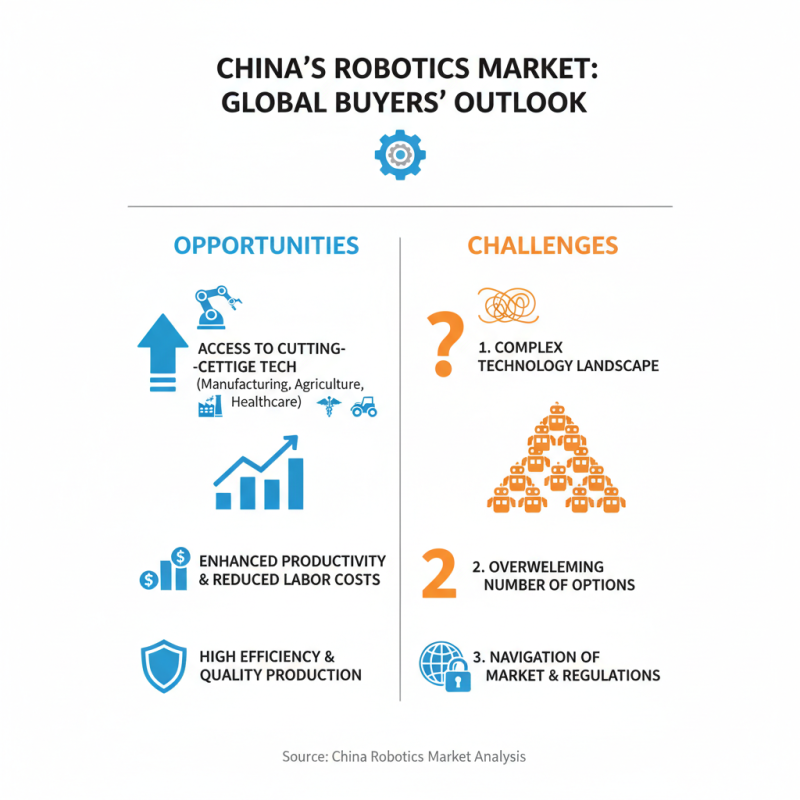
China’s advanced robotics market presents unique opportunities and challenges for global buyers. The rapid growth in automation is reshaping industries. Buyers now have access to cutting-edge robotics in manufacturing, agriculture, and healthcare. These robots enhance productivity and reduce labor costs. Companies can achieve high efficiency in production lines. However, understanding the technology landscape is crucial. The sheer number of robots available can overwhelm potential buyers.

The challenge lies in ensuring reliability and quality. Not all manufacturers adhere to global standards. Buyers must conduct thorough due diligence. This includes evaluating the technical support and service infrastructure. A lack of established quality assurance processes could lead to costly setbacks. Additionally, navigating the language and cultural differences in partnerships may be complex. Engaging with reliable local partners can help mitigate these risks.

Another consideration is the pace of innovation. Robotics technology evolves quickly. Staying informed about emerging trends is vital for buyers. It’s important to reflect on how quickly systems may become obsolete. Strategic planning will be essential to avoid investing in outdated technology. Understanding these implications will enable global buyers to make informed decisions in this dynamic market.