
01302 246818

Why Choose an HDD Machine for Global Projects?

Why Choose an HDD machine for Global Projects?

Global infrastructure is moving underground, and project owners increasingly need methods that reduce surface disruption. The International Telecommunication Union reported that 5.4 billion people used the internet in 2023. That connectivity depends on reliable fiber networks, often installed beneath roads, railways, and developed districts. The International Energy Agency’s Electricity 2024 report also expects electricity demand to grow through 2026, increasing pressure on utility developers. An HDD machine can install conduits and pipelines while preserving much of the surrounding surface.

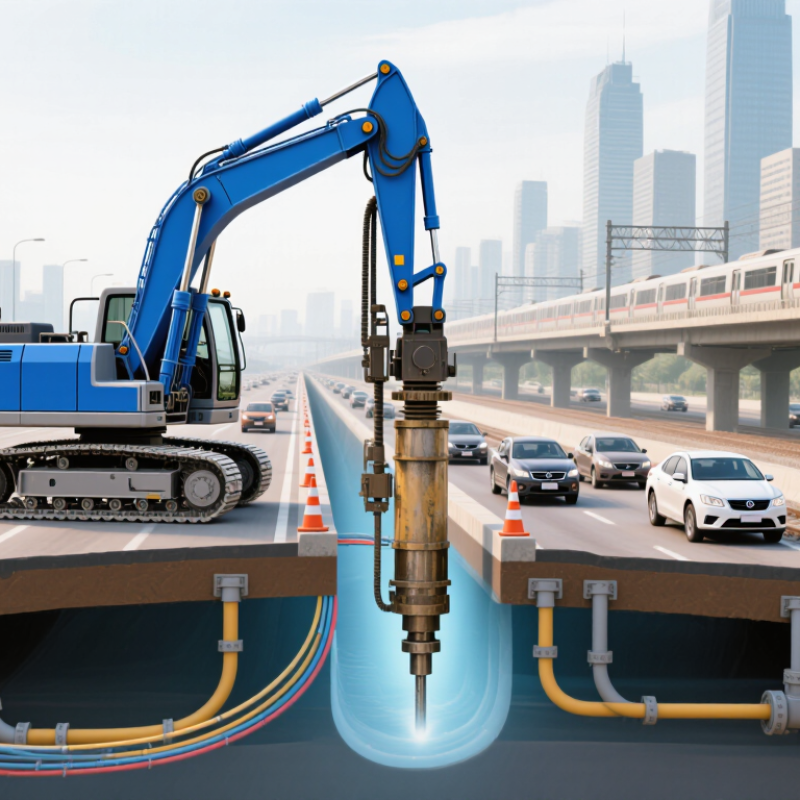
The advantages are practical. A compact rig can launch beside a busy highway, steer beneath obstacles, and complete a bore with fewer open trenches. This may reduce traffic closures, reinstatement work, noise, and disruption to businesses. Federal Highway Administration guidance recognizes trenchless construction as a useful option where conventional excavation creates substantial social or environmental impacts. However, good results depend on more than equipment size. Soil investigation, drilling-fluid management, entry angles, utility locating, and accurate tracking remain essential.

No method is perfect.

Rock, cobbles, unstable formations, and restricted working areas can quickly change the cost calculation. A machine selected from a brochure may perform poorly on unfamiliar ground. The Global Infrastructure Hub has repeatedly highlighted the complexity of delivering infrastructure across different markets, regulations, and site conditions. Therefore, international contractors should compare torque, pullback force, tooling, service support, operator training, and local standards before choosing an HDD machine. Reports provide direction, not certainty. Field experience still matters. Sometimes, a smaller and carefully controlled rig is safer than the most powerful option.
Why Choose an HDD Machine for Global Projects?

What Is an HDD Machine and How Does It Work?

Why Choose an HDD Machine for Global Projects?

What Is an HDD Machine and How Does It Work?

A Horizontal Directional Drilling machine installs underground utilities without opening a continuous trench. It uses a drill head, hydraulic thrust, rotation, tracking tools, and drilling fluid. The process has three practical stages: pilot boring, hole enlargement, and product pullback.

During pilot boring, the drill head follows a planned underground path. An electronic sonde sends depth and direction data to the surface. Operators then steer around roads, railways, rivers, and existing utilities. Reaming enlarges the pilot hole. Finally, the machine pulls back a cable, pipe, or conduit through the prepared bore.

The U.S. Federal Highway Administration’s HDD guidance identifies these stages as core controls for safe, predictable installation. The EPA’s 7th Drinking Water Infrastructure Needs Survey estimates $625 billion in U.S. drinking-water investment over 20 years. That scale explains the demand for lower-disruption methods. However, HDD is not automatically the best choice. Groundwater, cobbles, unstable soil, and poor drilling-fluid control can change the plan quickly.

A 2024 Global Market Insights assessment places the HDD equipment market above $8 billion, although commercial estimates vary by methodology. That uncertainty deserves attention. Experienced contractors still verify geotechnical data, bore length, bend radius, and local standards before selecting equipment. A powerful machine cannot correct an incomplete site investigation. Even small tracking errors can become expensive underground problems.

Which Global Project Conditions Suit HDD Machines?

Why Choose an HDD Machine for Global Projects?

Which Global Project Conditions Suit HDD Machines?

HDD machines suit projects where open excavation would cause major disruption. They work well beneath busy roads, railways, rivers, and protected landscapes. A narrow entry pit and exit pit can reduce surface damage significantly. This matters in dense cities, where traffic delays quickly increase project costs. HDD also supports utility installation across uneven ground and sensitive public areas. However, success depends on more than machine power. Soil reports, groundwater levels, drilling depth, and crossing length require careful review. Rocky or unstable ground may demand different tooling and stronger monitoring.

Tips: Match the machine to the soil. Confirm access for transport, mixing equipment, and spoil handling. Keep an experienced operator involved. Small planning gaps can become expensive delays.

Global projects often face changing weather, limited site access, and different technical standards. A reliable HDD plan should include backup tooling, fluid control, and clear communication between surveyors and crews. Local training is also important, especially when operators are unfamiliar with the ground conditions. We have seen schedules weaken when teams trusted desktop data too much. Field verification remains essential. An HDD machine is a strong choice when the route is long, the surface is valuable, and controlled underground installation is practical. It is not always the best answer. Poor ground knowledge can outweigh its advantages.

How HDD Machines Improve Installation Efficiency and Safety

Why Choose an HDD Machine for Global Projects?

Horizontal directional drilling (HDD) machines improve installation efficiency by reducing surface excavation. Crews can install pipelines, cables, and conduits beneath roads, railways, and waterways. This limits traffic disruption and shortens restoration work.

In field projects, accurate steering is critical. A trained operator monitors depth, drilling angle, ground pressure, and fluid circulation. Real-time tracking helps the crew avoid existing utilities and adjust the bore path early. Smaller work zones also reduce worker exposure to moving vehicles and open trenches. Safety improves. However, HDD is not automatically risk-free. Unstable soil, poor utility records, or incorrect drilling fluid can cause delays and ground movement. Site investigation remains essential.

Tips: Confirm utility locations before drilling. Use a detailed bore plan. Check drilling fluid performance throughout the operation. Keep communication clear between the operator, locator, and site supervisor. A short daily safety briefing can prevent costly misunderstandings.

HDD machines can also reduce project waste and lower restoration costs. Less pavement is removed, and fewer workers operate near deep excavations. Still, efficiency depends on proper equipment selection, operator experience, and local ground conditions. A machine that performs well in compact soil may struggle in fractured rock. This is where planning must remain practical, not optimistic. Record actual production rates and revise future estimates from site evidence.

Why Choose an HDD Machine for Global Projects?

HDD can reduce surface disruption, spoil handling, and traffic interference compared with conventional open-cut installation. The chart uses a normalized planning index, where open-cut installation equals 100; lower values indicate less impact.

Planning benchmark: values are normalized comparisons for typical utility crossings and should be validated against local soil conditions, permitting requirements, utility depth, and project design.

What Factors Determine HDD Machine Selection?

Why Choose an HDD Machine for Global Projects?

What Factors Determine HDD Machine Selection?

Selecting an HDD machine begins with the ground, not the machine catalog. Soil reports, bore length, rock layers, and groundwater conditions shape the decision. A compact unit may suit a narrow urban site. It may struggle in dense clay or fractured rock.

Field teams should compare required pullback force, torque, drilling fluid capacity, and maximum bore diameter. These figures need practical margins. A calculation that looks safe on paper can fail when soil conditions change. I have seen projects lose time because entry space was underestimated. Access roads, turning areas, spoil control, and equipment transport deserve equal attention.

Local regulations also influence selection. Noise limits, traffic controls, fluid disposal rules, and utility clearance requirements vary between regions. Operators need verified training and clear maintenance procedures. Reliable service support matters when a pump fails far from a major city. Spare parts should be available through legal and traceable channels.

Project managers should also examine fuel use, automation features, monitoring accuracy, and crew experience. More power is not always better. Excessive capacity can increase transport costs and complicate setup. A smaller machine may improve control, but only when production targets remain realistic. Weather creates another variable. Wet ground can make a suitable design suddenly inefficient. That possibility should stay visible during planning.

Why Choose an HDD Machine for Global Projects? - What Factors Determine HDD Machine Selection?

Typical planning ranges for horizontal directional drilling projects. Actual values depend on ground conditions, design requirements, local regulations, and project-specific engineering.
Selection Factor Why It Matters on Global Projects Typical Data or Range Recommended Machine Characteristics Priority
Installation Length Longer crossings require sufficient thrust, pullback capacity, drilling-fluid management, and rod storage. Small utility crossings: approximately 30–150 m; medium projects: approximately 150–600 m; larger crossings may exceed 600 m. Match rated thrust and pullback to the bore length, product size, soil resistance, and required safety margin. High
Product Diameter and Type Cable, water, gas, and telecommunications installations have different pullback, bending, and buoyancy requirements. Common utility installations range from small ducts below 100 mm to pipelines above 500 mm in outside diameter. Select adequate pullback force, torque, reaming capacity, and tooling compatibility for the final product. High
Ground Conditions Soil and rock conditions affect cutting tools, drilling-fluid pressure, steering accuracy, and bore stability. Typical conditions include clay, sand, gravel, mixed ground, weathered rock, and competent rock. Use interchangeable tooling, variable torque, suitable drilling-fluid circulation, and rock-capable options where required. Critical
Thrust and Pullback Force The machine must overcome friction, soil resistance, borehole curvature, and product installation loads without overloading the pipe or cable. Compact machines may provide tens of kilonewtons; larger systems can provide several hundred kilonewtons. Choose a rated capacity above the calculated installation load, with allowance for changing ground conditions. Critical
Rotational Torque Higher torque supports larger reamers, dense soils, gravel, and rock drilling, but may increase equipment size and operating cost. Light-duty systems may be below 5,000 N·m; medium and heavy-duty systems commonly provide higher torque levels. Select torque according to tooling diameter, formation strength, and required steering performance. High
Drilling Fluid System Drilling fluid cools and lubricates tooling, transports cuttings, stabilizes the bore, and reduces pullback resistance. Flow requirements vary widely, from low-flow utility work to several hundred litres per minute for larger bores. Provide adjustable flow and pressure, mixing capacity suited to the bore size, and filtration or recycling where practical. Critical
Steering and Guidance Accurate tracking helps avoid existing utilities, environmental constraints, roads, railways, rivers, and restricted work zones. Guidance methods may include walkover locating, wireline guidance, or gyro-based systems for difficult or deep crossings. Use a guidance system appropriate for depth, magnetic interference, drilling fluid, and required positional tolerance. Critical
Site Access and Footprint Urban streets, narrow easements, environmentally sensitive areas, and remote sites can limit equipment size and setup options. Working areas vary by machine and bore design; compact setups generally reduce traffic disruption and temporary land use. Prioritize compact dimensions, low ground pressure, transportability, and flexible anchoring or setup arrangements. High
Power and Fuel Efficiency Remote projects may face limited fuel supply, high transport costs, or strict emissions requirements. Diesel power is common for mobile equipment; electric or hybrid support may be suitable where grid access and regulations allow. Select power output for peak drilling loads while considering fuel consumption, idle control, emissions, and serviceability. Medium
Rod Length and Bend Radius Rod geometry influences setup length, bore profile, steering control, and the minimum allowable curvature. Rod lengths commonly fall within approximately 3–10 m, depending on machine class and transport constraints. Match rod strength, connection design, flexibility, and allowable bend radius to the planned alignment. High
Safety and Compliance International projects must address worker safety, underground utility clearance, drilling-fluid containment, noise, and environmental controls. Requirements differ by jurisdiction and may include guarding, emergency stops, noise limits, spill control, and utility-locating procedures. Choose equipment with documented safety systems, clear operating procedures, emergency controls, and compliance support. Critical
Transport and Logistics International deployment depends on shipping dimensions, lifting points, customs documentation, spare parts, and local haulage capacity. Transport limits commonly include road axle-load restrictions, container dimensions, crane capacity, and regional access conditions. Favor modular components, documented weights and dimensions, standard lifting points, and readily available consumables. High
Maintenance and Operator Support Downtime can be costly when projects operate far from major service centers or across multiple regulatory regions. Key considerations include preventive maintenance intervals, technician availability, spare-parts lead time, and operator training. Select robust, serviceable equipment with diagnostic access, multilingual documentation, training, and a practical spare-parts plan. High
Total Project Cost The lowest purchase price may not provide the lowest installed cost once transport, tooling, fluid, labor, fuel, downtime, and restoration are included. Evaluate total cost of ownership over the project life rather than comparing equipment price alone. Balance productivity, reliability, fuel use, consumables, residual value, rental alternatives, and expected utilization. Critical

How to Plan HDD Operations Across Different Regions

Why Choose an HDD Machine for Global Projects?

Planning HDD operations across regions requires more than selecting equipment by pullback force. Soil, climate, utility density, permits, and local skills can change the design overnight. UN-Habitat’s World Cities Report 2022 estimates that 56% of people already live in cities. That share may reach 68% by 2050. Congested streets make trenchless installation increasingly practical.

Start with a regional survey, not a machine brochure. Review bore logs, groundwater levels, traffic limits, and existing utility records. In urban areas, confirm locating methods and potholing requirements before mobilization. The ASCE 38-22 standard provides a useful framework for utility information quality. Still, records can be incomplete. A neat map may hide an old service line.

Digital connectivity also affects planning. ITU’s Facts and Figures 2023 reports that 67% of the global population used the Internet. This growth increases demand for fiber conduits and resilient network routes.

Select machines according to ground conditions, bore length, product diameter, and recovery access. In rocky regions, plan for stronger tooling and slower production. In soft soils, manage fluid pressure carefully.

Local crews should understand safety procedures, environmental controls, and emergency communication.

Weather deserves its own line in the schedule. Heavy rain can flood entry pits and weaken access roads. Heat can change fluid performance and worker capacity.

A regional contingency plan should include spare tooling, alternate suppliers, and extra restoration time.

The first plan will probably be imperfect. That is acceptable, if field feedback changes the next bore.