Why Choose a Cold Foil Printing Machine?
Choosing a Cold Foil Printing Machine can help packaging and print teams add metallic detail without relying on traditional hot stamping. The process typically transfers foil onto a printed adhesive layer, allowing designs to combine reflective accents with ordinary inks. Depending on the press configuration, cold foil units may operate inline with offset or flexographic printing. That can reduce extra handling, though results depend on the full production setup.
Imagine a carton with a bright silver logo, fine lines, and a matte background. Registration, adhesive coverage, substrate surface, and curing all affect how clean those details appear. Even a slight misalignment can soften an edge or make a narrow line look uneven. Small changes matter. A well-matched machine can support repeatable output, but it cannot correct poor artwork or inconsistent materials by itself. Operators still need time for setup, inspection, and adjustments.
The practical question is not simply whether foil looks impressive. It is whether the equipment suits the job volume, substrate range, available press space, and finishing requirements. Foil use can also add material and process costs, so samples and production trials are useful before committing to a specification. We should be honest: a metallic finish will not improve every design, and complex details may need revision. This guide explores the advantages, limitations, and selection factors behind a Cold Foil Printing Machine, so buyers can compare options with clearer expectations.
How Does a Cold Foil Printing Machine Work?
Why Choose a Cold Foil Printing Machine?
How Does a Cold Foil Printing Machine Work?
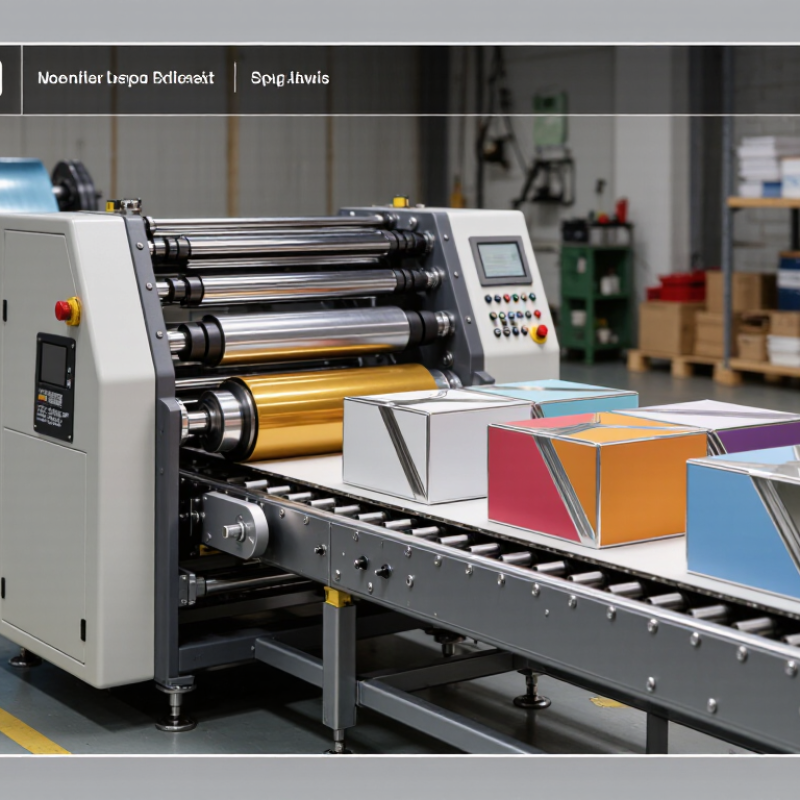
Cold foil decoration is a transfer process, not a heated stamping process. On a typical inline press, a printing unit lays UV-curable adhesive onto selected areas of paperboard, label stock, or another compatible substrate. The foil web then meets the adhesive at a pressure nip.
The press holds the layers together while UV light cures the adhesive, often through the foil’s transparent carrier. The cured adhesive bonds the metallic layer to the printed areas. The carrier film then separates and winds onto a take-up roll, leaving foil only where adhesive was applied. No heated die is needed. Small details matter: uneven pressure, poor registration, or unsuitable stock can leave gaps or soft edges.
Smithers’ 2022 study, The Future of Packaging Printing to 2027, projected the packaging print market would reach $551.3 billion by 2027. That figure describes a broad market, not proof that cold foil suits every job. Still, it shows why efficient finishing options draw attention. Cold foil can work well for fine lines and repeatable designs, but it is not magic. Test the actual substrate and artwork before a full production run; reflective finishes can expose flaws that ordinary ink hides.
Why Choose a Cold Foil Printing Machine? - How Does a Cold Foil Printing Machine Work?
| Dimension | Cold Foil Printing | How It Works or Why It Matters |
| Foil transfer method | Foil is transferred where a pattern of adhesive has been printed. | The adhesive defines the areas that receive the metallic foil. |
| Typical process sequence | Print adhesive, bring the foil into contact with the substrate, apply pressure at a nip, then separate the carrier film. | The foil remains on the adhesive-coated image areas; unused foil stays on the carrier. |
| Adhesive curing | UV-curable adhesive is commonly used; other systems may be available depending on the press and materials. | Curing requirements must be matched to the adhesive, substrate, and press configuration. |
| Heat requirement | The transfer process does not require a heated stamping die. | This distinguishes cold foil from hot stamping, which uses a heated die to transfer foil. |
| Press integration | Can be integrated inline with compatible printing presses and finishing units. | Inline production can combine foil application with printing steps in one press pass. |
| Image detail and registration | Foil placement follows the printed adhesive image; achievable detail and registration depend on press capabilities and setup. | Accurate plate alignment, stable substrate handling, and suitable adhesive coverage help control the result. |
| Overprinting | Foil can be combined with printing inks in compatible workflows. | Ink and foil sequencing, adhesion, and curing should be tested for the specific job. |
| Common applications | Labels, cartons, folding cartons, and other printed packaging or promotional materials. | Metallic accents can highlight logos, text, borders, and decorative graphic elements. |
| Material compatibility | Performance varies with the substrate, adhesive, foil construction, and surface condition. | A production trial is useful for checking adhesion, appearance, and downstream finishing compatibility. |
| Key setup checks | Check adhesive coverage, curing, nip pressure, web or sheet alignment, foil tension, and carrier release. | These process variables affect transfer consistency and should be set according to the equipment and consumable specifications. |
What Features Define a Cold Foil Printing Machine?
A cold foil printing machine is defined by controlled transfer, not heat. It applies a patterned adhesive to the substrate, brings foil into contact, then releases the carrier film. Foil remains only where adhesive has been printed. Many systems use UV-curable adhesive, so curing consistency matters. A stable foil unwind, accurate web tension, and precise registration help keep fine lettering and borders aligned. Registration matters. On press, even a small shift can leave a visible halo around type.
Look for adjustable pressure, reliable curing, and controls that match the press speed and substrate. Paperboard, label stock, and film can behave differently, so a setup that works on one material may need adjustment on another. The machine should also support inspection and practical changeovers; setup waste still counts. Smithers’ The Future of Global Packaging to 2024 forecast the global packaging market would grow from $917 billion in 2019 to $1.05 trillion in 2024. That forecast signals the scale of packaging demand, not guaranteed demand for foil effects. Cold foil can add bright metallic detail without a heated die, but it still depends on adhesive, surface quality, and operator settings. It is not magic. Test the actual artwork and stock before committing to a run.
What Benefits Does Cold Foil Printing Offer?
Cold foil printing adds a reflective finish without a heated stamping die. On many presses, foil transfers inline with the print process, helping reduce separate finishing steps. It can also support fine text, gradients, and colored effects when printed inks sit over the foil. A small silver highlight on a bottle label or carton can catch light quickly. The effect is practical, not just decorative: it helps key details stand out on crowded shelves.
Smithers’ report, The Future of Global Packaging to 2028, valued the global packaging market at about $1.17 trillion in 2023 and projected growth to $1.42 trillion by 2028. That broad market forecast does not prove demand for foil itself. It does, however, underline why converters seek flexible ways to differentiate packaging. Cold foil can suit short-to-medium runs where a vivid metallic area matters, while avoiding the cost of a custom hot-stamping die.
There are trade-offs. Adhesive coverage, foil tension, and press registration need close control; small shifts can soften edges or expose gaps. Heavy foil coverage may also affect recycling choices, depending on the package structure and local systems. Not magic. A press trial on the actual substrate is still wise, because paperboard, film, and coatings can behave differently.
Which Industries Use Cold Foil Printing Machines?
Cold foil printing machines serve industries where shelf impact and fine detail matter. Packaging is a major user. Folding cartons for cosmetics, personal care products, and premium foods often use metallic accents on logos, borders, or small illustrations. A silver highlight beside a matte color can make a carton feel more dimensional without covering the whole panel. It catches the eye.
Label converters also use cold foil for beverage, household, and specialty product labels. The process can place foil near printed text and graphics, which helps keep designs crisp on narrow labels. Commercial printers may apply it to book covers, invitations, promotional pieces, and product inserts. Results depend on the paper or film, adhesive, ink sequence, and machine setup; a sample run is a sensible check before a large order.
Some manufacturers choose cold foil for flexible packaging, though each material needs testing for adhesion and finishing performance. Operators must watch registration closely, especially when foil meets fine type or detailed artwork. Small shifts show. It is not the right choice for every job: simple designs may not justify the added setup, and textured or unsuitable surfaces can produce uneven transfer. Choosing the process means weighing visual effect against substrate behavior, run length, and finishing requirements.
What Factors Should Guide Your Machine Selection?
Choosing a cold foil printing machine starts with the work it must actually run. Define your substrates, web width, target speed, foil coverage, and required registration tolerance. PMMI’s 2023 State of the Industry report estimated U.S. packaging machinery shipments at $10.9 billion in 2022 and projected $11.5 billion for 2023. These figures cover packaging machinery overall, not cold-foil units, but they show why capacity and operating costs deserve careful scrutiny.
Check whether the machine handles your paperboard or film without curl, scuffing, or unstable tension. Ask for registration data at your planned running speed, not only at a slow demonstration pace. Run a real job. Compare foil transfer, adhesive curing, make-ready time, and waste across several repeat runs. A test on your actual stock is more useful than a polished sample on unfamiliar material.
Also examine operator access, changeover steps, inspection systems, and local service support. Request documented energy use and practical maintenance intervals; quoted maximum speed alone says little about daily output. I would leave room for future job changes, but avoid paying for capacity that stays idle. The right choice depends on repeatable results, not the most impressive specification sheet.