What is a Wafer Roll Machine and How Does it Work?
The Wafer Roll Machine is an essential piece of equipment in the food industry. It is designed to create crispy wafer rolls, a popular snack enjoyed by many. Understanding how this machine works can deepen our appreciation for this tasty treat.
This machine operates through a series of precise steps. Dough is mixed and shaped, then cooked on heated plates. The process seems simple, yet it requires careful calibration. Small variations can lead to uneven or subpar products. A well-functioning Wafer Roll Machine is critical for maintaining quality.
However, this technology also presents challenges. Managing production efficiency while ensuring consistent taste can be difficult. Continuous monitoring is necessary to uphold standards. Perhaps we should reflect on how we can improve these processes further. The art of creating the perfect wafer roll is as fascinating as it is complex.
What is a Wafer Roll Machine?
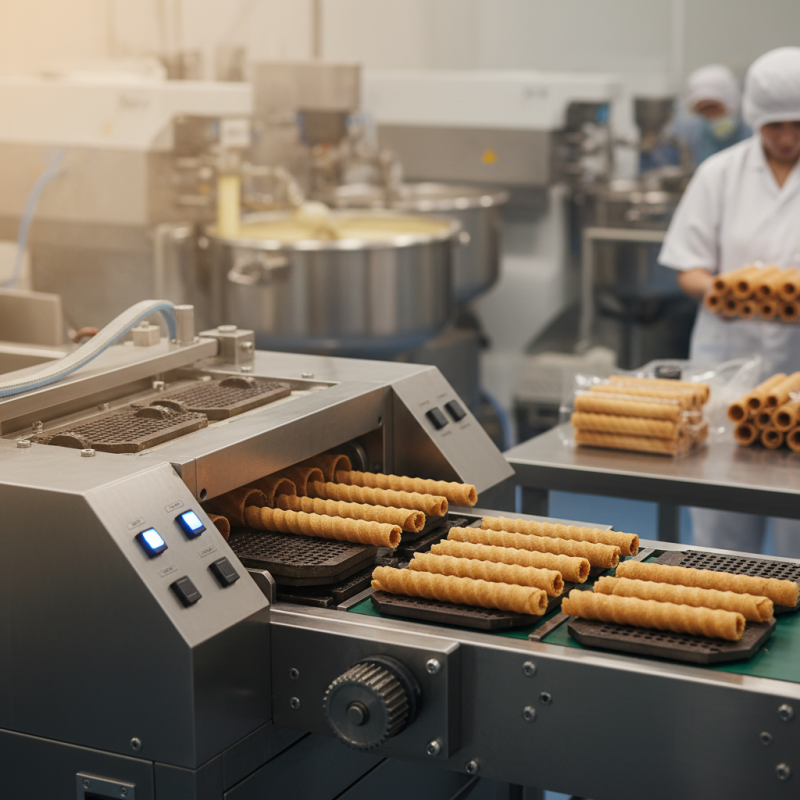
A wafer roll machine is a specialized device used to create thin, crispy rolls. These rolls are often filled with delicious cream, chocolate, or other savory fillings. The machine functions by mixing ingredients to create a batter. This batter is then poured onto a heated plate, where it cooks evenly.
Once cooked, the wafer is carefully removed. It is placed onto a cylindrical mold before it cools. The process is delicate and requires precise control of temperature and timing. The thickness of the wafer and the speed of rolling must be monitored closely. Small adjustments can lead to dramatic changes in the final product.
The beauty of a wafer roll machine lies in its simplicity. However, it can be challenging to achieve consistency. Operators need to be attentive and skilled. Even a slight error in batter thickness can result in uneven rolls. Constant practice and adjustment are key to mastering this art.
Key Components of a Wafer Roll Machine
A wafer roll machine is essential in producing delicate, crispy snacks. The machine's key components play a crucial role in its efficiency and output quality. Typically, these machines consist of a batter mixing unit, a baking oven, and a rolling station. Each part must work harmoniously to ensure consistency.
The batter mixing unit blends ingredients accurately. A report from the International Snack Industry indicates that proper mixing enhances texture and taste, crucial for consumer satisfaction. The baking oven uses precise temperature controls to create that golden crisp. Variations can affect the final product. Monitoring this closely is vital. Studies show that inconsistency in baking can lead to an increase in product waste.
Finally, the rolling station shapes the baked wafers into perfect rolls. This is where skilled operators make a difference. They ensure even rolling and avoid breakage. In fact, machines can yield between 500 to 1000 rolls per hour under optimal conditions. However, even advanced machines can experience technical issues, like uneven rolling or temperature fluctuations. Addressing these challenges is key to successful production. Consistent inspection and maintenance improve output quality.
The Process of Making Wafer Rolls
The process of making wafer rolls begins with selecting high-quality ingredients. Flour, sugar, and vegetable oil are primary components. The choice of ingredients affects the final taste and texture. Sugar accounts for about 25% of the mixture, providing sweetness and aiding in caramelization during baking. This step demands precise measurement and mixing.
Once the batter is ready, it is spread onto a heated cast or plate. The temperature typically hovers around 200°C. It bakes quickly, often within a few minutes. The result is a thin, crispy sheet. This phase requires careful timing. Overbaking can lead to a bitter flavor, while underbaking yields a soggy product.
After baking, these sheets are rolled while still warm. A specialized machine aids this process, ensuring consistency. Reports indicate that well-designed machines can increase productivity by up to 30%. However, frequent maintenance is critical. Clogged machines may disrupt operations, highlighting the importance of regular check-ups. Quality control measures must be in place to ensure uniformity in every batch. This process is more complicated than it appears, demanding focus and precision at every step.
Applications of Wafer Roll Machines in the Food Industry
Wafer roll machines have become integral in the food industry. These machines create thin, crispy wafers that are often used to make cones and cylinders. They offer versatility unique to snack foods. By using these machines, manufacturers can produce a wide variety of flavors and textures, appealing to different consumer preferences.
In bakeries and snack companies, wafer roll machines allow for efficient production. They can create large batches quickly, saving time. However, this can lead to inconsistent product quality if not monitored closely. Operators must pay attention to temperature and ingredients. Small changes can greatly impact the final product, making precision essential.
Moreover, wafer rolls are used in desserts and ice cream cones. Their light and crispy texture complements other sweets perfectly. While these rolls are popular, businesses must innovate to stand out. Experimenting with flavors and designs can attract more customers. Yet, this experimentation carries risks. Not every new idea will succeed. It requires careful planning and market research to gauge potential success.
Applications of Wafer Roll Machines in the Food Industry
Advantages of Using Wafer Roll Machines
Wafer roll machines are increasingly popular in the food industry. They produce delicious, crispy wafer rolls. These machines are efficient and versatile, making them ideal for various snacks. One significant advantage is their ability to create unique shapes and flavors. This attracts customers looking for something new and tasty.
Efficiency is another key benefit. Wafer roll machines can produce large quantities in a short time. This helps businesses meet high demand without sacrificing quality. They also require less manual labor, allowing staff to focus on other tasks. However, adjusting the machine settings can be tricky and may require practice.
Another advantage is cost savings. Although the initial investment might be high, the long-term savings can be significant. Businesses can reduce waste and improve production consistency. Yet, some operators may struggle with maintenance and upkeep. Regular checks are necessary to keep the machine running smoothly. Balancing efficiency with proper care is essential for optimal performance.