
01302 246818

Top 10 Types of Specialty Batteries for Global Buyers

Specialty Batteries are designed for demanding jobs where ordinary cells may fail. Think of a surgical monitor, an aircraft beacon, or a remote weather sensor. Each application requires a different balance of energy, power, size, safety, shelf life, and temperature resistance. That balance shapes this guide to the Top 10 Types of Specialty Batteries for Global Buyers.

Market data shows why careful selection matters. The International Energy Agency reported that global electric vehicle battery demand exceeded 750 GWh in 2023. BloombergNEF also recorded an average lithium-ion pack price of 139 dollars per kWh that year. These figures describe mainstream battery progress, not every specialty application. Medical, aerospace, industrial, and emergency systems often prioritize reliability over the lowest purchase price. A cheaper battery can create expensive downtime.

Battery scientist M. Stanley Whittingham described lithium batteries as “a very complicated system” in a Nobel Prize interview. That warning still applies. Chemistry alone does not determine performance. Packaging, battery management, transport conditions, certification, and supplier traceability matter equally. Buyers should compare verified datasheets, test reports, cycle-life evidence, and field experience. IEC requirements may apply, but the correct standard depends on the product and market.

No shortlist is perfect. Applications evolve. A battery that performs well in a warehouse may struggle inside a freezing sensor station. This article examines ten specialty battery categories, including lithium primary, lithium-ion, silver-oxide, nickel-metal hydride, thermal, and medical-grade solutions. The goal is practical comparison, not a simplistic winner. Reliability is application-specific. Testing remains essential.
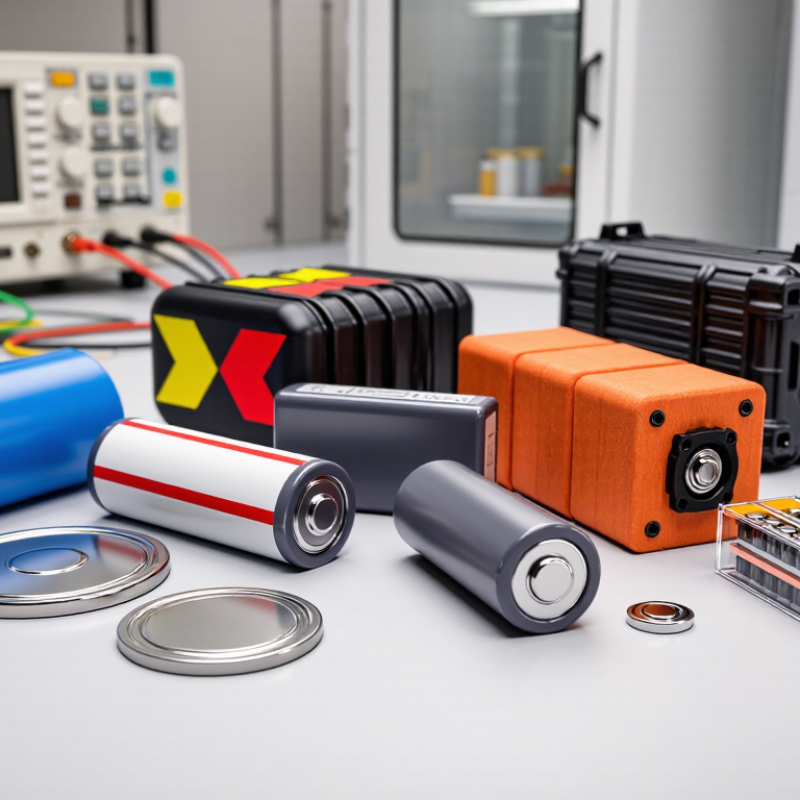
Top 10 Types of Specialty Batteries for Global Buyers

Specialty Battery Taxonomy: IEC 60086, Wh/kg, Cycle Life, and Safety

Top 10 Types of Specialty Batteries for Global Buyers

Specialty battery taxonomy begins with chemistry and application. IEC 60086 mainly addresses primary batteries, not every rechargeable design. It supports consistent checks for dimensions, terminals, markings, and performance.

Common categories include alkaline, zinc-carbon, lithium primary, silver-oxide, zinc-air, NiMH, NiCd, lithium-ion, lithium iron phosphate, and sodium-ion batteries. Each serves a different operating profile.

Wh/kg Wh/kg measures stored energy against battery weight. It matters for medical equipment, sensors, drones, and portable instruments. A high figure does not guarantee better purchasing value.

Cycle life Cycle life shows how many charge and discharge cycles a rechargeable cell can complete. Test temperature, load, charging speed, and cutoff voltage can change the result.

Published numbers are useful, but sometimes too clean. Real operating data is messier.

Safety screening Safety screening should examine thermal behavior, venting, short-circuit response, leakage, and physical damage tolerance.

A coin cell may power a meter for years, while a lithium-ion pack may need protection electronics and monitored charging. NiMH often suits repeated-use devices with moderate energy demands. NiCd can perform reliably in harsh conditions, though environmental restrictions may apply in some markets. Lithium iron phosphate usually offers strong thermal stability, but its lower voltage affects system design.

Buyers should request test conditions, production dates, transport documents, and sample inspection records. A spreadsheet can look precise. The battery may still disappoint.

Primary Cells: Li-SOCl₂ at 500–700 Wh/kg, Li-MnO₂, Silver-Oxide, and Zinc-Air

Specialty primary cells support meters, trackers, alarms, and medical monitoring devices where replacement is difficult. Li-SOCl₂ chemistry is valued for very low self-discharge and long shelf life. Published energy figures around 500–700 Wh/kg can be attractive, but real performance depends on load, temperature, and pack design. It is not a universal answer. High pulse demands may require a capacitor or a hybrid design.

Li-MnO₂ cells provide stable voltage and useful pulse capability for cameras, sensors, and compact electronics. They often suit applications needing reliable energy in a small package.

Silver-oxide cells deliver a notably flat discharge curve, helping precision instruments maintain consistent readings. Their compact size is useful, although cost can limit large-volume designs.

Zinc-air cells offer high theoretical energy density through oxygen from the surrounding air. Their vents matter. Humidity, airflow, and activation time can affect practical results.

In field evaluations, buyers should compare discharge curves rather than headline capacity alone. Check storage temperature, pulse current, leakage risk, and connector compatibility. A common mistake is testing only at room temperature. Cold conditions can change the result sharply. Ask suppliers for recent test data, safety documentation, and lot traceability. I would also question unusually high energy claims without defined test conditions. Specifications are useful, but the device’s real duty cycle decides the better chemistry.

Rechargeable Cells: Li-Ion at 150–250 Wh/kg, LiFePO₄, NiMH, and NiCd

For global buyers, rechargeable cells remain the practical core of specialty battery design. Conventional lithium-ion cells commonly provide 150–250 Wh/kg, according to U.S. Department of Energy battery technology reviews. They suit portable instruments, medical equipment, robotics, and compact backup systems. However, real-world capacity falls with cold temperatures, aging, high discharge rates, and protective limits. The number looks attractive. It is not the whole specification.

LiFePO₄ cells usually deliver lower energy density than nickel-rich lithium-ion chemistries. The International Energy Agency’s Global EV Outlook 2024 reports that LFP technology generally offers lower density but stronger thermal stability and lower material costs. NiMH cells typically provide about 60–120 Wh/kg, with reliable performance across repeated cycles. NiCd cells can tolerate harsh charging and high discharge loads, but they have lower energy density and raise serious recycling concerns because of cadmium. Regional rules must be checked before importing them. Some older assumptions need review.

Tips: Ask suppliers for cell-level and pack-level figures separately. Request capacity tests at the intended temperature and discharge rate. Check cycle-life data, storage limits, safety testing, and traceability records. IEC 61960 and IEC 62133-based documentation can improve comparison quality. Do not compare only watt-hours. A slightly heavier LFP pack may perform better in heat, vibration, and daily cycling. Supplier data can also be optimistic, so independent sample testing is worth the cost.

Next-Generation Systems: Solid-State and Flow Batteries with 2,000+ Cycles

Top 10 Types of Specialty Batteries for Global Buyers

Solid-state batteries are attracting buyers seeking higher safety and energy density. Their solid electrolytes can reduce leakage and thermal-risk concerns. However, 2,000+ cycles remain a performance target, not a universal result. The International Energy Agency’s Global EV Outlook 2024 notes that solid-state systems remain largely pre-commercial. Laboratory results can also differ sharply from field performance.

Flow batteries offer a different path. Their energy capacity depends on electrolyte volume, while power depends on the stack. This design supports easier scaling for stationary applications. The U.S. Department of Energy’s Long Duration Storage Shot identifies flow batteries as candidates for storage lasting over ten hours. Several technical assessments report potential lifetimes above 10,000 cycles under controlled operating conditions. That matters for solar farms, microgrids, and industrial backup systems.

Cycle count alone is not enough. Buyers should examine depth of discharge, round-trip efficiency, temperature range, maintenance, and electrolyte recovery. A system rated above 2,000 cycles may perform poorly if operated aggressively every day. It happens. Test conditions need careful review. IDTechEx’s 2024 analysis of solid-state batteries also highlights manufacturing scale and interface stability as major barriers. Procurement teams should request third-party test data, warranty assumptions, and measured capacity retention before comparing quotations.

Global Buyer Standards: UN 38.3 Testing, 10-Year Shelf Life, and IP Ratings

For global buyers, specialty battery selection begins with transport evidence, not a catalogue image. The IATA 2025 Lithium Battery Guidance Document references UN 38.3 testing for lithium battery shipments. The test series covers altitude simulation, thermal cycling, vibration, shock, external short circuit, impact, overcharge, and forced discharge. A credible report should identify the exact cell, pack, chemistry, laboratory, and test revision. Vague certificates create expensive delays. Documentation matters.

A 10-year shelf-life claim needs careful questioning. Storage temperature, state of charge, humidity, and connector leakage can change real results. The 2024 IEA Global EV Outlook reported battery demand above 750 GWh in 2023, showing why quality systems and traceability now matter across the supply chain. However, that figure does not prove every specialty battery lasts ten years. Buyers should request accelerated-aging data, calendar-life curves, and retained-capacity limits. The assumption is convenient, but often wrong.

IP ratings must match the installation, not the sales language. Under IEC 60529, IP67 means dust-tight protection and temporary immersion up to one meter. IP68 depends on the manufacturer’s declared depth and duration. It does not automatically guarantee resistance to impact, salt spray, chemicals, or repeated pressure washing. I have seen specifications copy “IP68” without defining test conditions. Require the enclosure drawing, gasket material, test depth, immersion time, and post-test electrical results. Small details expose large risks.

Top 10 Types of Specialty Batteries for Global Buyers - Global Buyer Standards: UN 38.3 Testing, 10-Year Shelf Life, and IP Ratings

Battery Type Typical Nominal Voltage Typical Energy Density Typical Shelf Life* 10-Year Shelf-Life Potential UN 38.3 Requirement Typical IP Rating for a Sealed Pack** Common Specialty Applications Key Buyer Considerations
Lithium-Ion NMC
Rechargeable
3.6–3.7 V per cell 150–250 Wh/kg 2–5 years stored at partial charge and moderate temperature Generally not as a full-charge, ready-to-use pack; possible with controlled storage and capacity management Yes, for cells and batteries offered for transport IP65–IP67, enclosure-dependent Portable instruments, robotics, medical equipment, backup systems Requires BMS, thermal protection, over-charge protection, and transport documentation
Lithium Iron Phosphate (LiFePO4)
Rechargeable
3.2–3.3 V per cell 90–160 Wh/kg 3–8 years under suitable storage conditions Potentially yes for low-rate standby designs with periodic maintenance Yes, for cells and batteries offered for transport IP65–IP67, enclosure-dependent Solar storage, telecom backup, industrial equipment, mobility systems Good thermal stability and cycle life; pack life depends strongly on temperature and state of charge
Lithium-Titanate (LTO)
Rechargeable
2.3–2.4 V per cell 50–90 Wh/kg 5–10 years in controlled standby service Often feasible for long-life industrial systems when correctly maintained Yes, for cells and batteries offered for transport IP65–IP67, enclosure-dependent Fast-charge vehicles, grid support, harsh-environment equipment Very high cycle capability and low-temperature performance; lower energy density and higher cost are common trade-offs
Lithium-Thionyl Chloride (Li-SOCl2)
Primary
3.6 V per cell 400–700 Wh/kg 10–20 years, depending on cell design and storage conditions Yes; one of the leading chemistries for long-life, low-drain devices Yes, when shipped as a lithium metal cell or battery IP67–IP68, pack and potting dependent Remote meters, utility monitoring, alarms, tracking devices Excellent low-rate service life; pulse loads may require a capacitor or hybrid pulse design
Lithium Manganese Dioxide (Li-MnO2)
Primary
3.0 V per cell 200–330 Wh/kg 5–10 years, depending on format and temperature Possible for low-drain products with validated leakage and capacity retention Yes, when shipped as a lithium metal cell or battery IP65–IP67, pack and enclosure dependent Cameras, medical devices, emergency equipment, memory backup Good shelf life and pulse capability; lithium-metal transport rules must be reviewed
Nickel-Metal Hydride (NiMH)
Rechargeable
1.2 V per cell 60–120 Wh/kg 1–3 years before recharge may be needed Generally no without periodic recharge and capacity verification Not normally subject to UN 38.3 as a non-lithium chemistry; other transport rules may apply IP54–IP67, enclosure-dependent Emergency lighting, handheld equipment, industrial instruments Lower environmental concerns than cadmium-based systems; relatively high self-discharge unless low-self-discharge cells are used
Nickel-Cadmium (NiCd)
Rechargeable
1.2 V per cell 40–60 Wh/kg 3–5 years in proper storage, with periodic maintenance where required Not typically a maintenance-free 10-year shelf-life solution Not normally subject to UN 38.3 as a non-lithium chemistry; regulations on cadmium and disposal apply IP54–IP67, enclosure-dependent Aviation, rail, emergency systems, high-temperature industrial equipment Strong high-rate and low-temperature performance; cadmium restrictions are important in many markets
Alkaline Manganese Dioxide
Primary
1.5 V per cell 80–150 Wh/kg 5–10 years under cool, dry storage Possible for selected low-drain products, but datasheet validation is required No, generally not a lithium battery; verify applicable air, sea, and ground rules IP54–IP67 for a sealed device, not for the bare cell Consumer electronics, sensors, alarms, emergency products Widely available and economical; performance decreases at high drain and extreme temperatures
Silver-Oxide
Primary
1.55 V per cell Typically 100–130 Wh/kg 3–10 years, depending on button-cell construction and storage Possible for compact, low-drain products with verified capacity retention No, generally not a lithium battery; button-cell packaging and safety rules still apply IP54–IP67 for the finished device; the bare cell is not IP-rated Watches, precision instruments, medical and measuring devices Stable voltage and compact size; higher material cost and limited high-drain capability
Zinc-Air
Primary
1.4 V nominal 300–400 Wh/kg, system-dependent Typically 2–5 years sealed before activation; shorter after air access Generally no after activation; sealed storage life depends on seal integrity No, generally not a lithium battery; confirm requirements for the finished product IP54–IP67 for the device; air access must remain functional Hearing instruments, specialty sensors, low-power medical devices High practical energy density, but humidity, airflow, activation time, and operating orientation affect performance

* Shelf life: Indicative industry ranges under specified storage conditions. Actual retention depends on temperature, humidity, state of charge, cell format, load profile, packaging, and manufacturer validation. A “10-year shelf life” claim should be supported by documented capacity-retention and leakage testing.

** IP rating: IP codes apply to the complete enclosure or finished battery pack, not normally to an unprotected cell. The rating must be verified through testing to IEC 60529 or the applicable regional equivalent.

UN 38.3: Lithium-ion and lithium-metal cells or batteries offered for international transport generally require successful UN Manual of Tests and Criteria, Part III, Sub-section 38.3 testing, together with applicable packaging, labeling, documentation, and mode-specific transport requirements.