Top 10 Robot End of Arm Tooling Solutions for Efficiency?
In the evolving landscape of manufacturing, efficiency is paramount. "Robot end of arm tooling" plays a crucial role in optimizing production. Experts agree on its significance. Dr. Jane Morgan, a leader in robotic automation, states, "The right tooling can drastically enhance a robot's capabilities."
Selecting effective end of arm tooling is not always straightforward. Various solutions exist, each with unique benefits and drawbacks. Companies often struggle to find the optimal fit. This challenge requires careful consideration of both tasks and environment. For instance, a gripping tool may excel in one scenario but fail in another.
One must reflect on these nuances. Despite advancements, some organizations overlook the importance of the right tooling. They may rush into decisions without thorough analysis. Ultimately, a thoughtful approach to robot end of arm tooling can lead to significant improvements in operational efficiency.
Overview of Robot End of Arm Tooling Solutions
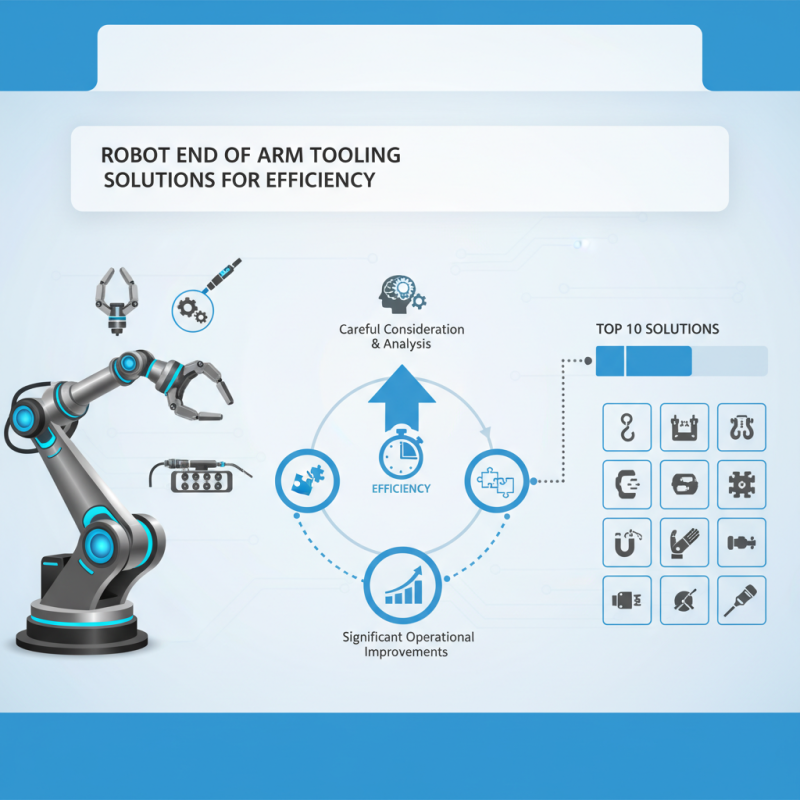
Robot end of arm tooling (EoAT) solutions are critical for enhancing automation efficiency. These tools are attached to robotic arms and play a vital role in various industrial processes. Their primary function is to facilitate the handling, assembly, and manipulation of objects. The right EoAT can significantly improve production rates and reduce operational costs.
When selecting EoAT options, consider your specific application needs. Different tasks may require different tools. For example, grippers are commonly used for picking and placing items. Vacuum tools are excellent for handling delicate materials or products with flat surfaces. Always assess the weight and size of the items being handled.
Tips: Always test different EoAT to find the best fit. Sometimes, the most straightforward solution works best. Reflect on the performance regularly.
Adaptability is another key factor. As production lines change, so should your EoAT. The ability to interchange tools can lead to broader functionality. However, it is crucial to ensure that any new tool integrates smoothly with existing systems.
Tips: Keep maintenance in mind. A well-maintained EoAT lasts longer and performs better. Don't overlook regular checks and tests.
Top 10 Robot End of Arm Tooling Solutions for Efficiency
| Rank |
Tooling Solution |
Application Area |
Efficiency Gain (%) |
Weight (kg) |
| 1 |
Vacuum Grippers |
Material Handling |
20 |
3.5 |
| 2 |
Electric Grippers |
Assembly |
25 |
4.0 |
| 3 |
Magnetic Grippers |
Metal Parts Handling |
30 |
5.0 |
| 4 |
Finger Grippers |
Complex Parts Handling |
15 |
2.8 |
| 5 |
Weld Fixtures |
Welding |
40 |
6.3 |
| 6 |
Suction Cups |
Pick and Place |
22 |
1.5 |
| 7 |
End Effectors |
Automated Assembly |
18 |
4.2 |
| 8 |
Tool Changers |
Versatile Operations |
35 |
6.0 |
| 9 |
Pressure Sensors |
Quality Control |
12 |
0.8 |
| 10 |
Soft Robotics |
Delicate Handling |
28 |
1.2 |
Key Factors Influencing Efficiency in Robotic Tooling
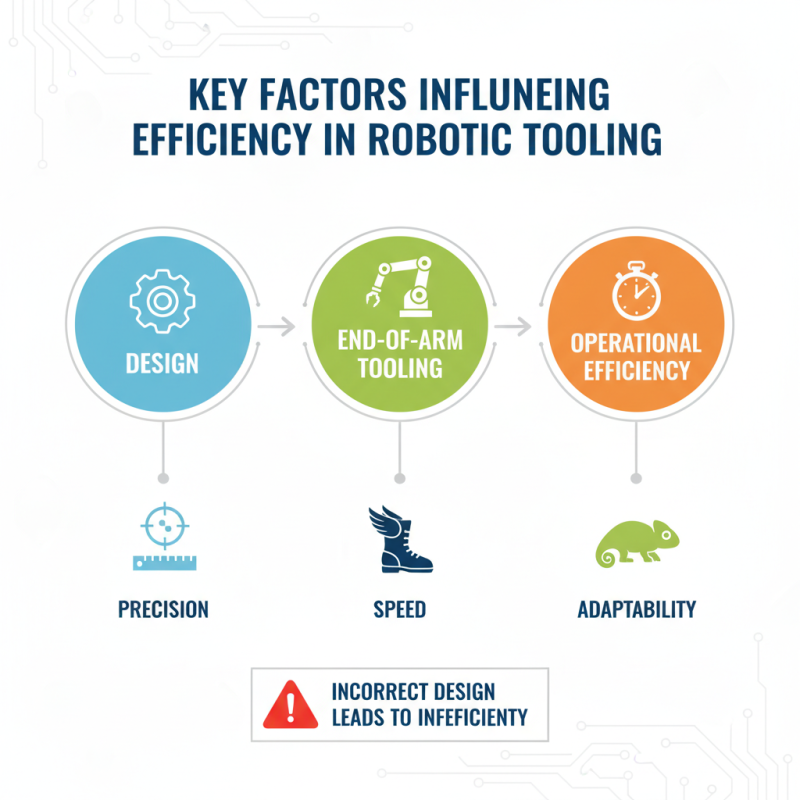
Robotic tooling solutions play a vital role in enhancing efficiency in automated processes. Several key factors impact the effectiveness of these systems. The design of end-of-arm tooling must align with the specific tasks at hand. Precision, speed, and adaptability are crucial. If a tool lacks the correct design, it can lead to operational inefficiencies.
Tips: Evaluate your task requirements regularly. Adjust your tooling designs accordingly.
Compatibility between tools and robots is another essential factor. Different robots have varied payload capabilities and reach. An incompatible tool might not perform well, affecting production speed. This mismatch can lead to costly downtime.
Tips: Perform regular checks on tool and robot compatibility. Small adjustments can yield significant improvements.
Lastly, the training of personnel is often overlooked. Workers must understand the full potential of robotic systems. Misunderstanding how to utilize tools can hinder efficiency. Continuous training programs can bridge this gap.
Tips: Conduct skills assessments frequently. Tailor training to address specific weaknesses. This will ensure your team maximizes robotic efficiency.
Top 10 Robot End of Arm Tooling Solutions Explained
Robotic end-of-arm tooling solutions play a crucial role in enhancing operational efficiency in various industries. These tools are pivotal in tasks such as assembly, pick-and-place, and packaging. They must adapt to specific needs, which is often challenging. One common approach is customizing tools for unique applications. Yet, finding the right fit can be a trial-and-error process.
Consider the diversity of gripping solutions. They can use suction, mechanical claws, or specialized fingers. Suction cups are often effective for smooth surfaces but may struggle with uneven textures. Conversely, mechanical claws offer strength but can lack the finesse needed for delicate items. This inconsistency creates the potential for inefficiencies and unexpected errors.
Another area is sensor integration. Tools equipped with sensors provide valuable feedback. They can detect weight or shape variations during operations. However, not all systems are user-friendly, making adjustments complex. Users may find themselves frustrated, wishing for simplicity. Balancing advanced features with usability remains a common hurdle. These nuances highlight the need for ongoing evaluation and refinement of robotic tooling solutions.
Top 10 Robot End of Arm Tooling Solutions for Efficiency
Applications and Industries Utilizing End of Arm Tooling
End of arm tooling (EOAT) is crucial in various industries. It allows robots to pick, place, or manipulate objects with precision. In factories, EOAT can handle everything from delicate components to heavy machinery. This versatility is vital for assembly lines, where speed and accuracy matter. Manufacturers often struggle to find the optimal tooling. Trying different configurations can be costly and time-consuming.
In the food industry, custom EOAT ensures hygiene and efficiency. Robots equipped with specialized grippers can handle fragile items like bread or eggs. However, not all solutions meet safety standards. It’s essential to regularly evaluate the tooling to prevent contamination. The packaging sector also benefits from advanced EOAT solutions. Robots can precisely pack products into boxes, speeding up the process. Yet, maintaining the right grip is challenging, especially with varied shapes and sizes.
In medical applications, EOAT assists in delicate procedures. Robots can handle surgical instruments or test samples with great care. Still, errors could lead to significant consequences. Continuous testing and adjustments are necessary. Overall, while EOAT enhances productivity, each application brings unique challenges that require thoughtful solutions.
Future Trends in Robot End of Arm Tooling Technologies
The future of robot end of arm tooling (EOAT) is evolving rapidly. Industry reports suggest a growth rate of 12% annually in this sector. Innovative technologies are emerging, improving efficiency and flexibility in automation. Advancements in lightweight materials and modular designs enhance productivity. Manufacturers are adopting these new solutions to reduce costs and increase output.
Tips: Consider lightweight materials. They improve speed and handling.
Smart tooling is becoming the norm. Sensors and AI integration allow for real-time adjustments. This technology enhances precision in tasks, reducing errors. Major studies indicate that automation with intelligent EOAT can lead to a 25% increase in production efficiency. However, training personnel on these advanced systems remains a challenge. Many companies face a skills gap, hampering full utilization.
Tips: Emphasize staff training. It’s crucial for success.
Innovative designs in EOAT focus on adaptability. As industries change, tools must keep pace. Yet, many companies struggle to overhaul existing systems. They risk falling behind competitors who embrace new technology. Continuous research and development are essential to remain relevant in this quickly changing landscape.