Top 10 Cooler Cold Plate Manufacturers in China?
Choosing a reliable Cooler Cold Plate manufacturer in China requires more than comparing prices or polished product photos. These components transfer heat between refrigeration systems, electronic modules, battery packs, and other temperature-sensitive assemblies. Their performance depends on material selection, internal channel design, surface flatness, brazing quality, and long-term sealing reliability.
This guide explores ten leading Cooler Cold Plate manufacturers in China through practical evaluation criteria. We consider manufacturing experience, engineering capability, prototype support, production capacity, quality-control procedures, and communication standards. Evidence may include factory information, technical documentation, certifications, customer industries, and observable production capabilities. Details matter. A cold plate with excellent conductivity can still fail when channels are poorly designed or mounting surfaces are uneven.
The review also considers copper and aluminum options, CNC machining, vacuum brazing, friction stir welding, pressure testing, and thermal validation. These details help buyers connect published claims with real purchasing risks. However, no ranking can represent every application perfectly. A supplier experienced in data-center cooling may not suit a compact medical device or high-vibration vehicle system. Some manufacturers disclose limited technical data, which makes direct comparison imperfect. That limitation deserves attention, not concealment.
Readers should treat this list as a structured starting point for supplier research. Request drawings, tolerances, test reports, sample results, and production references before making a final decision. Reliable manufacturers explain limitations clearly and respond with measurable solutions. Their support after delivery matters too. In practice, consistent quality often matters more than the lowest quotation.
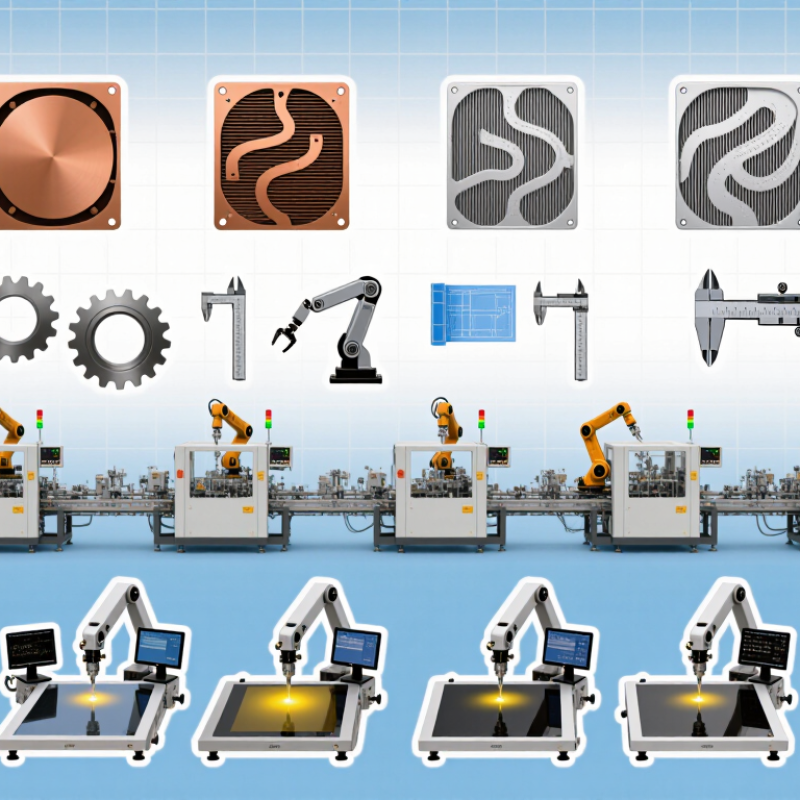
What Is a Cooler Cold Plate and How Does It Work?
What Is a Cooler Cold Plate and How Does It Work?
A cooler cold plate is a metal heat exchanger placed directly against a hot component. It usually uses copper or aluminum, sealed channels, and a thermal interface material. Coolant flows through those channels and absorbs heat from the contact surface. The warmed liquid then moves to a radiator, chiller, or heat-rejection loop. Simple in principle. Difficult in production.
The U.S. Department of Energy reports that cooling can consume up to 40% of a data center’s electricity, depending on system design. The 2024 Uptime Institute Global Data Center Survey recorded an average PUE of 1.56 among surveyed facilities. These figures explain why cold plates matter in servers, power electronics, and battery systems. A well-designed plate can reduce thermal resistance, but pressure drop must remain acceptable. Too many channels may improve heat transfer while increasing pumping energy. Too few channels may create hot spots.
In practical evaluation, engineers should inspect flatness, leak testing, flow distribution, corrosion resistance, and long-term joint reliability. ASHRAE TC 9.9 guidance also reminds designers to control equipment inlet temperatures, not only coolant temperature. I would question any supplier promising maximum cooling without showing test conditions. Real assemblies vary. Contact pressure, interface thickness, coolant quality, and mounting errors can change results. The cold plate is efficient, but it is not magic.
China’s Cooler Cold Plate Manufacturing Industry
China’s cooler cold plate manufacturing industry serves data centers, electric vehicles, industrial drives, and compact refrigeration systems. Manufacturers commonly work with copper, aluminum, and mixed-metal structures. Each material affects conductivity, weight, corrosion resistance, and machining cost.
Production often combines CNC machining, vacuum brazing, friction stir welding, and pressure testing. A reliable factory checks channel dimensions, surface flatness, joint strength, and coolant leakage. Thermal cycling tests reveal weaknesses that ordinary inspections may miss. In practical sourcing, engineers should request drawings, sample reports, material certificates, and traceability records. Small details matter here. A blocked channel can reduce cooling performance quickly.
China’s supplier network offers flexible tooling, fast prototyping, and large-scale production capacity. Many manufacturers also support customized ports, mounting holes, coatings, and flow paths. However, the industry is not flawless. A low quotation may hide limited testing or unstable process control. Even polished samples can fail after repeated heating and cooling. Buyers should compare thermal resistance, pressure limits, tolerance data, and after-sales response, not only unit prices. Factory audits remain useful, although they cannot predict every production problem. Better communication between designers and machinists often prevents expensive revisions. That lesson is easy to overlook.
Top 10 Cooler Cold Plate Manufacturers in China? - China’s Cooler Cold Plate Manufacturing Industry
Industry overview: The table summarizes ten relevant cold-plate manufacturing capabilities and design considerations. It is not a ranked list of companies; no company or brand information is included.
| No. | Capability or design dimension | Common industry options | Key selection consideration |
| 1 | Base-plate material | Aluminum alloys and copper are commonly used. | Compare thermal conductivity, weight, corrosion compatibility, and cost. |
| 2 | Internal flow-channel construction | Machined channels, joined plates, and tube-in-plate designs. | The channel layout affects pressure drop, flow distribution, and heat transfer. |
| 3 | Joining and sealing processes | Brazing, friction stir welding, and other qualified joining methods. | Confirm process suitability for the material, operating pressure, and production volume. |
| 4 | Manufacturing processes | CNC machining, drilling, forming, welding, and surface finishing. | Check whether the process can meet the required geometry and tolerances. |
| 5 | Leak and pressure verification | Pressure-decay, hydrostatic, or tracer-gas testing, as specified for the design. | Agree on the test method, acceptance criteria, and documentation before production. |
| 6 | Thermal performance validation | Thermal testing under defined heat load, coolant, flow, and ambient conditions. | Compare results only when test conditions and measurement methods are consistent. |
| 7 | Coolant compatibility | Compatibility depends on coolant chemistry and all wetted materials. | Review corrosion risks, seals, fittings, and the intended operating environment. |
| 8 | Ports and connections | Threaded ports, hose connections, and application-specific fittings. | Specify thread standard, port orientation, sealing method, and installation clearance. |
| 9 | Quality and traceability | Inspection plans may cover dimensions, materials, joining, and leak-test records. | Request evidence relevant to the product and the buyer’s quality requirements. |
| 10 | Customization and production readiness | Design-for-manufacturing review, prototypes, and production process validation. | Confirm drawing control, sample approval, lead time, and change-management procedures. |
Note: Available materials, processes, and test methods vary by product design and supplier. Confirm specifications directly against the application requirements.
How to Evaluate Cooler Cold Plate Manufacturers
Evaluating cooler cold plate manufacturers in China requires more than comparing unit prices. The IEA’s Electricity 2024 report estimates that data centers used about 240 TWh of electricity in 2022. Demand may reach 620–1,050 TWh by 2026. Efficient thermal hardware is becoming operationally important. Ask each supplier for measured thermal resistance, pressure-drop curves, flow rates, and test conditions. Data without test conditions is weak evidence.
Inspect the manufacturing process closely. Look for controlled machining, vacuum brazing, friction-stir welding, or other suitable joining methods. Confirm copper or aluminum grades, surface flatness, channel dimensions, and coolant compatibility. ASHRAE TC 9.9 guidance stresses reliable operating conditions for data-center equipment. A capable supplier should provide leak-testing records, burst-pressure results, corrosion checks, and temperature cycling data. Request samples from the same production line, not only laboratory prototypes.
Experience matters. Review traceability, inspection tools, corrective-action records, and production capacity. A factory may show excellent prototypes yet struggle with repeatability. That happens. Compare at least three pilot lots and measure thermal resistance yourself. Also check whether the supplier can support custom ports, mounting tolerances, and service documentation. Certification helps, but it does not replace independent validation. A low quote can conceal thinner walls, unstable bonding, or expensive rework later. Be skeptical of perfect claims.
Top 10 Cooler Cold Plate Manufacturers in China
Top 10 Cooler Cold Plate Manufacturers in China
China’s top ten cooler cold plate manufacturers are often judged by engineering depth, process control, and delivery stability. Strong suppliers usually offer aluminum, copper, or mixed-metal cold plates for electronics, batteries, lasers, and industrial equipment. Their teams study heat load, coolant flow, pressure loss, and mounting limits before recommending a design. This practical approach reduces costly revisions.
Manufacturing capability matters just as much. Leading factories commonly use vacuum brazing, friction stir welding, CNC machining, and leak testing. A reliable supplier should provide material certificates, dimensional reports, thermal test data, and traceable inspection records. Ask how each cold plate handles flatness, internal channels, corrosion protection, and repeated thermal cycling. Small details can decide field performance.
Still, ranking ten manufacturers is not perfectly objective. Some suppliers publish impressive thermal figures without explaining test conditions. That deserves caution. A better review compares sample quality, communication speed, prototype accuracy, production capacity, and after-sales response. During evaluation, inspect channel cleanliness and sealing surfaces closely. Request a sample under realistic coolant temperature and flow. I have found that promised performance can change after scaling from ten units to several thousand. That uncomfortable gap should remain part of the purchasing discussion.
How to Choose a Manufacturer for Your Application
Top 10 Cooler Cold Plate Manufacturers in China: How to Choose a Manufacturer for Your Application
Choosing among China’s top ten cooler cold plate manufacturers requires more than comparing quotations. The International Energy Agency reported that data centers consumed about 460 TWh of electricity in 2022. Demand could exceed 1,000 TWh by 2026. Cooling efficiency now affects operating cost, rack stability, and equipment life. Start with your actual heat load, coolant type, flow rate, allowable pressure drop, and installation space.
Ask manufacturers for thermal resistance data under your operating conditions. A polished laboratory result may not represent a dusty factory or uneven mounting surface. Request sample test reports, material certificates, leak-test records, and dimensional inspection results. Copper and aluminum offer different conductivity, weight, and corrosion risks. For demanding applications, examine vacuum brazing, friction-stir welding, channel design, and surface flatness. Evidence matters.
MarketsandMarkets estimates that the liquid cooling market may grow from roughly 4.5 billion dollars in 2023 to more than 12 billion dollars by 2028. This growth attracts capable suppliers, but also inexperienced workshops. Check monthly capacity, quality traceability, engineering response time, and prototype control. A supplier should simulate your interface before mass production. Test the details. I would not trust a low price without thermal cycling and pressure testing. Even a strong manufacturer can miss a seal weakness when your coolant, vibration, and mounting force differ from its reference setup. A pilot batch, measured in your assembly line, often reveals more than a sales presentation.