Top 10 Collaborative Robots to Boost Your Business?
In today’s rapidly evolving business landscape, collaborative robots, or cobots, are becoming essential tools for enhancing productivity. According to Dr. Emma Dalton, a leading expert in robotics, "The integration of collaborative robots can significantly transform our approach to manufacturing and service." Her insights emphasize the potential of cobots to redefine operational efficiency.
These robots work alongside human operators, enhancing their capabilities without replacing them. This synergy leads to increased output and reduced workplace injuries. However, companies must carefully assess their ecosystem before implementing cobots. Not every business can seamlessly integrate these technologies. Misalignment between human workers and robots can lead to inefficiencies.
As businesses explore automation, the role of collaborative robots warrants critical evaluation. While the benefits are clear, the challenges cannot be overlooked. Proper training and integration strategies are essential. Organizations must be prepared to adapt and reflect on their processes. Embracing cobots may indeed boost productivity, yet successful implementation requires ongoing attention and flexibility.
Overview of Collaborative Robots and Their Benefits for Businesses
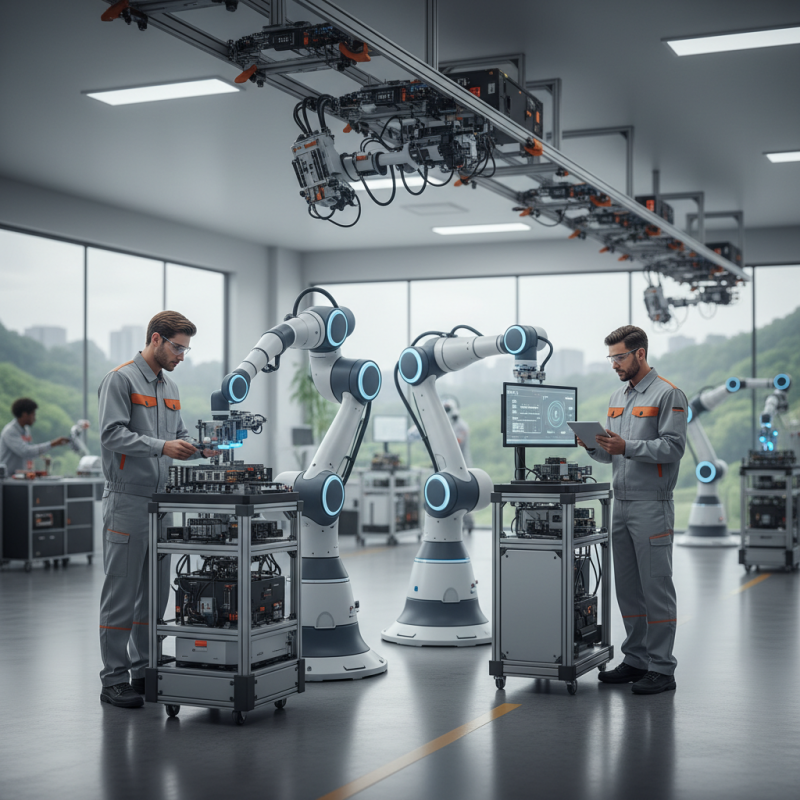
Collaborative robots, or cobots, are transforming industries by enhancing operational efficiency. According to a recent study by the International Federation of Robotics, the market for collaborative robots is projected to grow by 25% annually. This rapid expansion highlights the significant role cobots play in modern businesses.
One key benefit of cobots is their versatility. They can perform repetitive tasks alongside human workers without requiring extensive safety measures. This adaptability allows companies to reallocate human resources to more complex activities, ultimately boosting productivity. A survey shows that businesses integrating cobots have reported productivity increases ranging from 20% to 30%. However, companies must evaluate processes to determine optimal robot integration.
Cost efficiency is another advantage. Cobots typically have a lower initial investment compared to traditional robots. They can often be integrated into existing workflows quickly. While the upfront costs may be lower, potential maintenance and training expenses must be considered. Without proper assessment, some companies may face hidden costs that affect their return on investment.
Top 10 Collaborative Robots to Boost Your Business
Key Features to Look for in Collaborative Robots
When considering collaborative robots, certain key features are crucial for enhancing productivity. First, safety is paramount. Collaborative robots should have built-in sensors to detect human presence. This helps prevent accidents and ensures a safer work environment. A robot that stops when it senses someone nearby can greatly reduce workplace injuries.
Another important feature is flexibility. The best collaborative robots can easily adapt to various tasks. They should be easily reprogrammable for different jobs. A robot capable of switching between assembly and packaging can save time and resources. Ease of use is also critical; intuitive programming interfaces mean less downtime for training.
Moreover, payload capacity matters significantly. The ability to handle different weights and sizes allows for a wider range of applications. However, some businesses overlook maintenance needs, which can lead to unexpected downtimes. It’s essential to choose robots with easy-to-service components. Regular upkeep can prolong lifespan and efficiency.
Keep in mind that not all collaborative robots will meet every need, highlighting the importance of thoughtful selection.
Top 10 Collaborative Robots for Various Industries
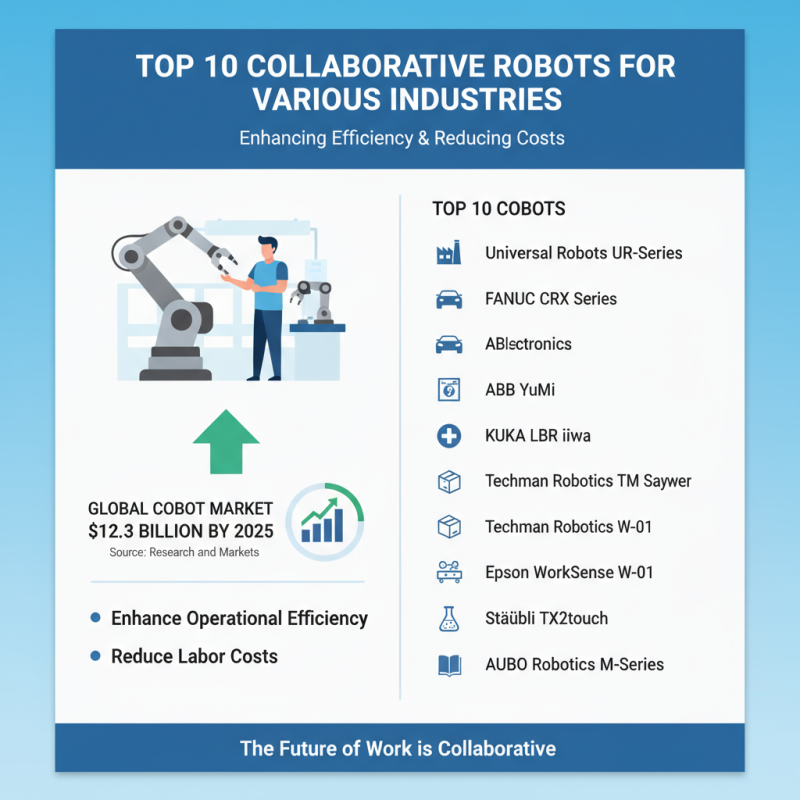
Collaborative robots, or cobots, are transforming various industries. The global market for cobots is expected to reach $12.3 billion by 2025, according to a recent report from Research and Markets. This growth highlights their significant role in enhancing operational efficiency and reducing labor costs across multiple sectors.
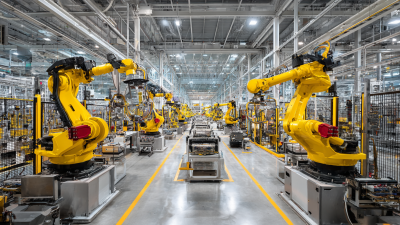
In manufacturing, for instance, cobots increasingly share tasks with human workers. They can perform repetitive assembly tasks at speeds unattainable by humans alone. Studies suggest that integrating cobots can increase productivity by up to 85%. Yet, not every organization experiences seamless integration. Proper training and workflow adjustments are critical. Mistakes in these areas can lead to productivity drops instead of gains.
In logistics, cobots are streamlining processes. They assist in packaging, sorting, and loading items efficiently. According to the International Federation of Robotics (IFR), warehouse automation can reduce labor costs by 30% to 50%. However, reliance on such technology may raise concerns over job displacement. Organizations must address employee fear and resistance to maintain a positive workplace atmosphere. It's crucial to balance automation with human oversight to create a harmonious working environment.
Case Studies: Successful Implementation of Collaborative Robots
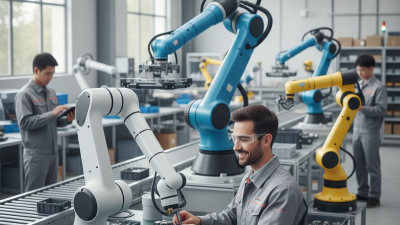
Collaborative robots have transformed industries, enhancing efficiency and safety. In one manufacturing case, a collaborative robot worked alongside human operators on an assembly line. These robots took over repetitive tasks, reducing fatigue and allowing workers to focus on quality control. Productivity surged by 30%, showcasing how these machines can complement human abilities.
Another example comes from the food industry. A company integrated collaborative robots to assist with packaging. These robots can handle delicate items, ensuring they remain intact. However, there were hurdles. Initial programming errors led to misalignment during packaging, creating waste. The team learned to refine robot workflows through trial and error, resulting in a smoother operation.
In a warehouse setting, a business implemented collaborative robots for inventory management. Robots transported materials, minimizing human traffic. Yet, challenges arose with navigation in tight spaces. Regular adjustments were necessary to enhance their movement. Ultimately, collaboration between robots and human staff improved efficiency while highlighting the need for continuous evaluation and adaptation in robotic implementation.
Future Trends in Collaborative Robotics and Business Integration
Collaborative robotics is gaining momentum in various industries. Companies are increasingly integrating these robots to enhance productivity. Future trends indicate a shift towards more intuitive interaction between humans and robots. This approach promotes seamless teamwork and boosts operational efficiency.
Tips: Start with simple tasks when integrating collaborative robots. Train employees alongside the robots to foster a harmonious work environment. Pay attention to employee feedback; their insights can highlight areas of improvement.
The growth of AI technologies will further drive collaborative robotics. More robots will understand human behavior, enabling better collaboration. However, organizations must prepare for potential challenges. Employees may feel threatened by automation, which can affect morale. Addressing these concerns is vital for successful integration.
Tips: Communicate transparently about the role of robots. Emphasize that robots are here to assist, not replace. Offering training can empower employees, making them feel valued. Regularly reassess the integration process; ensure it aligns with both business goals and employee needs.