
01302 246818

Who Are the Top CNC Metal Parts Manufacturers in China?

Choosing among China’s top Cnc Metal Parts manufacturers takes more than comparing prices. A polished website cannot show whether a shop controls tolerances consistently, communicates clearly, or catches a tool-wear problem before it affects a batch. Real confidence comes from checking the details: material traceability, inspection methods, machining capacity, and sample-part quality.

Manufacturing researcher Dr. Yoram Koren’s work on reconfigurable manufacturing systems offers a useful principle, paraphrased here: production systems should adapt as product requirements change. That matters when a supplier must move from a prototype to repeat production without losing control of fit or finish. Look for evidence, not broad promises. Ask how the manufacturer measures critical dimensions, handles drawing revisions, and documents inspection results. A precise answer is a good sign.

This guide examines what separates dependable Cnc Metal Parts manufacturers from vendors that may look similar online. It considers machining capabilities, materials, quality systems, communication, lead times, and the support available after delivery. A low quotation can hide extra setup costs or uneven inspection. A high price does not guarantee better parts, either. No shortlist captures every shop-floor reality; even a capable factory may be a poor match for a particular design. The goal is a practical comparison, grounded in verifiable details, so buyers can identify suppliers suited to their parts and production needs.
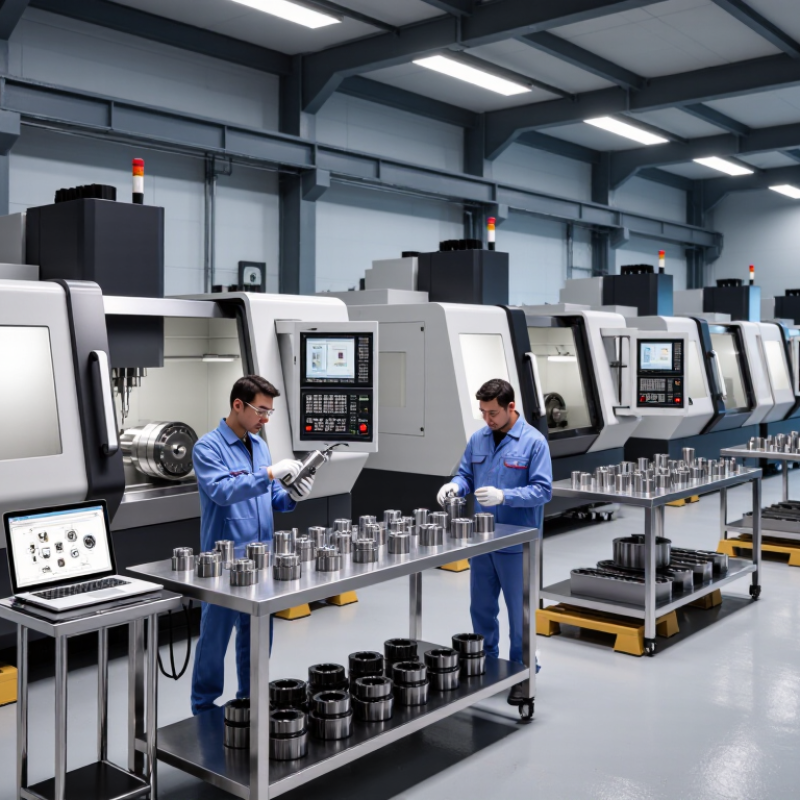
Who Are the Top CNC Metal Parts Manufacturers in China?

What CNC Metal Parts Manufacturing Involves

CNC metal parts manufacturing turns a digital design into a physical component through controlled cutting operations. A machinist reviews the drawing, selects material stock, and plans how the part will be held in the machine. Aluminum, stainless steel, and brass respond differently to cutting forces and heat. Small details matter. A thin wall may flex, while a deep pocket can trap chips or require longer tools.

Milling removes material with rotating cutters; turning shapes parts as a workpiece spins. Drilling, tapping, and reaming create holes and threads with specified dimensions. Operators choose cutting speeds, tool paths, and setups based on the material and geometry. These choices affect surface finish, production time, and dimensional accuracy. A stated tolerance should serve the part’s function, not simply look impressive on a drawing.

Inspection may involve calipers, micrometers, gauges, or coordinate measuring equipment, depending on the feature and required precision. Yet a clean measurement does not explain every production issue. Heat, tool wear, and clamping pressure can shift dimensions between operations. That part is easy to underestimate. A first run may reveal a weak setup or an awkward tool path, so careful review and adjustment remain part of the process.

How Chinese Manufacturers Are Evaluated

Choosing a CNC metal parts manufacturer takes more than comparing quoted prices. A practical evaluation begins with evidence from the shop floor. Review machine lists, inspection procedures, material traceability, and recent sample reports. Ask how operators control tolerances after tool wear or a production change. Details matter. A polished sample alone proves little; repeatability across a small batch is more revealing.

For dimensional checks, request actual measurement records, not only a quality certificate. Confirm that the supplier uses suitable instruments, such as calibrated micrometers, height gauges, or a coordinate measuring machine when geometry requires it. Discuss drawing revisions, datum interpretation, deburring, and surface finish before production. These conversations expose gaps early. Still, a video call cannot replace an on-site audit, and one successful inspection does not guarantee every future lot.

Assess delivery performance through dated order records and explanations for delays. Ask who approves process changes and how nonconforming parts are isolated, corrected, and documented. Technical staff should explain trade-offs plainly, including where a tight tolerance raises cost without improving function. Communication is evidence too. Compare several suppliers using the same drawing, material specification, and inspection scope; otherwise, quotations are not truly comparable.

Leading CNC Metal Parts Manufacturers in China

Leading CNC metal parts manufacturers in China are best judged by process control, not a ranking headline. A capable shop should explain how it maintains dimensions across repeat batches, manages tool wear, and checks critical features. For a small aluminum bracket, request a first-article report showing hole positions, thread checks, and surface finish against the drawing. Details matter.

Industry data offers context, but it needs careful reading. Grand View Research’s CNC Machine Market report put the global CNC machine market at USD 101.22 billion in 2023. It projected 7.3% annual growth from 2024 to 2030. This measures machine-market activity, not sales by Chinese parts suppliers. It does suggest continued investment in automation, though shop-floor capability still varies. Ask about machine types, inspection frequency, material certificates, and how nonconforming parts are contained.

Tip: Send each candidate the same drawing, material grade, annual volume, and tolerance notes. Compare inspection plans and lead-time assumptions alongside price.

Materials, Processes, and Production Capabilities

China’s CNC metal parts manufacturers work with aluminum, stainless steel, carbon steel, brass, and titanium. Material choice affects weight, corrosion resistance, machining time, and cost. A drawing should specify the alloy and its temper, not just “aluminum.” Small omissions can cause real delays.

Processes vary with geometry and tolerances. CNC milling suits flat faces, pockets, and complex profiles; turning produces round components such as shafts and bushings. Some parts need drilling, tapping, or secondary finishing. Ask how the shop controls burrs and protects cosmetic surfaces. Details matter.

Production capability means more than machine count. Review equipment range, batch-size flexibility, inspection methods, and documented quality checks. For critical dimensions, request measurement records and confirm the stated tolerance is achievable across the full order. A prototype can expose fixture or tool-access problems before production, though it cannot guarantee every batch will match. No process is perfect. Clear drawings, realistic tolerances, and direct communication help reduce surprises.

How to Choose a CNC Manufacturing Partner

Choosing a CNC manufacturing partner in China starts with a clear drawing and realistic requirements. Share material grades, critical dimensions, tolerances, finish, and expected order volume. A polished website cannot show how a shop handles a difficult feature. Details matter.

Ask how the team checks parts during production, not only before shipping. For a tight bore, request the measuring method and acceptance range. Ask for evidence. A sample inspection report can show whether measurements are recorded consistently. If the supplier flags an unclear dimension before quoting, that is often more useful than a fast, confident promise.

Review communication as carefully as machine capacity. Confirm who answers technical questions, how revisions are tracked, and whether the quoted process matches your drawing. Discuss packaging too: thin edges may need separators to avoid scratches in transit. A low quote can be attractive, but compare its material, inspection, and tooling assumptions with other offers. I would still test a small batch before committing to recurring orders; that step takes time, and it can reveal problems the drawing never predicted.

Who Are the Top CNC Metal Parts Manufacturers in China? - How to Choose a CNC Manufacturing Partner

Evaluation Dimension What to Assess Evidence to Request What a Strong Partner Demonstrates
Machining Capabilities Whether the supplier’s CNC milling, turning, drilling, and finishing processes suit the part geometry, material, and production volume. Equipment list, process descriptions, sample parts, and details of any outsourced operations. Clear process capability information and a practical explanation of how the part will be made.
Material Control Availability and traceability of specified metals, such as aluminum, stainless steel, carbon steel, brass, or titanium. Material certificates, purchase records, and lot-identification procedures where required. Materials are checked against the drawing and purchase specification, with traceability appropriate to the project.
Quality Management How the supplier controls inspection, nonconforming parts, corrective actions, and production records. Quality-system documentation, inspection procedures, and relevant certification records. ISO 9001 is a widely used quality-management standard. Documented controls and records that match the risks and requirements of the order.
Dimensional Inspection Whether measurement methods and equipment are suitable for the drawing’s tolerances and critical features. Sample inspection reports, calibration records, and details of available measuring equipment, such as CMMs or gauges. Inspection results are traceable to drawing revisions, specified tolerances, and measurement methods.
Engineering Support Ability to review drawings, identify manufacturing risks, and suggest design-for-manufacturing improvements without changing requirements without approval. A sample design review, clarification process, and change-control procedure. Questions are raised early, recommendations are explained, and approved changes are documented.
Surface Finish and Secondary Processes Whether required treatments—such as anodizing, plating, passivation, or coating—are performed and controlled in-house or by qualified subcontractors. Process specifications, finish inspection records, and disclosure of outsourced steps. Finish requirements are defined and verified, with responsibility for subcontracted processes clearly assigned.
Production Capacity Available machine time, staffing, and capacity for both initial samples and repeat production. Capacity information, production planning details, and a schedule based on the actual order quantity. Capacity commitments are realistic and account for setup, inspection, and any secondary operations.
Lead Time and Delivery Quoted timing for engineering review, samples, production, inspection, and shipment. A milestone-based schedule, stated assumptions, and the supplier’s process for communicating delays. Lead times are clearly defined, progress is communicated, and schedule changes are raised promptly.
Cost Transparency How pricing accounts for material, machining time, setup, tooling, finishing, inspection, packaging, and shipping. An itemized quotation with stated quantity breaks, validity period, and any minimum-order requirements. Pricing assumptions and potential cost changes are explained before the order is placed.
Communication and Change Control Responsiveness, technical communication, drawing-revision control, and approval of deviations. Named points of contact, document-control practices, and examples of deviation or change-approval records. One controlled drawing revision is used for production, and deviations require documented customer approval.
Risk and Compliance Fit Whether the supplier can meet applicable industry, regulatory, confidentiality, and export requirements for the project. Relevant certificates, written procedures, and project-specific compliance documentation. Requirements are confirmed before production, and evidence is provided only where applicable to the part and market.
Sample-to-Production Consistency Whether approved samples, production parts, and inspection criteria are controlled consistently. First-article inspection results, approved sample records, and a documented production-control plan. Production follows the approved specification, with changes reviewed and recorded.