
What Is a Padel Shooting Machine and How Does It Work?
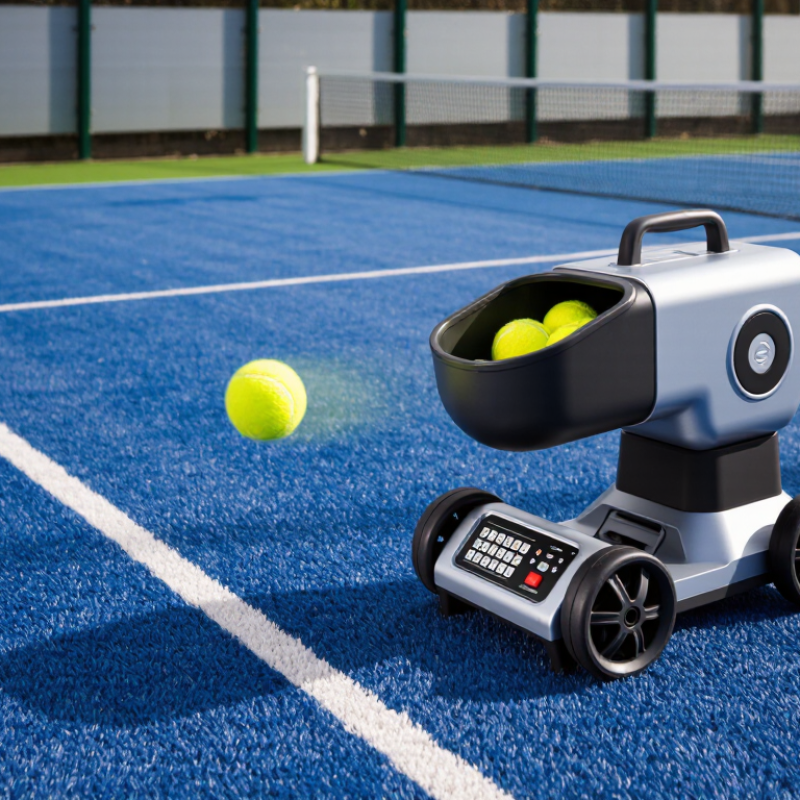
A Padel Shooting Machine is becoming a practical training partner for players who need repetition, timing, and measurable feedback. It is a compact device that stores balls, launches them at selected speeds, and changes their direction or trajectory. Some models produce flat shots. Others simulate lobs, volleys, bandejas, and defensive rebounds. The machine usually combines a ball hopper, rotating wheels, electronic controls, and a rechargeable battery. Two spinning wheels grip each ball and release it forward. Adjusting wheel speed changes pace and spin. An oscillating base can send balls across different zones.
Padel coach and equipment consultant Jordi Rovira explains, “A good machine does not replace a partner; it repeats a useful ball with measurable consistency.” That distinction matters. A real opponent reacts to your position, while a Padel Shooting Machine follows programmed settings. Players can practise split steps, racket preparation, recovery, and wall control without waiting for another person. Small details become visible. Your feet may stop before the ball arrives. Your contact point may drift too far behind your body. The machine reveals those habits, sometimes uncomfortably.
It is not perfect.
Ball speed, court surface, wind, and battery power can affect performance. Some machines also struggle with irregular feeds or damp balls. Users should begin with slower settings and leave clear space around the launch area. A thoughtful training plan matters more than maximum speed. The best results come from combining machine drills with coaching, match play, and honest self-review. That balance makes the technology useful rather than impressive only in appearance.
Definition and Purpose of a Padel Shooting Machine
A padel shooting machine is an automated training device designed to deliver balls at controlled speeds, angles, and intervals. It usually uses rotating wheels, a ball hopper, and adjustable launch settings. Players can practise volleys, bandejas, lobs, smashes, and defensive returns without waiting for a partner.
Its main purpose is purposeful repetition. A player may receive the same cross-court ball every ten seconds, then change the launch angle for a deeper challenge. This creates a measurable practice routine. The machine also supports solo training, which is useful when court time or partners are limited. However, it cannot read body language, tactical choices, or emotional pressure. That assumption is too neat. Real match decisions remain essential.
The FIP Global Padel Report 2024 reported more than 25 million players across approximately 90 countries. It also recorded tens of thousands of courts worldwide. This expanding participation increases interest in consistent practice tools, although the report does not prove that every player needs a machine. A reliable unit should offer stable feeding, clear speed controls, safe ball storage, and easy emergency stopping. Testing these features matters more than chasing maximum speed.
Tips: Start with slower feeds and a fixed target. Keep the machine several metres away. Record successful returns, not only missed shots. Change one setting at a time. Human coaching still matters.
What Is a Padel Shooting Machine and How Does It Work? - Definition and Purpose of a Padel Shooting Machine
| Data Dimension | Accurate Description | Practical Relevance for Padel Training |
|---|---|---|
| Definition | A padel shooting machine is an automated training device that launches balls at controlled intervals, speeds, angles, and trajectories. | It provides repeatable practice without requiring another player to feed every ball. |
| Primary Purpose | The machine is designed to help players practise strokes, movement patterns, timing, consistency, and reactions through repeated ball feeds. | Players can focus on technique and decision-making while controlling the difficulty of each drill. |
| Typical Ball Delivery | Most machines use rotating wheels, a pneumatic system, or another mechanical launching method to project balls toward the player. | The delivery system determines how consistently the machine can reproduce speed, spin, height, and direction. |
| Ball Compatibility | The machine should be used with balls that match its operating requirements. Padel balls are smaller and have lower internal pressure than standard tennis balls. | Using unsuitable balls can affect trajectory, feeding reliability, equipment wear, and training accuracy. |
| Speed Control | Adjustable speed allows the user to select slower feeds for beginners and faster feeds for advanced reaction or defensive drills. | Progressive speed increases help players develop control before training under greater time pressure. |
| Spin Control | Some machines can produce topspin, backspin, or relatively flat feeds, depending on their wheel arrangement and controls. | Spin variation helps players practise reading the ball and adapting racket angle, swing path, and contact point. |
| Elevation and Trajectory | The launcher may be adjusted to send balls at different heights, including low feeds, medium-height shots, and higher defensive balls. | Different trajectories can simulate groundstrokes, volleys, lobs, and defensive recovery situations. |
| Horizontal Direction | A rotating or adjustable launching mechanism can direct balls toward different areas of the court, depending on the machine design. | Directional changes support drills for forehands, backhands, transitions, lateral movement, and recovery to the ready position. |
| Oscillation Function | Oscillation moves the feed from side to side or across a selected range rather than repeatedly targeting one fixed point. | This adds footwork demands and encourages players to prepare early and return to an effective court position. |
| Feed Interval | The interval is the time between successive ball launches. A longer interval allows more preparation, while a shorter interval increases the reaction challenge. | Interval adjustments make the same machine suitable for technical practice, conditioning, and high-tempo drills. |
| Control Method | Controls may be located on the machine or provided through a remote controller or digital interface, depending on the model. | Accessible controls allow players or coaches to change settings without interrupting the exercise. |
| Power Source | Machines may use rechargeable batteries or an external electrical supply. Battery operation generally improves portability. | Training time depends on battery capacity, charging conditions, and the selected feed settings. |
| Training Applications | Common applications include forehand and backhand repetition, volley practice, return-of-serve preparation, overhead work, lobs, and defensive shots. | Structured drills can isolate one skill or combine strokes with movement and recovery patterns. |
| Effect on Consistency | Repeated feeds create a stable practice environment, which can help players identify technical errors and build more reliable contact. | Consistency improves when repetition is combined with correct technique, appropriate intensity, and regular feedback. |
| Limitations | A machine does not fully reproduce the unpredictable choices, positioning, communication, and tactical responses of a live opponent or partner. | Machine drills should complement, rather than replace, match play, coached practice, and partner-based exercises. |
| Safety Considerations | Players should maintain a safe distance during setup, keep clear of the launch area, use suitable protective equipment when appropriate, and stop the machine before making adjustments. | Clear court access and controlled settings reduce the risk of impact injuries and equipment-related accidents. |
| Maintenance Requirements | Regular care may include cleaning the feed path, checking wheels and moving parts, inspecting the battery or power connection, and storing the machine in a dry location. | Routine maintenance supports dependable feeding and helps preserve the accuracy of repeated drills. |
| Best Use in a Training Session | A productive session normally progresses from low-intensity technical feeds to movement-based drills and then to more demanding speed, spin, or direction changes. | Gradual progression improves learning quality and helps reduce unnecessary fatigue or technical breakdown. |