2025 How to Master Advanced Robotics: Explore Trends, Tips, and Techniques
As we step into 2025, the landscape of advanced robotics is rapidly evolving, presenting both challenges and exciting opportunities for practitioners and enthusiasts alike. Dr. Emily Chen, a leading expert in the field of robotics, states, "Mastering advanced robotics requires a blend of technical knowledge, creativity, and an understanding of human needs." This assertion underscores the importance of being equipped with the latest trends, tools, and techniques to effectively navigate this complex domain.
The emergence of sophisticated algorithms, artificial intelligence, and machine learning is reshaping the capabilities of robots, enabling them to perform tasks previously thought to be exclusively human. As we explore the evolving trends in advanced robotics, it becomes crucial to understand how these technologies are not only transforming industries but also enhancing our daily lives. By delving into the myriad techniques that can be employed, from programming to systems integration, we can better prepare ourselves for the future challenges and innovations that lie ahead.
In this exploration, we aim to provide insights into mastering advanced robotics, drawing on expert knowledge and pioneering practices. By adopting a proactive approach and embracing continuous learning, we can all contribute to the future of advanced robotics, shaping a world where humans and machines work in harmony to drive progress and innovation.
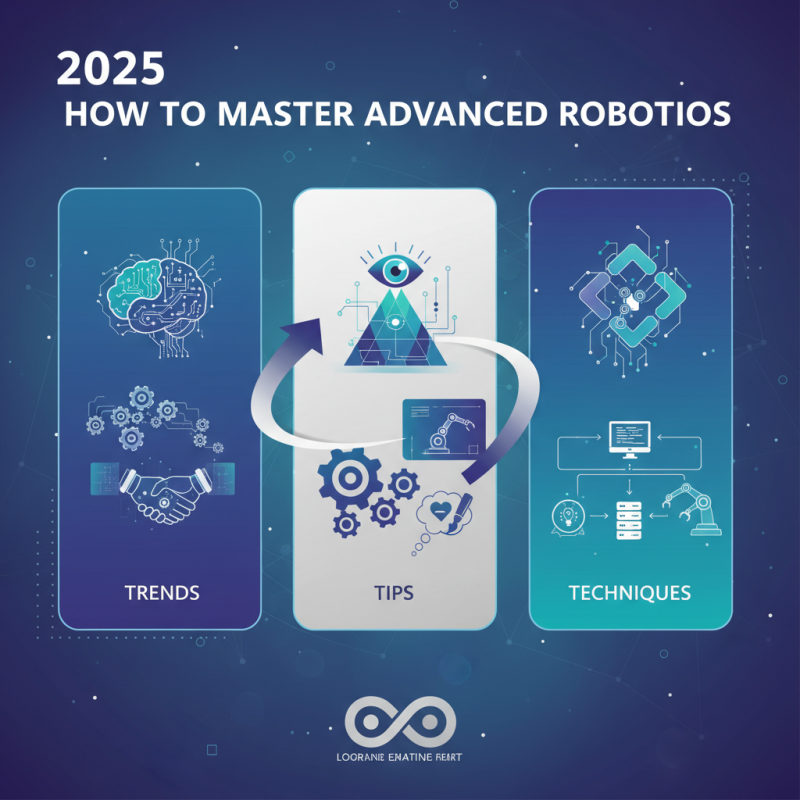
Understanding the Evolution of Advanced Robotics by 2025
The evolution of advanced robotics by 2025 will fundamentally reshape industries and the workforce. According to a report from McKinsey, it is estimated that automation and robotics could raise global productivity by up to 1.4% annually. As we move into this era, understanding the key trends is critical. Innovations in artificial intelligence, machine learning, and materials science will enable robots to perform increasingly complex tasks, from surgical assistance to autonomous vehicles. The market for advanced robotics is projected to reach $150 billion by 2025, as businesses invest in integrating robotic systems for efficiency and scalability.
To truly master advanced robotics, professionals should focus on developing a strong foundation in interdisciplinary skills, such as programming, engineering, and data analysis. Additionally, staying updated with ongoing research and breakthroughs is crucial. Here are some tips: First, engage in hands-on projects and workshops to gain practical experience with robotic systems. Second, network with industry professionals and participate in robotics competitions or forums, which can provide insight into real-world applications and challenges. Lastly, consider pursuing online courses or certifications in robotics and AI to enhance both theoretical knowledge and technical capabilities. Embracing continuous learning will position you at the forefront of this rapidly advancing field.
Trends in Advanced Robotics by 2025
Key Trends in Robotics Technology and Industry Applications
The landscape of robotics technology is rapidly evolving, driven by innovations in artificial intelligence, machine learning, and sensor technology. One of the key trends shaping the industry is the integration of AI with robotic systems, resulting in machines that can learn from their environment and adapt their behavior accordingly. This shift enables robots to perform complex tasks with higher efficiency and precision, whether in manufacturing, healthcare, or logistics. As industries increasingly adopt automation, the demand for collaborative robots, or cobots, is growing, allowing human workers and robots to work side by side, enhancing productivity and safety.
Another significant trend is the emergence of robotics in various sectors beyond traditional manufacturing. In healthcare, for instance, robots are being utilized for surgeries, rehabilitation, and patient monitoring, showcasing their potential to improve outcomes and streamline processes. Meanwhile, in agriculture, autonomous systems are being implemented for tasks such as planting, harvesting, and pest control, addressing labor shortages and promoting sustainable practices. These advancements highlight how robotics technology is not only transforming existing applications but also paving the way for innovative solutions that tackle contemporary challenges across different industries.
2025 How to Master Advanced Robotics: Explore Trends, Tips, and Techniques
| Trend/Technique |
Description |
Industry Application |
Future Outlook |
| AI Integration |
Incorporating artificial intelligence for enhanced decision-making and perception. |
Manufacturing, Healthcare |
Expected to improve efficiency and reduce operational costs. |
| Collaborative Robots (Cobots) |
Robots designed to work alongside humans safely. |
Assembly lines, Warehousing |
Growth in workforce adaptability and productivity. |
| Autonomous Systems |
Systems capable of performing tasks without human intervention. |
Agricultural Robotics, Delivery Services |
Increased reliance on autonomous solutions in various fields. |
| Robotics Process Automation (RPA) |
Automation of routine tasks using software robots. |
Finance, Customer Service |
Enhancement of operational efficiency and accuracy. |
| Enhanced Sensors |
Advanced sensors for better perception and interaction with the environment. |
Healthcare, Manufacturing |
Potential for innovation in user interaction and feedback systems. |
Essential Techniques for Developing Advanced Robotic Systems
Developing advanced robotic systems requires a solid understanding of various essential techniques that can significantly enhance their functionality and efficiency. One of the foundational techniques is the application of machine learning algorithms. By allowing robots to learn from data, they can adapt to new environments and tasks, improving their decision-making capabilities in real-time. This adaptability is crucial for applications in dynamic settings such as warehouses, hospitals, and even personal homes, where robots must navigate and interact with unpredictable elements.
Another vital technique lies in sensor integration and data fusion. Advanced robotics systems rely heavily on diverse sensors—such as cameras, LiDAR, and IMUs—to perceive their surroundings. Combining data from multiple sensors enables robots to build a comprehensive understanding of their environment, facilitating better navigation, object recognition, and interaction. Mastering sensor integration allows developers to create systems that are not only aware of their context but can also execute complex tasks with greater accuracy and reliability, resulting in enhanced performance across various applications.
Tips for Mastering Programming Languages for Robotics
As the field of robotics advances at an unprecedented pace, mastering programming languages becomes crucial for aspiring roboticists. According to a recent report by the International Federation of Robotics, the demand for skilled robotics professionals is projected to increase by over 30% in the next five years. This creates a pressing need for a robust understanding of the programming languages that power these sophisticated machines. Proficiency in languages such as Python, C++, and ROS (Robot Operating System) is essential for developing complex algorithms and integrating various hardware components effectively.
To navigate the intricate landscape of robotics programming, aspiring engineers should focus on cultivating a strong foundation in algorithms and data structures. A study by the IEEE Robotics and Automation Society highlights that nearly 60% of robotics engineers identify a solid grasp of algorithmic thinking as a key factor in successful project execution. Therefore, committing time to learn not just the syntax of programming languages but also their application in problem-solving can significantly enhance one’s ability to innovate and create responsive, adaptive robotic systems.
In addition to technical skills, fostering a habit of continuous learning is vital in this rapidly evolving industry. Engaging with online courses, participating in community projects, and contributing to open-source initiatives can provide invaluable hands-on experience. According to a survey conducted by RoboGlobal, 75% of industry leaders emphasize the importance of practical experience complemented by theoretical knowledge in robotics. By blending formal education with real-world problem-solving, aspiring robotics programmers can position themselves favorably in an increasingly competitive job market.
Future Challenges and Opportunities in Advanced Robotics Skills
As we delve into the future of advanced robotics, several challenges and opportunities are shaping the skills required for success in this field. One of the primary challenges includes the rapid pace of technological change, necessitating continuous learning and adaptation. Professionals in robotics need to stay current with innovations such as artificial intelligence, machine learning, and automation processes. This can be particularly daunting as the demand for skilled workers in these areas continues to rise.
To navigate these challenges effectively, aspiring roboticists can adopt several key strategies. First, engaging in lifelong learning is essential. This could involve taking online courses through reputable platforms, attending workshops, or participating in relevant conferences. Second, building a strong foundation in programming languages such as Python or C++ is critical, as these skills are fundamental for working with robotic systems. Lastly, collaborating on projects and gaining practical experience through internships can significantly enhance one’s understanding of real-world applications.
Moreover, the opportunities in advanced robotics are vast. Robotics is increasingly permeating industries such as healthcare, agriculture, and manufacturing, creating a demand for interdisciplinary skills. Emphasizing teamwork and communication is vital, as effective collaboration across different fields will be key to innovating and solving complex problems. By honing both technical and soft skills, individuals can position themselves favorably in this rapidly evolving landscape.