How to Choose the Right Automation Systems for Your Business Efficiency
In today’s competitive business landscape, selecting the appropriate automation systems is paramount for enhancing organizational efficiency and productivity. According to a recent report by ResearchAndMarkets, the global automation system market is projected to reach USD 300 billion by 2025, driven by advancements in technology and an increasing demand for streamlined operations. Companies that effectively implement automation systems can experience cost reductions of up to 20%, which underscores the potential of these solutions to transform traditional business practices.
Expert insights from John Smith, a renowned industry analyst with over 20 years of experience in automation technologies, highlight the crucial nature of this selection process. Smith states, “Choosing the right automation systems is not just about adopting technology; it’s about strategically aligning automation with business goals to drive meaningful outcomes.” This perspective emphasizes the need for businesses to evaluate their unique objectives, workflows, and challenges before making investment decisions. As organizations navigate the evolving landscape of automation, understanding how to choose the right systems will play a vital role in achieving sustainable growth and operational excellence.

Understanding Business Automation: Key Definitions and Concepts
Business automation refers to the use of technology to execute recurring tasks or processes in a business environment, streamlining operations and improving overall efficiency. According to a report by McKinsey, companies that automate their operations can achieve up to a 30% increase in productivity within three years. Understanding key definitions and concepts related to business automation is crucial for leveraging its potential benefits.
One important concept is Robotic Process Automation (RPA), which focuses on automating rule-based tasks that are often repetitive and time-consuming. Businesses utilizing RPA can experience significant cost reductions; a study from Deloitte indicates that RPA can reduce operational costs by up to 40%. Furthermore, integrating automation in various processes can lead to enhanced data accuracy and improved compliance.
Tips: When considering automation systems, first identify the specific processes that are repetitive and have a high potential for improvement. Additionally, ensure that the chosen system can easily integrate with existing technologies within your business infrastructure. Always start with a pilot project to test the effectiveness of the automation before a full-scale implementation. By following these guidelines, companies can better position themselves to boost efficiency and maintain competitiveness in their respective markets.
Assessing Your Business Needs: Identifying Areas for Automation
Automating business processes can significantly enhance efficiency and productivity. However, to effectively integrate automation into your operations, it's crucial to thoroughly assess your business needs. Identify the repetitive tasks that consume valuable time and resources, as automation is most beneficial in areas where manual intervention is minimal but critical for output. According to a report from McKinsey, as much as 45% of activities that individuals are paid to perform can be automated by adapting current technology, illustrating the vast potential for efficiency gains in various industries.
To pinpoint the best areas for automation, consider conducting a detailed workflow analysis. Evaluate tasks based on their frequency, time consumption, and impact on your overall business objectives. For instance, if customer service queries frequently disrupt your team’s productivity, implementing an automated chatbot could allow human agents to focus on more complex issues.
Tip: Prioritize areas with high-volume, low-complexity tasks for automation, as this can yield quick wins and demonstrate the value of automation to your team.
Furthermore, regularly gather feedback from employees on pain points within their workflows. This not only helps to uncover additional automation opportunities but also fosters a collaborative approach to change. Remember, successful automation aligns with your strategic goals and adapts to your evolving business landscape.
Tip: Engage stakeholders across departments to ensure that the automation solutions considered are user-friendly and capable of integrating seamlessly with existing systems.
Evaluating Automation Systems: Key Features and Industry Benchmarks
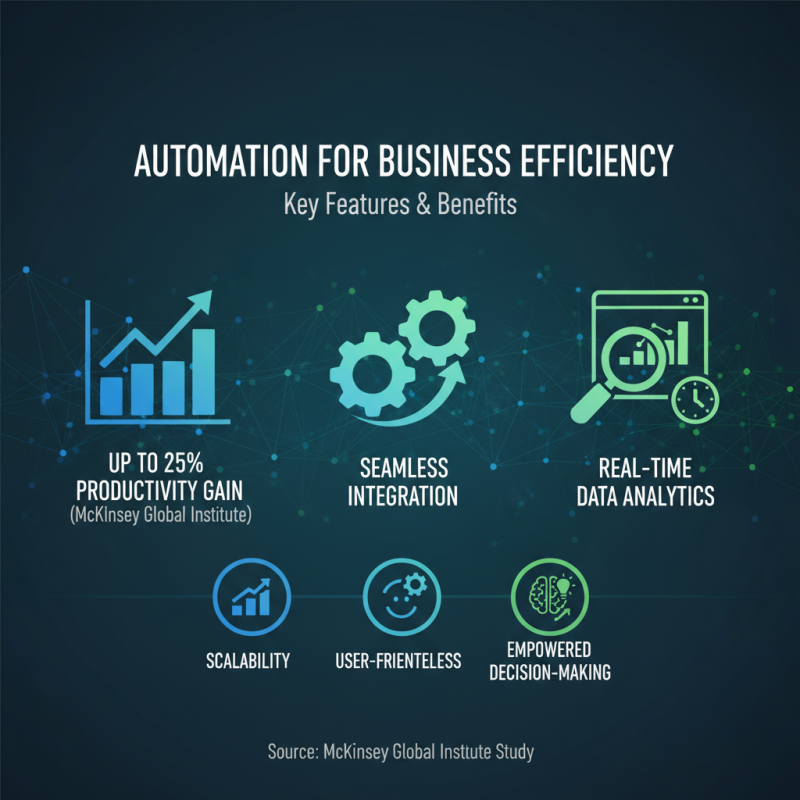
When evaluating automation systems for boosting business efficiency, it's essential to focus on key features that align with industry benchmarks. A recent study from the McKinsey Global Institute indicates that automation technologies could increase productivity by up to 25% in certain sectors. This underscores the necessity for businesses to identify systems that can seamlessly integrate into their existing workflows. Key features to consider include scalability, user-friendliness, and the ability to provide real-time data analytics, which can empower decision-making processes.
Additionally, adherence to industry benchmarks can serve as a critical guideline when selecting automation systems. The Deloitte Insights report highlights that organizations applying automation effectively experience a 20% reduction in operational costs on average. This finding emphasizes the potential for automation not only to streamline processes but also to enhance profitability over time. Businesses should examine their specific needs and compare them against these benchmarks, ensuring the chosen system provides measurable benefits relative to their investment and meets the evolving demands of their industry.
Cost-Benefit Analysis: Measuring Efficiency Gains from Automation
When considering automation systems for your business, performing a cost-benefit analysis is crucial to understanding the efficiency gains you can expect. This involves identifying both the upfront costs of implementation—such as software purchases, hardware upgrades, and employee training—and the potential savings and productivity boosts these systems can deliver over time. By quantifying these factors, businesses can better assess whether the initial investment aligns with their long-term financial goals.
In addition to direct cost savings, it is essential to evaluate how automation can enhance overall operational efficiency. Consider metrics such as reduced labor hours, fewer errors, and faster turnaround times. Calculating the time saved by automating repetitive tasks can illustrate how resources can be reallocated to higher-value activities. This dual lens of financial and operational impact will enable businesses to make informed decisions about which automation solutions will yield the best return on investment while streamlining processes and improving overall performance.
Future Trends in Automation: Aligning with Business Growth Strategies
As businesses navigate the complexities of the digital age, aligning automation systems with growth strategies is paramount. Recent studies suggest that businesses integrating automation are 2.5 times more likely to become market leaders. This trend is fueled by advancements in artificial intelligence and machine learning, which enable companies to optimize processes and reduce operational costs. The future of automation will not only focus on efficiency but also on enhancing customer experience, creating a seamless interaction between technology and human touchpoints.
**Tip**: Evaluate your current workflows to identify areas where automation can provide the most significant impact. By analyzing repetitive tasks and bottlenecks, businesses can prioritize which functions to automate first, thus ensuring a smoother transition and greater ROI.
Looking ahead, the emphasis on scalable and adaptable automation solutions will be crucial. According to a report by McKinsey, automation could increase productivity by up to 40% in industries ranging from manufacturing to service provision. Businesses should embrace this potential by not only implementing automation but by fostering a culture of continuous improvement and innovation that encourages employee involvement in the automation process.
**Tip**: Consider forming cross-functional teams to oversee the automation implementation. This approach can help gather diverse perspectives, leading to more tailored automation solutions that align with both operational needs and strategic objectives.
Future Trends in Automation for Business Efficiency
This chart illustrates the adoption rates of various automation technologies that businesses are implementing to enhance efficiency and align with growth strategies. The data reflects current trends indicating a significant shift towards integrating AI and robotic process automation in business workflows.