
01302 246818

How to Choose the Best Air Detection Drone?

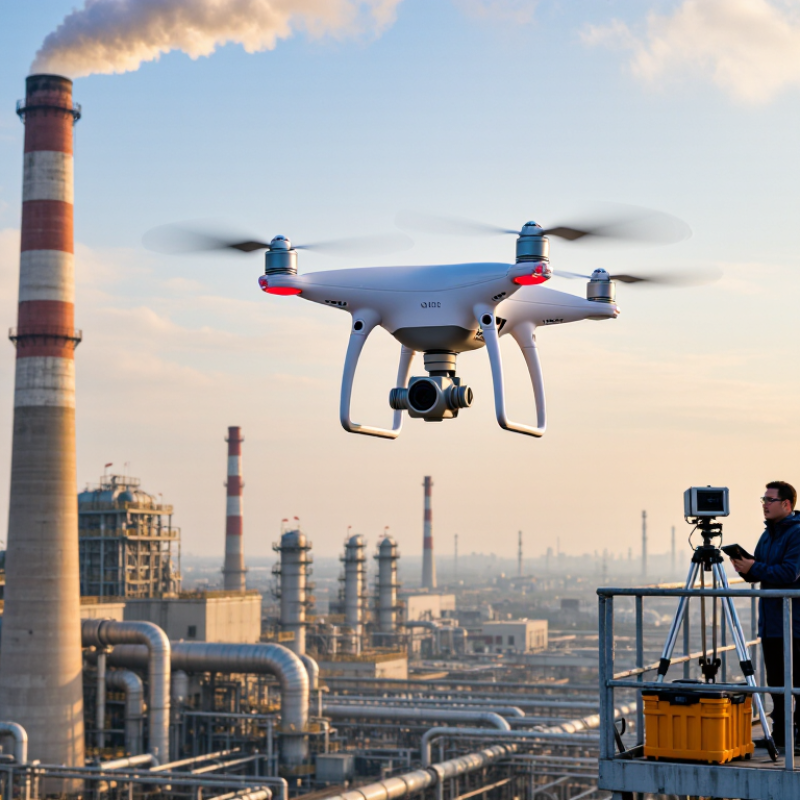
Choosing the right Air Detection Drone begins with the air you need to measure, not the aircraft’s advertised range. Are you tracking particulate matter, gases, temperature, or several conditions at once? Each target calls for suitable sensors, calibration, and a clear plan for checking results. A small drone hovering beside a smokestack may look capable, but turbulence, heat, and sensor placement can distort readings. Details matter.

Atmospheric scientist Dr. David W. Fahey’s measurement-focused research offers a useful principle: reliable conclusions depend on sound measurements and careful validation. That is a guiding idea, not a direct quotation about drones. For buyers, it means asking how the sensor was calibrated, how often it needs maintenance, and whether its readings can be compared with a trusted reference instrument. “Trust, then verify.” A polished dashboard alone is not proof.

This outline will help you compare payload compatibility, flight time, data quality, operating conditions, and support. It will also consider practical limits: wind can shift a sampling path, battery life can shrink in cold weather, and a sensor may respond slowly after changing altitude. These trade-offs are easy to underestimate. Even experienced teams can choose a platform that performs well in demonstrations but poorly during repeated fieldwork. The best Air Detection Drone is not necessarily the fastest or most expensive. It is the one that collects dependable data for your specific task, with limitations you understand and can explain. One point deserves reflection: no single setup fits every site, and published specifications rarely tell the whole story.
How to Choose the Best Air Detection Drone?

Define the Airborne Monitoring Task and Target Substances

Before choosing an air detection drone, define what you need to measure and where. A broad goal like “check air quality” is not specific enough. Are you tracking particulate matter near a construction site, measuring carbon dioxide in a greenhouse, or detecting a known industrial gas around a facility? Each target calls for a different sensor, detection range, and sampling method. Some sensors respond to several substances, so a reading may indicate a change without identifying its exact cause.

Think about the flight environment, too. A drone hovering above a roadside may sample a different air layer than one moving through a narrow alley. Wind, temperature, humidity, and rotor wash can influence measurements. Small details matter. Match the sensor’s stated range and response time to expected concentrations, then check how often it needs calibration. Request test data under conditions similar to your site, not just a clean laboratory example.

In practice, I would log location, altitude, time, and weather with each reading. That makes comparisons more useful, though it does not remove every uncertainty. Sensor drift can be easy to miss. A simple field check before and after a survey may reveal problems, but it is not a perfect substitute for proper calibration. Decide what evidence you need before buying: a warning, a mapped trend, or a defensible measurement record.

Compare Sensor Types, Accuracy, and Detection Limits

Choosing an air-detection drone starts with the substance you need to measure. Electrochemical sensors can detect specific gases, while optical particle sensors estimate airborne dust or smoke. Photoionization sensors respond to many volatile compounds, but they do not identify each one separately. Match the sensor to the target, not just the product’s advertised sensor count. More sensors do not automatically mean better data.

Accuracy depends on calibration, temperature, humidity, and how air reaches the sensor. A drone’s movement can create turbulence, so readings taken near a wall or exhaust outlet may not represent the surrounding area. Check the stated detection limit and measurement range: a sensor may register a change but still be unable to quantify low concentrations reliably. Ask for performance data under conditions close to your intended use. Small details matter.

Plan for uncertainty. Wind can shift a plume between sampling points, and a short flight may miss brief peaks. Compare drone readings with a fixed monitor or a trusted reference instrument when possible. Keep calibration records and repeat measurements at consistent heights and intervals. I would not treat one unusually high reading as proof; sensor drift or interference could be involved. That caution can feel inconvenient, but it is useful.

How to Choose the Best Air Detection Drone? Compare Sensor Types, Accuracy, and Detection Limits

Sensor type Typical targets Example measurement range Typical detection limit or resolution Typical accuracy considerations Drone suitability and key limitations
Electrochemical Carbon monoxide (CO), nitrogen dioxide (NO₂), ozone (O₃), sulfur dioxide (SO₂) Often 0–100 ppm for CO; many ambient NO₂ and O₃ sensors cover approximately 0–1 or 0–5 ppm Commonly around 0.01–0.1 ppm, depending on target gas and model May be specified as a percentage of reading plus a fixed offset. Cross-sensitivity, temperature, humidity, and sensor aging can affect results. Lightweight and relatively low power. Suitable for localized gas surveys, but each sensor generally measures a specific gas and needs calibration.
Photoionization detector (PID) Many volatile organic compounds (VOCs), typically reported as isobutylene equivalents Common handheld-style ranges include 0–2,000 ppm or 0–10,000 ppm Some instruments resolve down to approximately 0.1 ppm; high-sensitivity models may reach lower levels Response depends on the compound’s ionization potential and correction factor. Readings are not compound-specific without additional analysis. Useful for finding VOC hotspots. Lamp cleanliness, humidity, and airflow affect readings; it does not detect every VOC.
Non-dispersive infrared (NDIR) Carbon dioxide (CO₂); specialized configurations can measure other infrared-absorbing gases Common CO₂ ranges include 0–5,000 ppm or 0–10,000 ppm Typically a few ppm to tens of ppm, depending on instrument design and measurement conditions Accuracy is commonly stated in ppm plus a percentage of reading. Pressure, temperature, and calibration affect performance. Good for CO₂ mapping and generally stable over time. Sensor size, power consumption, and pressure compensation matter on small drones.
Metal-oxide semiconductor (MOS) Broad responses to combustible gases and VOCs; target gases depend on the sensing element Varies widely; some devices report concentrations over ranges from fractions of a ppm to hundreds or thousands of ppm Highly model- and gas-dependent; a single universal detection limit is not applicable Often less selective than electrochemical or optical methods. Humidity, temperature, baseline drift, and interfering gases can influence readings. Compact and inexpensive, making it useful for screening. Best used to identify relative changes or hotspots rather than to confirm a specific gas concentration.
Optical particle counter Particulate matter by size, commonly PM₁, PM₂.₅, and PM₁₀ Typically reports mass concentration from near zero to several hundred or more µg/m³ Often detects particles in an approximate size range starting around 0.3 µm; mass resolution depends on the instrument Reported mass is usually estimated from particle counts and assumptions about size, density, and shape. Results may differ from reference methods. Useful for mapping particulate concentrations. Rotor wash, inlet placement, particle composition, and high humidity can distort measurements.
Optical absorption or open-path laser sensor Selected gases such as methane, CO₂, or other gases supported by the wavelength and instrument Instrument-specific; may report concentration over a defined path length rather than at a single point Depends on path length, wavelength, and instrument design; specifications may use ppm·m rather than ppm Accuracy depends on optical alignment, atmospheric conditions, path length, and calibration. Results are not directly equivalent to point-sensor readings. Can survey gas plumes without placing a sensor directly in them. Typically heavier and more power-intensive than compact point sensors.

Values are representative examples, not universal specifications. Detection limits, ranges, and accuracy vary by sensor model and target gas; check the instrument data sheet and verify performance with calibration. For drone surveys, account for payload, power, airflow, rotor wash, flight speed, sampling delay, and environmental conditions.

Evaluate Flight Performance, Payload, and Operating Conditions

How to Choose the Best Air Detection Drone?

Flight time matters only when it includes the sensor’s working load. A drone rated for 40 minutes empty may stay aloft for less time with a gas analyzer, sampling inlet, and protective housing attached. Check flight logs from comparable payloads, not just brochure figures. Payload placement matters, too: a vibrating frame or propeller wash can distort readings near the sampling inlet. Choose a platform with stable hovering and enough lift for the instrument, batteries, and mounting hardware.

Match the sensor to the question. For particulate monitoring, compare its detection range and resolution with the World Health Organization’s 2021 air quality guidelines: the recommended PM2.5 limits are 5 μg/m³ annually and 15 μg/m³ over 24 hours. These are health guidelines, not automatic pass-or-fail thresholds for a brief drone survey. Consider calibration, sampling duration, and whether measurements can be checked against a ground instrument. Temperature, humidity, wind, and rain can affect both sensor response and flight safety. A light gust may shift a plume before the sensor captures it.

Tips: Test the full payload outdoors before fieldwork. Log wind, humidity, battery use, and sensor readings together. The first trial may be messy; that is useful data. Recheck the inlet for dust after each flight.

Check Data Handling, Connectivity, Safety, and Regulations

Choosing an air detection drone starts with its data handling. Ask where images, sensor readings, and flight logs are stored. Local processing can reduce transmission risks and improve response time. Cloud access should use encryption, strong passwords, and role-based permissions. Check retention settings carefully. You may not need months of footage. Clear audit logs also show who viewed or changed critical data.

Connectivity matters in real conditions, not only on a product sheet. Test the drone near buildings, trees, and industrial equipment. A reliable system should support stable command links and automatic recovery after signal loss. Consider cellular, radio, or private network options, depending on local coverage. Do not assume one connection will always work. That assumption is easy to make.

Safety features deserve hands-on inspection. Look for obstacle detection, geofencing, low-battery alerts, and a controlled return function. Confirm how the drone behaves when sensors become dirty or GPS weakens. Small failures can create serious consequences. Regulations also vary by location and operation type. Check airspace restrictions, pilot qualifications, equipment registration, privacy rules, insurance, and possible permit requirements with the relevant aviation authority. Keep records of risk assessments and maintenance checks. A technically capable drone may still be unsuitable if its operation plan is incomplete. Some specifications look impressive, but field conditions can expose weaknesses. That is worth remembering.

Match Drone Capabilities to Budget and Maintenance Needs

How to Choose the Best Air Detection Drone?

Start with the mission, not the aircraft price. A drone for routine air-quality mapping needs different equipment than one used near industrial sites. Define the target gases, sampling height, flight time, and required measurement accuracy. Then compare the sensor payload, battery capacity, navigation stability, and data software.

A lower-cost drone may suit short surveys over open land. However, its sensors may need frequent calibration, and replacement parts can increase yearly expenses. Check calibration intervals, battery life cycles, cleaning procedures, and technician availability before buying. A ten-minute flight can become a costly operation if every battery needs early replacement. Keep spare filters and protective cases in the budget.

For professional monitoring, choose a system with documented sensor performance and clear maintenance records. Ask how readings are verified against ground instruments. Also confirm local aviation rules and environmental monitoring requirements before each project. Simple workflows matter. Operators should be able to inspect sensors, update logs, and review abnormal readings without advanced programming. Field teams often discover that dust, humidity, and sudden temperature changes affect results. This part is easy to underestimate. A carefully selected drone still needs trained operators and regular checks. I would leave room for mistakes, because real conditions rarely match the test site.