How to Choose the Best Photoelectric Sensors for Your Needs?
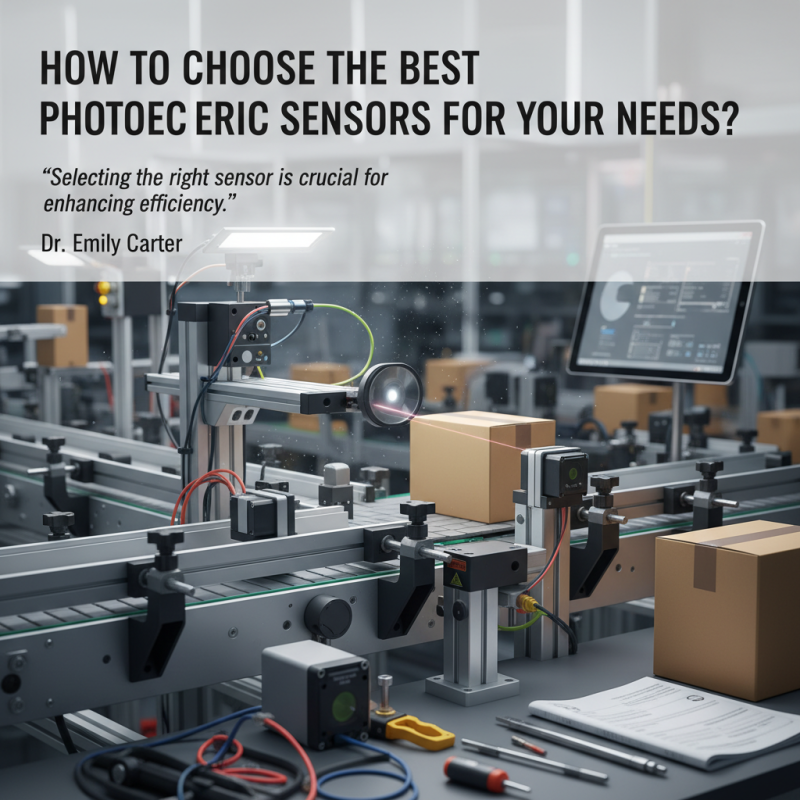
Choosing the right Photoelectric Sensors for your applications can be challenging. According to Dr. Emily Carter, an expert in automation technology, "Selecting the right sensor is crucial for enhancing efficiency." Photoelectric sensors play a vital role in a variety of industries. They detect objects, measure distances, and ensure accurate control in automation systems.
When considering photoelectric sensors, it's essential to assess specific needs. Factors include sensing distance, environmental conditions, and the types of materials to be detected. Different applications require different sensor types, such as through-beam, retroreflective, or diffuse sensors. Each type has its advantages and limitations. In the quest for the perfect sensor, it’s easy to overlook critical details, leading to suboptimal choices.
Integration of photoelectric sensors into existing systems can bring unexpected challenges. Compatibility issues and installation complexities may arise. It's important to reflect on past experiences, as mistakes could provide valuable learning opportunities. Proper training and support can help mitigate these risks, ensuring optimal sensor performance. The goal is to create a seamless integration that benefits production efficiency and safety.
Understanding Photoelectric Sensors: Types and Applications
Photoelectric sensors play a crucial role in automation. They detect changes in light. This feature makes them useful in various industries. There are different types of photoelectric sensors. Each serves unique purposes. Understanding these types is essential for effective use.
Three main categories exist: through-beam, retro-reflective, and diffuse sensors. Through-beam sensors emit light to a receiver. They excel at long-range detection. Retro-reflective sensors bounce light off a reflector. They’re great for compact setups. Diffuse sensors detect objects by the light they scatter. This type is favored for close-range applications.
Choosing the right type depends on specific needs. For instance, consider the environment. Dust or dirt can interfere with sensors. Also, evaluate the distance required for detection. Sometimes a sensor may not function as expected. This might lead to false readings. Reflecting on these factors can prevent issues down the line.
Key Factors to Consider When Selecting Photoelectric Sensors
When selecting photoelectric sensors, several key factors come into play. Understanding the working environment is crucial. Humidity, dust, and temperature can affect sensor performance. A sensor designed for high humidity might not work well in dry conditions. Similarly, sensors exposed to dust need protective features to ensure they remain functional.
Sensitivity is another important aspect. Different applications require different levels of sensitivity. A sensor too sensitive may result in false readings. However, one that is not sensitive enough can miss critical detections. Reflective sensors often work better in confined spaces, while through-beam sensors excel in open areas.
Finally, consider the mounting options and integration capabilities. Some sensors can be challenging to install. Ease of integration into existing systems is vital. Select a sensor that fits your specific needs and ensures seamless compatibility. Evaluate the potential challenges with installation and maintenance as well. Keeping these factors in mind will help you make an informed decision.
Comparative Analysis of Photoelectric Sensor Technologies
When selecting photoelectric sensors, understanding the different technologies is crucial. There are three primary types: diffuse, retro-reflective, and through-beam sensors. Each type has its own strengths and weaknesses, making them suitable for various applications. According to recent industry reports, diffuse sensors are best for short-range detection, while through-beam options offer greater accuracy over longer distances. Retro-reflective sensors strike a balance, providing reliable performance in moderate ranges.
Data indicates that 57% of users prefer retro-reflective sensors due to their versatility. However, some users report issues with ambient light interference. In contrast, diffuse sensors may struggle with distance. Studies show that up to 40% of installations experience misalignment. These factors highlight the need for careful site assessment before making a decision.
Notably, while photoelectric sensors in industrial automation enjoy a 15% annual growth rate, challenges remain. A significant portion of operators faces difficulties in configuring these sensors correctly. This can lead to suboptimal performance. Understanding the specifics of each technology helps in making informed choices. Reducing errors during implementation can significantly enhance efficiency.
Installation and Maintenance Tips for Optimal Performance
When selecting photoelectric sensors, proper installation and maintenance are crucial for optimal performance. Start by ensuring the sensor is mounted correctly. The sensor should have a clear line of sight. Avoid placing it near objects that could obstruct its path. This simple step can prevent many issues later on.
Regular maintenance is important too. Dust and dirt can interfere with the sensor's accuracy. Clean the lens periodically with a soft, lint-free cloth. Ensure the sensor's wiring remains intact and free from corrosion. Pay attention to any unusual readings; they may indicate a need for recalibration.
Many people overlook environmental factors. Temperature fluctuations can impact sensor function. Think about humidity levels and their effects as well. If the sensor operates in harsh conditions, consider shields or protective coverings. Reflect on past experiences. What worked and what didn’t? This knowledge can guide future installations.
Sensor Performance Comparison
Real-World Use Cases of Photoelectric Sensors in Various Industries
Photoelectric sensors are vital in many industries today. They detect objects without direct contact. For instance, in manufacturing, they are often used for counting items on assembly lines. They can also detect the presence of products before packaging. This saves time and reduces errors.
In the food processing industry, photoelectric sensors help ensure product safety. They can detect foreign objects in a production line. However, sometimes they may miss small items. This is a concern for quality control. Regular calibration and maintenance are essential to avoid errors.
In the automotive industry, these sensors are crucial for automation. They assist in robotic arms during assembly. Yet, environmental factors like dust and humidity can affect their performance. It's worth noting that different sensors work better in various conditions. Choosing the right type for specific environments is not always straightforward. Sometimes, trial and error is unavoidable.