
01302 246818

China Top 10 FM Transmitter Manufacturers for Global Buyers?

Choosing reliable Chinese manufacturers requires more than comparing power ratings or factory photos. Global buyers need Fm Transmitters that perform steadily, meet regional requirements, and remain supportable after installation. This guide examines ten established manufacturers through practical purchasing criteria, including engineering capability, product consistency, customization, testing procedures, and export experience.

A serious supplier should explain frequency stability, audio processing, cooling design, protection systems, and remote monitoring options in clear technical language. Buyers should also request test reports, quality certificates, production samples, and references from comparable broadcast projects. A transmitter that looks affordable may create higher costs through unstable output, difficult maintenance, or unavailable replacement parts. Small details matter, such as connector quality, cabinet ventilation, and the clarity of the user manual.

Field experience often reveals more than a product page. Some manufacturers offer impressive specifications but respond slowly when a fault appears. Others provide modest equipment with stronger documentation and faster engineering support. No shortlist is flawless. Supplier capabilities can change, and specifications should be verified before purchase. That point deserves attention.

This introduction presents ten China-based FM transmitter manufacturers for informed global comparison. It does not treat every supplier as identical or recommend one solution for every market. Buyers should confirm local licensing rules, electromagnetic compatibility requirements, voltage standards, import procedures, and installation conditions with qualified professionals. The strongest decision usually balances measured performance, compliance evidence, lifecycle support, and transparent communication. Reliability begins before the order.
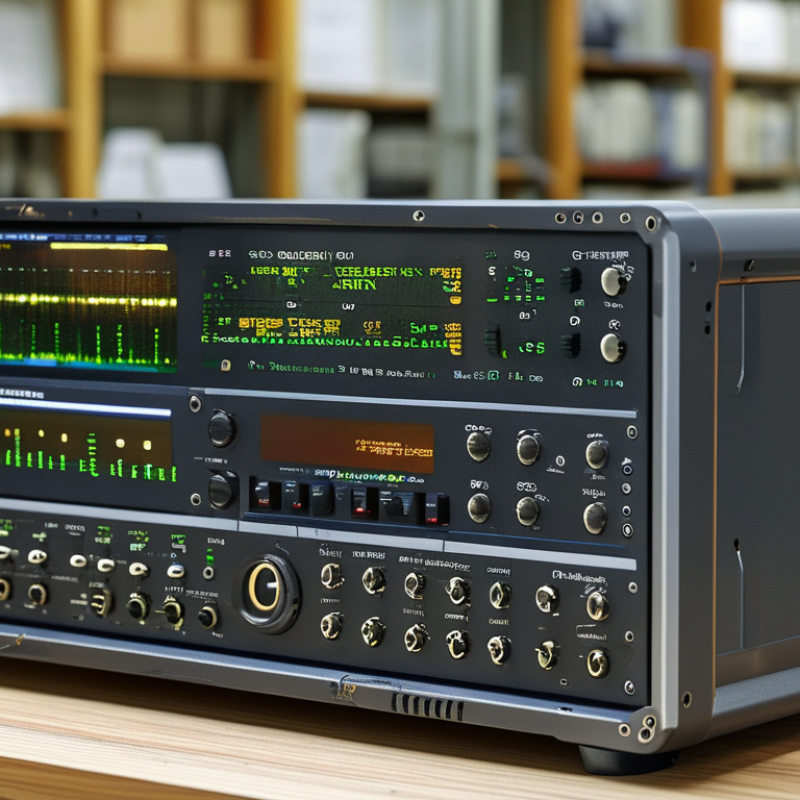
China Top 10 FM Transmitter Manufacturers for Global Buyers?

What Are FM Transmitters and How Do They Work?

An FM transmitter converts an audio signal into a radio-frequency signal. A microphone or studio mixer supplies the audio. The transmitter then changes the carrier frequency slightly, following the audio waveform. This process is called frequency modulation, or FM.

The signal passes through several stages. Audio processing controls volume and reduces unwanted peaks. Stereo encoding combines left and right channels. A modulator applies the audio to a carrier, commonly within the 87.5–108 MHz broadcasting range, depending on national rules. The power amplifier strengthens the signal, while a tuned antenna radiates it across a service area. Clear results depend on antenna height, cable quality, grounding, and terrain. More power alone does not guarantee better coverage.

ITU-R Recommendation BS.450 describes technical characteristics for VHF FM sound broadcasting. In the United States, FCC rules define channel spacing and operating limits for FM stations. These standards matter when buyers compare transmitters for studios, community coverage, or relay sites. RAJAR’s Q1 2024 report recorded weekly radio reach of about 88% among UK adults, showing that broadcast radio remains widely used. However, coverage estimates can mislead. Buildings, hills, and interference often reduce real-world range. I have found that a modest, well-installed system may outperform a larger unit with poor antenna alignment. That detail is easy to overlook.

How to Evaluate Chinese FM Transmitter Manufacturers

How to Evaluate Chinese FM Transmitter Manufacturers

Choosing among China’s top FM transmitter manufacturers requires more than comparing online prices. A polished website is not proof of engineering strength. Request the company’s legal registration, factory address, production photos, and recent export experience. Ask who designs the RF circuit and who performs final testing. Experienced suppliers should provide clear specifications for output power, frequency stability, cooling, modulation, and harmonic suppression.

Request a sample unit before placing a large order. Measure its output with calibrated equipment, then check performance after several hours of operation. Look for stable temperature, clean audio, firm connectors, and readable labels. Ask for test reports, user manuals, wiring diagrams, and spare-part lists. Reliable manufacturers explain limitations instead of promising perfect results. That matters.

Certification documents require careful review. Confirm that reports match the exact model, voltage, and production version. Check whether the supplier can support your destination’s import and radio equipment requirements. A written warranty should define response times, repair procedures, and replacement conditions. Video inspections can help, but they cannot replace an independent audit. I once treated fast replies as a sign of quality. It was a weak assumption. Compare technical answers, sample results, documentation, and after-sales support together. Payment terms and delivery schedules should also be written clearly, with no vague promises.

China’s Top 10 FM Transmitter Manufacturers for Global Buyers

China’s Top 10 FM Transmitter Manufacturers for Global Buyers

China’s top ten FM transmitter manufacturers serve broadcasters, educational networks, community stations, and industrial communication projects. Their product ranges often include compact 30-watt units, mid-power transmitters, and high-power systems for professional sites.

In my sourcing experience, cabinet quality matters as much as rated output. Thick aluminum panels, clean cable routing, and replaceable cooling fans usually indicate better engineering discipline.

Global Buyers Should Examine

Global buyers should examine frequency stability, audio processing, harmonic suppression, remote monitoring, and power efficiency. A reliable supplier should provide test reports, wiring diagrams, user manuals, and clear production records.

Ask whether each transmitter is tested under continuous operation, not only during a short factory demonstration. Small details matter. Loose connectors can become expensive failures.

The Strongest Manufacturers Usually Support

The strongest manufacturers usually support customization, spare parts, firmware updates, and technical training. They should also explain export documentation and local approval requirements without making unsupported promises.

Buyers must verify compatibility with regional spectrum rules before purchase. Factory audits can reveal practical issues, including noisy fans, weak solder joints, or inconsistent labeling.

Not every attractive specification reflects field performance. Some suppliers may also overstate coverage because antenna height, terrain, and installation quality affect real results. A careful comparison should include warranty terms, response time, sample testing, and total operating cost.

Key Products, Specifications, and Industry Applications

China’s top 10 FM transmitter manufacturers are best compared through measurable specifications, not catalog size. Typical products range from compact 30-watt units to 30-kilowatt systems for regional networks. Key checks include frequency stability, harmonic suppression, cooling design, and remote monitoring. ITU-R BS.450-4 remains a useful technical reference for FM broadcasting, including channel planning and deviation requirements.

Field experience shows that efficiency matters more than headline power. A 1-kilowatt solid-state transmitter may suit a campus, emergency information service, or rural relay site. Larger N+1 systems fit provincial networks and continuous operation. Look for digital exciters, automatic power control, reflected-power protection, and efficient liquid or forced-air cooling. Nielsen’s Audio Today 2024 report found that AM/FM radio reached 82% of U.S. adults weekly, showing why reliability still matters in a digital media market.

Specifications can mislead.

Buyers should request measured, not advertised, performance data. Ask for test results covering output power, signal-to-noise ratio, audio distortion, and standby changeover time. IEC 60215 guidance is useful when reviewing transmitter safety and construction quality. Some suppliers offer impressive efficiency figures under ideal conditions; actual results may change with voltage, temperature, and antenna mismatch. That point deserves more attention. Applications, service access, spare-part availability, and compliance documentation should influence the final top-10 ranking as much as price.

China FM Transmitter Manufacturing Market: Typical Output Power by Application

FM transmitter output power is selected according to coverage requirements, antenna system design, licensing conditions, and operating environment. Lower-power systems are commonly used for campus, community, and tourism broadcasting, while higher-power systems support regional and wide-area commercial radio coverage.

How to Compare Prices, Certifications, Support, and Export Services

China Top 10 FM Transmitter Manufacturers for Global Buyers?

Price comparisons should begin with the delivered cost, not the factory quotation. A low-priced transmitter may exclude cooling equipment, excise duties, software, or export packaging. Request an itemized pro forma invoice. Compare output power, frequency stability, efficiency, warranty length, and spare-parts pricing. A 1 kW model with higher efficiency can reduce electricity costs over several years.

Certification documents need careful checking. Ask for test reports, declaration documents, and certificates relevant to your destination. Common references include CE, FCC, RoHS, and ISO 9001, but requirements differ by market and transmitter power. Confirm the certificate holder, model number, testing laboratory, and validity date. A copied logo proves very little. I have seen buyers accept attractive paperwork without matching the equipment model. That mistake is expensive.

Support quality becomes visible after installation. Evaluate response times, English-language manuals, wiring diagrams, commissioning guidance, and remote diagnostic procedures. Ask whether technicians can explain reflected power, cooling alarms, and frequency drift clearly. Export service should include a commercial invoice, packing list, certificate of origin, accurate HS classification, and strong moisture protection. Confirm whether the supplier handles pre-shipment testing, serial-number records, and freight coordination. Ask for photographs before loading. Small details matter. My own comparison sheets sometimes miss local installation costs, so I now request a complete landed-cost estimate and keep a contingency budget for site-specific work.