China’s robotic automation solutions market has expanded across automotive, electronics, logistics, food processing, and general manufacturing. This article introduces ten notable suppliers serving these demanding sectors. Their capabilities may include robotic welding cells, palletizing systems, machine vision, assembly lines, and warehouse automation.
The selection considers engineering experience, product reliability, integration skills, after-sales support, certification practices, and documented industry projects. Factory visits, technical audits, and customer references remain valuable when evaluating a supplier. A polished website is not enough. Buyers should examine cycle-time data, robot brands, safety designs, software compatibility, spare-parts access, and service response times.
Real production details matter. A packaging line may need stable performance across thousands of daily cycles. A welding cell may require accurate positioning within tight tolerances. Electronics plants often demand cleaner environments and careful vision inspection. These requirements can expose differences between suppliers that appear similar on paper.
This is not a permanent ranking. Supplier strengths change with new contracts, software updates, hiring decisions, and investment in research. Public information is also uneven, so some conclusions require cautious interpretation. That is worth remembering.
The following overview compares ten Chinese companies through a practical, evidence-based lens. It highlights their typical applications, technical advantages, limitations, and suitability for different factory conditions. Readers should request current quotations, factory references, compliance documents, and pilot-test results before making a purchasing decision. No supplier fits every operation. Careful verification still matters.
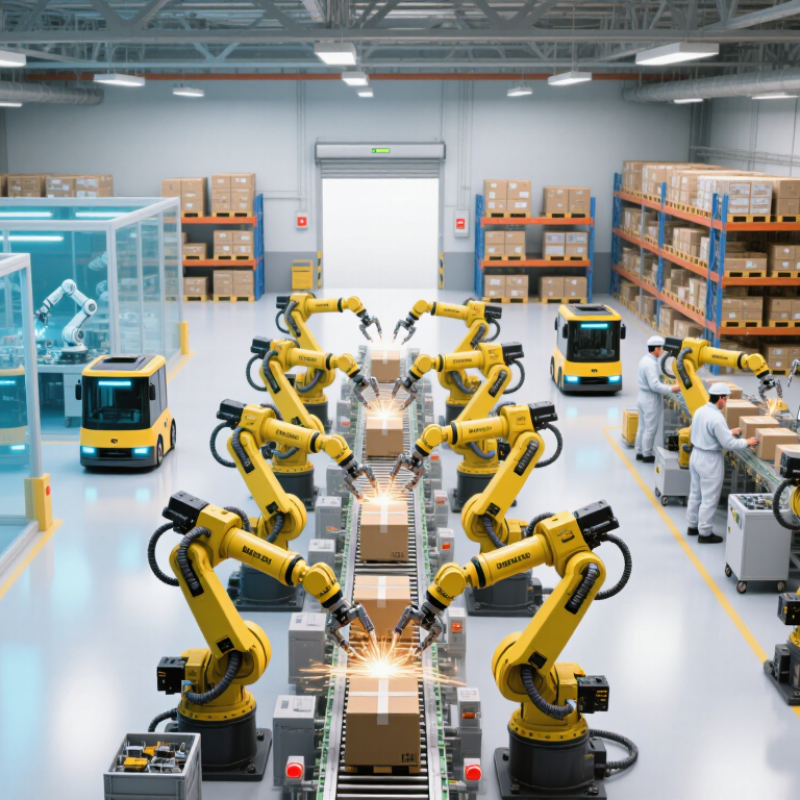
Robotic automation solutions combine industrial robots, sensors, controllers, software, and engineering services. Their purpose is to perform repeatable tasks with greater consistency and measurable efficiency. In China, the scope covers assembly, welding, packaging, machine tending, inspection, warehousing, and internal material movement. It may also include digital production monitoring, predictive maintenance, and operator training.
A capable supplier should provide more than robotic equipment. It should study cycle time, workspace limits, product variation, safety risks, and existing production systems. A reliable proposal includes layout drawings, risk assessment, integration steps, testing records, and after-sales support. Compliance with applicable safety requirements, including relevant ISO standards, should be verified. In practice, a polished demonstration can hide difficult commissioning work. That is an important weakness in many comparisons. Real performance depends on stable programming, accurate grippers, clean data, and trained employees.
Tips: Ask for site-specific performance evidence. Check recovery time after faults. Request a clear maintenance plan. Compare total ownership costs, not only the purchase price. Small details matter. Supplier rankings should therefore consider engineering depth, delivery reliability, safety documentation, customization ability, and measurable results from comparable factories. A solution that looks advanced may still fail when products change frequently. Careful pilot testing remains necessary.
Choosing among China’s leading robotic automation suppliers requires more than comparing catalog prices. Evaluate the complete solution: robot payload, reach, cycle time, repeatability, controller compatibility, and installation support. A capable supplier should test your actual parts, trays, and production rhythm, not only present a polished demonstration. Ask for measurable results from an eight-hour trial, including stoppage rates and changeover time. Real performance matters.
Tips: Request customer references from factories with similar workloads. Check technician response times, spare-parts availability, training quality, and software documentation. Review safety functions, electrical compliance, data protection practices, and integration experience with conveyors, vision systems, and existing machines. A low purchase price may hide costly engineering changes later.
Do not accept vague claims such as “high precision” or “fast delivery.” Request written tolerances and acceptance procedures. In one practical review, a robot met its accuracy target but struggled with inconsistent component placement. That detail changed the final decision. Suppliers should explain maintenance intervals, expected service life, and upgrade paths clearly. I would also leave room for doubt: factory conditions rarely match showroom conditions, and even a strong proposal may need another test. A transparent supplier welcomes that pressure.
China’s Top 10 Robotic Automation Solutions Suppliers
China’s leading robotic automation suppliers serve automotive, electronics, logistics, food processing, and general manufacturing. Their capabilities usually cover robot arms, collaborative robots, machine vision, automated guided vehicles, and control software. The strongest suppliers also design complete production cells, not only individual machines. This distinction matters.
A practical top-ten review should examine specialist strengths. Some suppliers focus on welding and heavy handling. Others build compact assembly stations for small electronic parts. Several concentrate on palletizing, packaging, warehouse transport, or visual inspection. System integrators connect robots with conveyors, sensors, safety fencing, and enterprise software. Buyers should request factory demonstrations, sample-cycle data, and documented acceptance testing.
Details reveal real competence. A reliable supplier can explain cycle time, payload, positioning accuracy, maintenance intervals, and spare-part availability. Ask for factory acceptance tests and site acceptance tests. Check training records and response procedures. ISO certifications may support credibility, but they do not replace performance evidence. A useful trial should run real workpieces for several shifts. Short demonstrations can hide jams, dust problems, or difficult changeovers. I would also compare five-year operating costs, not only the initial quotation. Some projects still need more manual adjustment than expected. That weakness deserves honest discussion before installation.
China’s top 10 robotic automation solution suppliers compete through core engineering, not only hardware prices. Leading suppliers typically combine six-axis robots, SCARA systems, machine vision, motion controllers, and safety equipment. Their software connects robots with PLCs, sensors, production databases, and quality inspection tools.
The strongest solutions serve automotive welding, electronics assembly, metal processing, packaging, food production, pharmaceuticals, and warehouse handling. A practical supplier should understand cycle time, payload, reach, floor space, and operator access. For example, a packaging cell may need a fast delta robot, vision guidance, conveyor tracking, and automatic error rejection. A welding line needs stable positioning, torch control, fixture accuracy, and consistent seam inspection. Digital twins can reduce commissioning risks, but they cannot replace production testing.
Tips: Ask for a live demonstration using your own parts. Check maintenance response times, spare-part availability, training, and software compatibility. Request measured data, not broad promises. No supplier is perfect. Some systems look impressive during demonstrations but struggle with dust, irregular parts, or frequent product changes. A careful factory trial can expose these weaknesses early. Buyers should also review safety documentation and local compliance requirements before installation. The best supplier is rarely the cheapest. It is the one that delivers reliable uptime, clear integration support, and measurable improvement after deployment.
Selecting a robotic automation supplier in China requires more than comparing online rankings. Start with your process, not the supplier’s product list. Define cycle time, payload, accuracy, workspace, and planned production volume. A capable supplier should request these details before recommending equipment. That behavior shows practical engineering judgment.
Ask for evidence from similar applications, including test videos, acceptance records, and measurable results. Visit the factory if possible. Observe wiring quality, safety guarding, software documentation, and spare-part storage. Speak with engineers, not only sales representatives. Check their experience with installation, operator training, maintenance, and remote support. Clear answers matter.
Request a written project scope with responsibilities, milestones, safety requirements, and performance tests. Confirm which parts are locally available and how quickly technicians can respond. A cheaper quotation may hide integration work, tooling changes, or long commissioning delays. I have seen teams focus on robot price and overlook these costs. That mistake is common.
Evaluate communication during the proposal stage. Slow replies may become serious delays later. Still, perfect promises deserve caution. Ask what could fail. Ask how the supplier handles failed tests. Compare at least three technically suitable proposals, then score them using the same criteria. Your best choice may not be the lowest bidder, but the supplier that documents risks honestly and supports the line after installation.