
01302 246818

What Are China Top 10 Biosafety Isolator Manufacturers?

Choosing China’s top 10 Biosafety Isolator manufacturers requires more than comparing product photographs or catalogue prices. A credible review must examine containment design, pressure stability, HEPA or ULPA filtration, glove-port ergonomics, transfer chambers, alarm logic, and cleaning access. It must also consider factory testing, installation quality, validation support, and long-term maintenance. Small details matter. A poorly positioned glove sleeve can increase operator fatigue. An unclear alarm can delay a safe response.

Dr. David Gillum, a respected biosafety professional, offers a practical principle: “Engineering controls must support behavior, not replace it.” This idea guides the comparison. A Biosafety Isolator should protect personnel, products, and the surrounding environment through integrated engineering and disciplined operation. The strongest manufacturers typically provide documented testing, traceable materials, responsive technical service, and training for end users. Their systems should also reflect the application, whether pharmaceutical compounding, sterile processing, laboratory research, or high-containment work.

This list is not permanently fixed. Public technical information can be incomplete, and regional service performance may differ. That limitation deserves attention. Therefore, the ranking considers visible manufacturing capability, product adaptability, quality evidence, customer support, and practical usability rather than marketing language alone. Readers should still confirm current certifications, factory acceptance records, local compliance requirements, and after-sales coverage before purchasing. A polished enclosure is not enough. Reliable containment is built through measurable performance, careful installation, and consistent human practice.
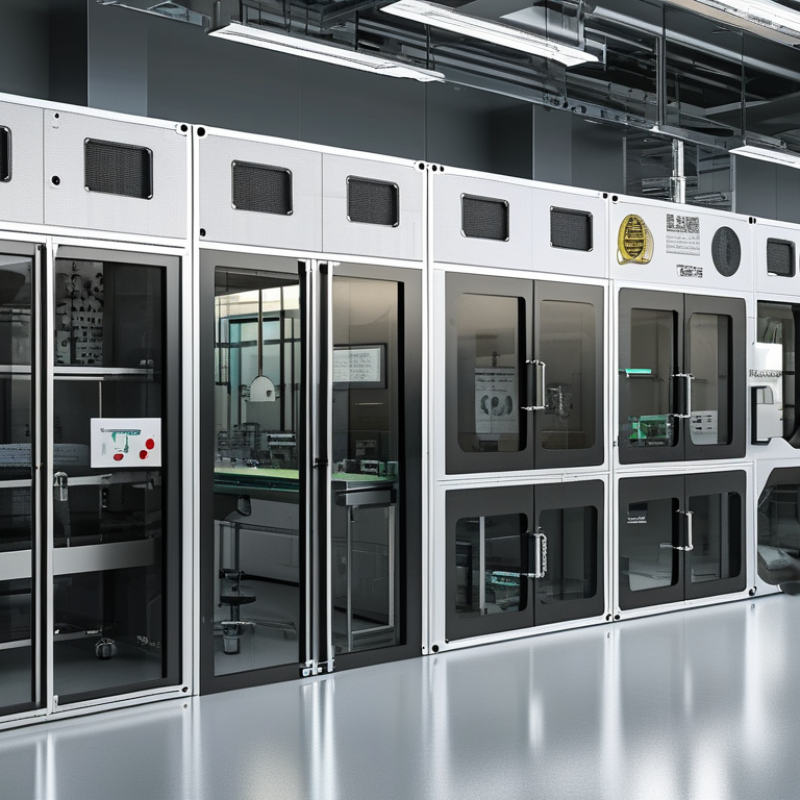
What Are China Top 10 Biosafety Isolator Manufacturers?

What Is a Biosafety Isolator and Why Is It Important?

A biosafety isolator is a sealed, glove-operated enclosure for handling materials that need controlled containment. It separates the operator, product, and surrounding room. Air moves through engineered paths, often with high-efficiency filtration and pressure control. Built-in glove ports allow manipulation without opening the main chamber. A transfer chamber helps move tools and samples with less disruption. The exact design varies. This matters.

Its importance becomes clear during routine laboratory work. An open container, leaking tube, or careless sleeve can release contamination. The isolator reduces that risk by limiting airflow escape and direct contact. Operators still need validated procedures, protective clothing, leak checks, and scheduled filter testing. Good containment is not created by hardware alone. It depends on training and disciplined cleaning. Small details matter, such as wiping the inner door handle before reaching inside.

The term “isolator” is sometimes used loosely, which can confuse purchasers. A reliable evaluation should examine airflow test reports, filter integrity records, glove replacement methods, alarm functions, and emergency procedures. Independent certification and compliance with applicable laboratory standards also deserve attention. Experienced teams assess the complete workflow, not only the enclosure. A beautiful machine may still perform poorly if its transfer chamber is awkward or its gloves restrict movement. That weakness is easy to overlook. A careful trial with real tools and sample containers can reveal it.

How to Evaluate China’s Biosafety Isolator Manufacturers

How to Evaluate China’s Biosafety Isolator Manufacturers

A credible evaluation starts with risk control, not a glossy catalog. The WHO Laboratory Biosafety Manual, fourth edition, requires a documented, activity-based risk assessment before selecting containment equipment. Ask manufacturers to show airflow studies, pressure stability records, HEPA filter leak tests, and alarm verification results. ISO 14644-1:2015 also provides measurable airborne-particle classifications for clean environments. These records should include test dates, instruments, calibration status, and acceptance limits.

For pharmaceutical applications, EU GMP Annex 1 specifies Grade A conditions equivalent to ISO 4.8 for particles ≥5 micrometers and ISO 5 for particles ≥0.5 micrometers. This benchmark helps compare factory claims with independent testing. Check whether the supplier can validate glove integrity, transfer chambers, sterilization cycles, and recovery time under actual load conditions. Service capability matters too. Request spare-parts lead times, remote support procedures, and examples of commissioning documents. A low purchase price can hide expensive validation work.

Experience still needs evidence. Visit the production site if possible, inspect welding quality, gasket alignment, surface finish, and cable routing. Ask for references from comparable containment projects, not unrelated cleanroom installations. My checklist is imperfect. Some suppliers communicate well but provide weak data. Others build solid equipment yet explain it poorly. Independent factory acceptance testing remains worthwhile, especially when the isolator protects operators, products, and test materials.

China’s Top 10 Biosafety Isolator Manufacturers

China’s Top 10 Biosafety Isolator Manufacturers represent a strong manufacturing segment for pharmaceutical, medical, and laboratory applications. These suppliers commonly produce negative-pressure isolators, sterile transfer chambers, and customized containment systems. Their capabilities often include stainless-steel fabrication, HEPA filtration, glove-port integration, pressure monitoring, and automated alarm controls. A reliable manufacturer should provide documented factory testing, clear validation records, and practical installation support.

The best supplier is not always the largest one. Experience with your process matters more. Review airflow studies, leak-test methods, material compatibility, cleaning access, and maintenance procedures. Ask for evidence from comparable projects, not only attractive specifications. Some suppliers may offer excellent engineering but limited overseas service. That weakness can become expensive during commissioning. Lead times also deserve attention, especially for custom dimensions and validated equipment.

Tips: Compare at least three technical proposals. Request pressure-decay test data and filter certificates. Check whether operators can reach every internal surface safely. Confirm spare-parts availability before signing. Visit a production facility if possible. A short factory visit can reveal welding quality, assembly discipline, and testing habits. Be cautious with vague claims such as “fully compliant” without named standards or supporting documents. Even experienced buyers can overlook user training, and that omission may affect daily containment performance.

China’s Top 10 Biosafety Isolator Manufacturers: Cleanroom Benchmarks

ISO 14644-1 airborne particle concentration limits used as a technical reference when evaluating biosafety isolator environments.

The chart shows the maximum permitted concentration of particles ≥0.5 μm per cubic meter for ISO Classes 5–8. Lower particle levels indicate a cleaner controlled environment; actual isolator performance also depends on airflow, pressure control, filtration, leakage testing, and validation requirements.

Key Products, Technologies, and Industry Applications

What Are China’s Top 10 Biosafety Isolator Manufacturers?

China’s leading biosafety isolator manufacturers typically supply negative-pressure isolators, aseptic compounding units, and flexible containment systems. Their key products often include glove ports, transfer chambers, HEPA or ULPA filtration, and integrated decontamination modules. These systems support pharmaceutical production, cell culture, diagnostic laboratories, and hospital preparation areas.

Technology selection should match the application, not just the equipment price. Stable airflow, pressure alarms, ergonomic glove access, and continuous particle monitoring directly affect daily operation.

Some advanced units use automated control panels and vapor-based decontamination cycles. Others focus on modular designs for faster installation and maintenance.

In practice, the best supplier should provide factory testing, installation guidance, operator training, and clear service records. A polished brochure is not proof of reliable performance.

Tips: Ask for airflow test reports, filter integrity records, and cleaning instructions. Check whether the isolator fits your room layout, power supply, and workflow. Review maintenance access carefully. Small design flaws become expensive during routine production. No ranking is perfect. A manufacturer with strong engineering may still need better documentation or after-sales response. Therefore, buyers should compare verified performance, user experience, customization ability, and long-term support before choosing among the top ten candidates.

How to Choose the Right Chinese Biosafety Isolator Supplier

What Are China’s Top 10 Biosafety Isolator Manufacturers?

A top-ten list can help, but it should not replace technical evaluation. The right Chinese supplier must match your containment level, workflow, and facility conditions. Ask for documented experience with similar laboratory or pharmaceutical applications. Request project references, factory photographs, and clear production records. A polished brochure is not enough.

Review the isolator’s airflow design, HEPA filter integrity testing, pressure alarms, glove ports, transfer systems, and cleaning access. Confirm whether factory acceptance testing and site acceptance testing are included. Reliable suppliers explain validation steps without vague promises. They should also provide drawings, user manuals, spare-parts plans, and responsive technical support. Check how quickly they handle faults. Small delays can become expensive.

Tips: Compare at least three suppliers using the same specification sheet. Check certificates with the issuing organization, not only scanned copies. Visit the factory if possible. Watch how staff document assembly and testing. Ask about installation training and after-sales response times. A low quote may look attractive, but it can hide weak materials or limited service. I would not choose on price alone. Even experienced buyers sometimes overlook local maintenance conditions. That mistake deserves a second review.

What Are China Top 10 Biosafety Isolator Manufacturers? - How to Choose the Right Chinese Biosafety Isolator Supplier

Comparative procurement matrix using anonymized supplier profiles. Specifications, certifications, performance claims, and delivery commitments should be verified against current technical documents, factory records, and project references before purchase.

Rank Anonymized Supplier Profile Primary Isolator Configuration Typical Application Containment and Airflow Features Common Filter Configuration Applicable Standards and Documentation Customization Capability Service and Validation Support Indicative Selection Score
1 Supplier Profile 01 Negative-pressure aseptic isolator with integrated transfer chamber Sterile compoundingSmall-batch filling Continuous pressure monitoring, controlled air cascade, glove integrity testing, and interlocked transfer doors Supply and exhaust HEPA filtration; optional safe-change exhaust filter housing Risk assessment, airflow test report, leak-test record, material certificates, and FAT/SAT documentation High: chamber size, glove ports, transfer systems, monitoring points, and utility layout Factory acceptance testing, installation qualification, operational qualification, and operator training 92 / 100
2 Supplier Profile 02 Closed aseptic isolator with integrated decontamination cycle Cell processingAdvanced therapy Closed material-transfer path, pressure alarms, automated cycle control, and glove-sleeve replacement access Terminal HEPA filtration with independent supply and return air paths Cycle development records, decontamination mapping, alarm list, software records, and cleaning validation support High: automated doors, recipe management, environmental monitoring, and process-specific tooling Protocol development, commissioning, validation assistance, and preventive-maintenance planning 90 / 100
3 Supplier Profile 03 Negative-pressure powder-handling isolator Potent compoundsPowder dispensing Airflow maintained inward toward the work zone, dust-control design, pressure alarms, and contained waste removal Supply HEPA filter and separately contained exhaust filtration Containment performance test, airflow visualization, filter integrity test, and cleaning procedure Medium to high: weighing decks, split butterfly valves, rapid transfer ports, and waste systems On-site commissioning, containment testing coordination, spare-parts support, and service training 88 / 100
4 Supplier Profile 04 Flexible-film or hybrid biosafety isolator Research laboratoriesAnimal health Negative-pressure operation, replaceable glove assemblies, compact footprint, and transparent working enclosure Replaceable inlet and exhaust HEPA filters with differential-pressure monitoring Material compatibility data, pressure test record, airflow report, and cleaning instructions Medium: port location, chamber geometry, shelving, and transfer-bag arrangements Remote technical support, installation guidance, consumable replacement training, and basic qualification documents 84 / 100
5 Supplier Profile 05 Hard-wall pharmaceutical isolator with rapid transfer port Sterility testingMicrobiology Rigid enclosure, monitored pressure differential, sealed transfer port, and low-turbulence internal airflow Supply and exhaust HEPA filtration with accessible integrity-test locations Airflow visualization, filter integrity testing, pressure recovery test, and surface-finish specification Medium to high: transfer ports, test accessories, lighting, shelving, and monitoring instruments FAT/SAT packages, qualification templates, installation support, and annual service options 86 / 100
6 Supplier Profile 06 Modular cleanroom-integrated biosafety isolator Pilot productionGMP facilities Designed for integration with room HVAC, room-pressure cascade, interlocked material flow, and centralized alarms Terminal HEPA supply filtration with return-air or exhaust filtration selected by risk assessment URS-to-DQ traceability, design drawings, utility matrix, commissioning plan, and validation package High: line integration, automation, pass-throughs, monitoring, and facility interfaces Project management, site coordination, commissioning, qualification, and documentation handover 89 / 100
7 Supplier Profile 07 Compact negative-pressure isolator for laboratory use Preclinical researchSample preparation Local negative pressure, visual pressure indicator, sealed access points, and manual or semi-automatic controls Integrated supply and exhaust HEPA filters with replaceable cartridges Factory test certificate, electrical safety record, pressure test, and user-operation manual Medium: chamber dimensions, glove ports, lighting, and work-surface materials Standard installation guidance, remote troubleshooting, and replacement-filter supply 81 / 100
8 Supplier Profile 08 Decontamination-capable transfer isolator Material transferSterile logistics Interlocked doors, pressure monitoring, validated decontamination sequence, and controlled material flow HEPA-filtered supply and exhaust with optional catalytic or chemical-process accessories Decontamination-cycle records, temperature or concentration mapping, alarm verification, and operator procedures Medium to high: chamber size, transfer-door dimensions, cycle controls, and monitoring sensors Cycle commissioning, operator training, maintenance schedule, and validation support 85 / 100
9 Supplier Profile 09 Custom multi-chamber biosafety isolator line Multi-step processingContract manufacturing Separated processing zones, independent pressure control, synchronized doors, and centralized monitoring Dedicated HEPA filtration for each zone, with filter monitoring and service access Functional specification, control-system documentation, airflow balance report, and integrated FAT/SAT records Very high: multi-zone layouts, robotics interfaces, process equipment, and automated material handling Full project lifecycle support, site supervision, validation documentation, and long-term service planning 87 / 100
10 Supplier Profile 10 Entry-level laboratory isolator with manual controls Routine testingEducational laboratories Basic negative-pressure control, manual glove ports, visual status indicators, and compact enclosure Replaceable HEPA supply and exhaust filters Product specification, factory inspection record, electrical test report, and operating manual Low to medium: worktop, window, glove-port position, and basic transfer accessories Remote support, standard spare parts, and optional site installation 77 / 100

Evaluation criteria include containment design, aseptic performance, filtration, documentation quality, customization, validation capability, service coverage, and lifecycle support. Buyers should confirm the required biosafety level, pressure regime, airflow pattern, decontamination method, applicable local regulations, and acceptance-test criteria before selecting a supplier.