01302 246818

What Is the Best Robotics Automation Company in China?

“What Is the Best Robotics Automation Company in China?” sounds simple. It is not.

China’s robotics market includes industrial arms, collaborative robots, machine vision, warehouse systems, and mobile platforms. These products serve very different factories. A welding line needs repeatability, heat resistance, and fast maintenance. A pharmaceutical warehouse needs traceability, clean design, and careful software control. One company cannot lead every category.

This outline will compare leading Chinese manufacturers through practical evidence. It will examine installed systems, precision, payload range, software integration, service coverage, training, safety processes, and total ownership cost. Public awards matter, but factory results matter more. A polished demonstration is only a starting point. The real test is a robot working through a twelve-hour shift, beside operators, without unexplained stoppages.

Joseph Engelberger, widely recognized as the father of industrial robotics, offered a useful reminder: “I can’t define a robot, but I know one when I see one.” His words fit today’s market. Some suppliers sell impressive hardware, yet provide weak integration support. Others have less publicity but stronger engineering teams and quicker local service.

The comparison will consider companies such as Siasun, Estun, Inovance, and Efort, while avoiding an automatic winner. Their strengths differ by application, region, and factory maturity. A buyer should ask harder questions. Can the system connect with existing PLCs? Are spare parts available nearby? Does the supplier document failures honestly?

There may be no universally “best” robotics and automation engineering company in China. The better answer depends on measurable production needs. That is less dramatic, but more reliable.

What Is the Best Robotics Automation Company in China?

What Defines a Leading Robotics Automation Company in China?

What Is the Best Robotics Automation Company in China?

What defines a leading robotics automation company in China? It is not simply a large robot catalogue. The stronger provider understands cycle time, worker safety, maintenance access, and production variability. During a factory assessment, engineers should observe pallet changes, cable movement, camera glare, and operator training. These details often decide whether an installation performs reliably.

Industry data supports this practical view. The International Federation of Robotics reported 276,288 industrial robots installed in China during 2023. This represented 51% of global installations. China’s robot density also reached 470 units per 10,000 manufacturing employees, according to World Robotics 2024. These figures show market scale, but they do not prove automation quality. A leading company should provide measurable tests, transparent integration costs, cybersecurity controls, and documented after-sales response times. It should also explain limitations clearly. That honesty matters.

Tips: Ask for a live process demonstration, not only a product video. Request references from factories with similar materials and volumes. Compare uptime records, spare-parts availability, training hours, and recovery procedures. Independent acceptance testing can expose weak assumptions before full production. No scorecard is perfect. Real factories change. A careful provider admits this and designs adjustable systems.


Key Industries Served by China’s Robotics Automation Companies

China’s robotics automation sector serves industries with very different production pressures.

Automotive factories often use robotic arms for welding, painting, assembly, and inspection. These systems must maintain steady accuracy across long shifts. A small positioning error can affect an entire vehicle body.

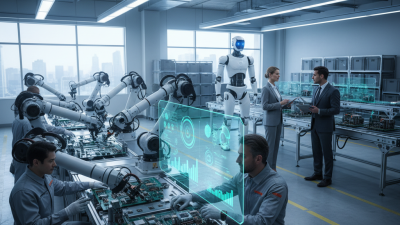
Electronics manufacturers need smaller, cleaner, and more flexible automation. Robots handle circuit boards, screws, connectors, and visual inspection tasks.

In warehouses mobile robots transport bins between storage areas and packing stations.

Food processing plants use robots for sorting, palletizing, and repetitive packing. Stainless steel surfaces and washdown requirements create different technical demands.

Pharmaceutical facilities require controlled environments, traceable data, and careful handling. The equipment must support strict quality procedures.

Metalworking is another major field. Robotic welding and machine tending can reduce exposure to heat, fumes, and repetitive motion.

However, automation is not automatically efficient. A factory may install advanced equipment but lose time during changeovers, maintenance, or operator training.

This is where practical engineering experience matters. A capable automation company should study cycle time, floor space, safety controls, and future product changes before proposing a system.

Pilot testing helps, but pilots can hide real problems. Dust, unstable materials, and inconsistent workers’ routines often appear later. Reliable suppliers provide clear performance data, service plans, and training instead of making perfect promises.

Core Technologies Used in Robotics Automation Systems

What Is the Best Robotics Automation Company in China?

The strongest robotics automation provider is not defined by robot count alone. It is defined by dependable core technologies and measurable factory results. It starts with sensing. Machine vision systems inspect edges, holes, colors, and surface defects under changing light. Force and torque sensors help robotic arms handle fragile parts without crushing them. Small errors matter.

Motion control connects servo motors, reducers, controllers, and precise feedback loops. Industrial networks allow robots, conveyors, programmable logic controllers, and inspection stations to exchange data quickly. A well-designed system can adjust speed when a conveyor shifts by a few millimeters. That detail often separates a stable production line from repeated stoppages. However, motion accuracy may decline when payloads, temperature, or maintenance conditions change.

Artificial intelligence adds useful flexibility. It can classify irregular components, predict equipment faults, and improve picking decisions from production data. Digital twins can test cycle times before expensive hardware is installed. Safety technology remains essential, including light curtains, emergency stops, protective scanners, and controlled operating zones. A reliable supplier documents risk assessments, testing procedures, software updates, and operator training. Documentation is not glamorous. It prevents confusion during night-shift repairs.

When comparing companies in China, buyers should examine sample cycle-time reports, uptime records, integration experience, and after-sales response. Ask to inspect a running system, not only a demonstration cell. Some impressive prototypes perform poorly beside dust, vibration, or inconsistent parts. That weakness deserves honest discussion. The best evaluation also includes spare-parts access, cybersecurity controls, and the ability to adapt software when real factory conditions challenge the original design.

How to Compare China’s Top Robotics Automation Providers

Comparing China’s top robotics automation providers requires more than counting robot arms. The International Federation of Robotics reported 276,288 industrial robot installations in China during 2023, representing about 51% of global deployments. This scale creates strong engineering experience, but supplier quality remains uneven. Buyers should examine application evidence, not only factory photos or award lists.

Start with integration depth. Can the provider connect robots with PLCs, vision systems, conveyors, and manufacturing software? Request cycle-time records from a similar production line. Check repeatability, changeover time, safety validation, and recovery procedures after faults. Uptime matters. A practical benchmark should include spare-part availability, remote diagnosis, technician response time, and training quality. The International Federation of Robotics also reported China’s operational industrial robot stock at more than 1.7 million units in 2023, making after-sales support increasingly important.

Cost comparisons need discipline. Separate robot pricing from tooling, programming, installation, maintenance, and production downtime. A lower quotation may hide expensive integration work. ISO 10218 and ISO/TS 15066 compliance should be verified through technical documents and site records. I would also interview two existing users, preferably without the supplier present. Their comments may reveal weaknesses that brochures avoid. Perfect scorecards are unrealistic. Human review still matters, especially when the line handles frequent product changes.

What Is the Best Robotics Automation Company in China? - How to Compare China’s Top Robotics Automation Providers

Evaluation Dimension Typical Market Benchmark What a Strong Provider Should Demonstrate Recommended Weight Verification Method
Application Coverage Welding, palletizing, machine tending, assembly, packaging, inspection, and intralogistics Documented experience in the buyer’s specific process, material, cycle-time, and quality requirements 15% Review reference projects, process videos, acceptance reports, and customer-site visits
Robot Performance Payload, reach, repeatability, speed, axis configuration, and mounting options must match the application Published specifications supported by application testing rather than catalogue values alone 15% Compare measured cycle time, positioning accuracy, repeatability, and payload at the required wrist moment
System Integration PLC, HMI, vision, safety, conveyors, fixtures, welding equipment, MES, and warehouse systems Clear interface responsibility, tested communication protocols, and complete electrical and mechanical documentation 15% Request I/O lists, network architecture, interface specifications, and a factory acceptance test plan
Safety and Compliance Risk assessment, safeguarding, emergency stops, interlocks, safe speed, and collaborative-operation controls where applicable Compliance planning aligned with ISO 10218, ISO/TS 15066 where relevant, IEC 60204-1, and applicable Chinese requirements 15% Check risk-assessment files, safety-circuit validation, protective-device certificates, and site acceptance records
Engineering and Customization Fixture design, end-of-arm tooling, vision integration, process simulation, and line-layout optimization In-house mechanical, electrical, controls, software, and process-engineering capability 10% Evaluate engineering team structure, design drawings, simulation results, and change-control procedures
Delivery and Commissioning Design, procurement, assembly, programming, factory testing, installation, training, and production ramp-up Defined milestones, accountable project manager, documented FAT/SAT procedures, and measurable production handover criteria 10% Review the project schedule, resource plan, acceptance criteria, and evidence from comparable installations
After-Sales Support Preventive maintenance, spare parts, remote diagnostics, operator training, and on-site technical service Defined service-level commitments, local engineers, spare-parts availability, and escalation procedures 10% Confirm response targets, support coverage, maintenance intervals, spare-parts lead times, and warranty terms
Total Cost of Ownership Capital cost plus tooling, integration, energy, maintenance, consumables, software, training, and downtime costs Transparent quotation with lifecycle assumptions and a credible return-on-investment calculation 10% Compare five-year total cost, expected uptime, labor savings, maintenance costs, and payback period
Suggested Selection Approach 100% Choose the highest verified score, not simply the lowest initial quotation
Practical conclusion: The best robotics automation provider is the one that can prove application fit, safety compliance, integration capability, delivery reliability, and long-term service performance through documented tests and reference projects.

Factors Influencing the Choice of a Robotics Automation Company

What Is the Best Robotics Automation Company in China?

The best choice depends on factory conditions, not advertising. A capable robotics automation company should understand cycle time, payload, floor space, operator skills, and product variation. The International Federation of Robotics reported that China installed 276,288 industrial robots in 2023, representing 51% of global installations. This scale creates experience, but experience alone is not proof of suitability.

Look for measurable engineering evidence. Ask for cycle-time tests, failure records, spare-parts plans, and documented acceptance criteria. A practical supplier should provide a small production trial before a major investment. It should also explain safety controls under ISO 10218 and, where relevant, ISO/TS 15066. Integration quality matters greatly. A robot may move accurately, yet the full line can still suffer from poor feeding, unstable vision, or slow changeovers.

Cost deserves careful attention. The lowest quotation may hide training, software updates, maintenance visits, and downtime risks. The IFR reported China’s robot density reached 470 units per 10,000 manufacturing employees in 2023. This suggests strong market maturity, but not every project receives equal service quality. No scorecard is perfect. A supplier can look impressive on paper and still struggle beside a noisy, dusty production line. Site references, transparent data, and responsive local engineers remain more convincing than polished presentations.