
Choosing an Aluminum Fin Press Machine is a production decision, not a simple equipment purchase. The right model must match fin height, material thickness, alloy behavior, strip width, and required output. A machine that looks powerful in a brochure may struggle with thin aluminum under continuous operation. Small differences in tooling alignment can also create uneven fins, burrs, and costly scrap.
Dr. Elena Marquez, an aluminum heat-exchanger manufacturing consultant, explains, “A reliable fin press begins with process knowledge, not machine size.” That observation deserves attention. Many buyers focus on maximum stroke speed first. That can be a mistake. Stable feeding, repeatable pressure, quick die changes, and accessible maintenance often matter more on a busy factory floor. Operators should also inspect the control panel, guarding, lubrication points, and emergency-stop layout before approval.
This guide presents seven practical tips for comparing an Aluminum Fin Press Machine. It considers production volume, fin geometry, press capacity, tooling quality, automation, service support, and total ownership cost. Real workshop conditions matter. Dust, vibration, operator skill, and material variation can change performance. No checklist removes every risk. A machine may meet specifications yet still feel inconvenient during a twelve-hour shift. That uncomfortable detail is easy to overlook. Buyers should request sample forming tests, inspect finished fins closely, and ask for measurable accuracy data. A careful decision may take longer, but it usually prevents expensive rework, delayed deliveries, and avoidable production frustration.
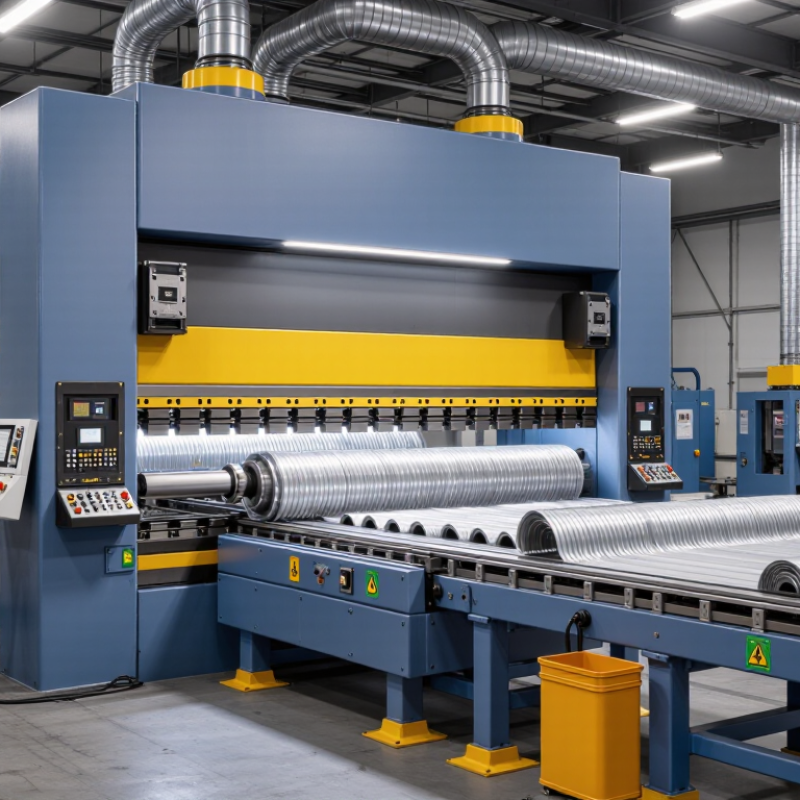
Before comparing an aluminum fin press machine, define the job it must perform. Identify the fin height, pitch, material thickness, strip width, and required production volume. A machine for thin condenser fins may not suit thicker heat exchanger material. It is tempting to choose maximum press force, but excessive capacity can increase energy use and tooling costs.
Review your actual production data, not ideal estimates. Record hourly output, material changes, reject rates, and the longest continuous run. Then match the machine’s stroke rate and feeding system to these conditions. Ask for sample production using your aluminum grade and target dimensions. Check fin consistency under magnification, especially around the collar and cut edge. Small burrs can create assembly problems later.
Leave room for maintenance. Tool access, lubrication points, sensor placement, and changeover time affect daily output. A practical machine should support stable feeding without constant operator adjustment. It should also provide clear controls and guarded moving parts. Do not ignore floor space and electrical requirements. I have seen production plans fail because these details were measured too late. A slower machine with dependable setup may outperform a faster one that produces frequent rejects. Test carefully. Then question your assumptions.
Press type should match production volume, fin geometry, and material temper. Mechanical presses suit high-speed, repeatable stamping, while hydraulic presses offer better force control for thicker or harder strip. Servo presses can adjust stroke profiles, but their higher cost may not benefit simple fin shapes. The U.S. Geological Survey reported about 70 million metric tons of global aluminum production in 2023. That scale reflects broad material variation, not one universal machine setting.
Capacity matters beyond rated tonnage. Calculate cutting and forming loads from strip thickness, fin height, pitch, and tensile strength. Then add a practical safety margin, usually 15–25%, after checking the manufacturer’s load curve. A narrow fin may require less force but higher cycling speed. Check stroke length, shut height, die area, feeder accuracy, and coil width together. One overlooked dimension can stop an otherwise suitable line.
Material compatibility deserves closer attention. Aluminum 1100 forms easily, while 3003 offers stronger fins with moderate formability. 5052 and harder tempers may need slower forming, larger radii, or staged operations. The International Aluminium Institute recorded 70.6 million tonnes of primary aluminum production in 2023, showing how widely grades and supply conditions can vary. Also verify thickness tolerance, surface coating, lubrication, and burr limits. A practical shop-floor lesson is simple: test the actual coil, not only its certificate. I would not treat catalog capacity as proof. Fin cracking, springback, and uneven pitch often appear after installation.
Choosing an aluminum fin press machine starts with tooling precision, not brochure speed. Check die alignment with a calibrated gauge before production. Confirm punch-to-die clearance against the fin material and thickness. Even a small offset can create uneven louvers, cracks, or excessive burrs. Ask suppliers for repeatability data from several hundred strokes, not one perfect sample. In practice, a polished sample can hide unstable tooling.
Fin quality needs measurable evidence. Inspect fin height, pitch, flatness, and edge condition under consistent lighting. Use a vision system or CMM inspection for critical dimensions. Compare samples from the beginning, middle, and end of a run. The Aluminum Association’s 2024 Aluminum Statistical Review shows the scale of modern aluminum demand, making consistent quality increasingly important. Do not accept “high precision” without inspection records. No metric is perfect.
Production speed should be tested under real load. Measure complete cycle time, setup time, jam frequency, and changeover losses. A faster stroke rate may reduce output if scrap or maintenance increases. Deloitte’s 2024 Smart Manufacturing and Operations Survey found that 86% of manufacturers expect smart manufacturing to become a key competitiveness driver within three years. Choose a machine that records pressure, cycle count, alarms, and downtime. Request a production trial using your actual coil, tooling, and target fin geometry. Seven checks, one overlooked detail can still stop a line.
A practical comparison checklist for selecting an aluminum fin press machine
| Tip | Evaluation Dimension | Practical Benchmark | Why It Matters | How to Verify |
|---|---|---|---|---|
| 1 | Tooling precision and repeatability | Look for documented die and guide-system repeatability of approximately ±0.02–0.05 mm for critical forming features. | Accurate tooling helps maintain consistent fin pitch, height, louver geometry, and alignment during long production runs. | Review dimensional inspection reports, die-maintenance records, and sample parts measured with a calibrated optical or coordinate measuring system. |
| 2 | Supported aluminum strip range | Confirm that the machine supports the required alloy, temper, strip width, and thickness. Common heat-exchanger fin stock is often about 0.08–0.30 mm thick, but the actual range depends on the product. | A machine that is too lightly or heavily rated can cause unstable feeding, excessive burrs, tool wear, or material cracking. | Compare the machine specification with the material mill certificate and run a trial using the exact alloy, temper, thickness, and width. |
| 3 | Fin geometry and surface quality | Define allowable variation for fin height, pitch, louver angle, burr height, and surface damage. A useful starting target is less than 5% pitch variation and no visible tearing or crushed sections. | Uniform fins provide predictable airflow and heat-transfer performance while reducing assembly problems and rejection rates. | Inspect a statistically representative sample using optical measurement, profile projection, burr checks, and visual inspection under consistent lighting. |
| 4 | Feed accuracy and strip control | For precision fin production, evaluate feed accuracy around ±0.05–0.10 mm per feed cycle, with stable uncoiling and tension control. | Inaccurate feeding can create pitch drift, material buckling, die misalignment, and inconsistent cut-off lengths. | Measure feed length over at least 100 consecutive cycles and check the results at startup, steady state, and near coil end. |
| 5 | Production speed and usable output | Many fin presses operate broadly in the range of 60–180 strokes per minute. Compare usable parts per minute rather than maximum empty-machine speed. | Higher nominal speed is valuable only when fin quality, uptime, changeover time, and scrap remain within acceptable limits. | Request a production trial that records strokes per minute, good pieces per hour, downtime, changeover duration, and scrap percentage. |
| 6 | Press rigidity, vibration, and safety | Prioritize a rigid frame, stable slide guidance, overload protection, guarding, interlocks, emergency stops, and compliance with applicable machinery-safety requirements. | Low vibration improves tool life and dimensional stability, while effective safeguards reduce operator exposure to moving tooling and strip edges. | Observe the machine at operating speed, review risk-assessment documentation, test safety circuits, and inspect vibration or abnormal noise during a trial run. |
| 7 | Changeover, maintenance, and total operating cost | Evaluate quick-change tooling, accessible lubrication points, spare-part availability, and a documented preventive-maintenance schedule. Track setup time and scrap; a practical internal goal is to keep avoidable scrap below 2–3% after process stabilization. | Shorter changeovers and predictable maintenance improve equipment availability and reduce the real cost per acceptable fin. | Time a complete product changeover, review maintenance intervals, calculate energy and tooling consumption, and compare total cost per good part. |
Note: The figures shown are general engineering benchmarks for initial equipment screening, not universal specifications. Final acceptance limits should be based on the aluminum alloy, fin design, customer drawings, tooling concept, and required production volume.
Automation should match your actual production rhythm. Check cycle time, material detection, recipe storage, sensor feedback, and data logging. The International Federation of Robotics reported 162 industrial robots per 10,000 manufacturing employees worldwide in 2023. This figure signals rising automation, but automation alone does not guarantee stable output. Test the press with your real fin stock, not only demonstration material. Confirm changeover steps and operator training time.
Safety features deserve direct inspection. Look for guarded pinch points, interlocked doors, emergency stops, two-hand controls, and clear lockout points. OSHA’s machine-guarding guidance emphasizes preventing body contact with hazardous moving parts. Ask whether maintenance staff can isolate electrical, pneumatic, and hydraulic energy safely. Small gaps matter. A missing label can create confusion during a rushed shift.
Maintenance requirements should be measurable. The U.S. Department of Energy’s Operations & Maintenance Best Practices guide links preventive maintenance with improved reliability and lower operating costs. Request lubrication intervals, spare-part lists, fault-code explanations, and service access drawings. Check whether common wear parts can be replaced without dismantling the whole feed system. Operator requirements also matter: lifting limits, setup skills, inspection duties, and restart procedures should be written clearly. No checklist is perfect. A practical trial with two operators may reveal awkward controls, excessive noise, or cleaning problems that a sales specification misses.
Choosing an aluminum fin press machine requires more than comparing purchase prices. Calculate the total cost across its working life, including tooling, installation, electricity, lubricants, spare parts, and operator training. Cheap is rarely cheap. A machine with a lower price may consume more energy or require frequent die adjustments. Request a detailed quotation with every excluded cost clearly listed.
Supplier support deserves equal attention. Ask how quickly technicians respond, whether remote diagnostics are available, and which parts are normally stocked. Request installation procedures, maintenance schedules, and training materials before signing. Ask for evidence. A practical supplier should explain press capacity, stroke accuracy, production speed, and safety controls without vague promises. Check references from factories producing similar aluminum fin profiles, not unrelated products.
Long-term reliability should be tested, not assumed. Review inspection records, cycle-test results, warranty terms, and recommended replacement intervals. Examine the frame, guide system, feeder, and control cabinet during a factory visit. Small alignment errors can create burrs, uneven spacing, and rejected fins. The machine may perform well during a demonstration, yet struggle after months of continuous operation. Leave room for doubt. Include response-time commitments, spare-part availability, and preventive service in the contract. Also calculate the cost of one day of downtime, because that figure often changes the buying decision.
