7 Best Humidor Boxes for Cigar Storage?
Choosing a Humidor Box is less about appearance and more about stable, measurable storage conditions. Cigar and cigarillo demand remains significant worldwide. Grand View Research valued the global cigar market at approximately USD 21.7 billion in 2022 and projected continued growth through 2030. However, that report tracks tobacco sales, not humidor quality. This distinction matters.
A reliable box should maintain consistent relative humidity, limit air exchange, and avoid strong internal odors. Spanish cedar remains popular because it supports humidity regulation and adds a familiar aromatic character. Still, cedar alone cannot correct a weak seal or an inaccurate hygrometer. Small details matter. A loose lid can quietly damage months of careful storage.
Michael Herklots, a respected cigar retailer and educator, has described the principle clearly: “A humidor is a tool for preserving the cigar’s condition, not improving it.” That warning should guide every comparison in this list. A premium box cannot revive cigars that have already dried out. It can only protect them from further change.
The seven selections below examine construction, capacity, seal quality, humidification design, and daily usability. Some models look impressive but create unnecessary maintenance. Others seem plain, yet perform consistently. That is easy to overlook.
Testing conditions also influence results. Room temperature, seasonal dryness, and calibration errors can change performance. Therefore, this guide treats manufacturer claims carefully and favors practical evidence. The best Humidor Box is not always the most expensive one. It is the one that keeps conditions steady, fits your collection, and remains simple enough to use correctly.
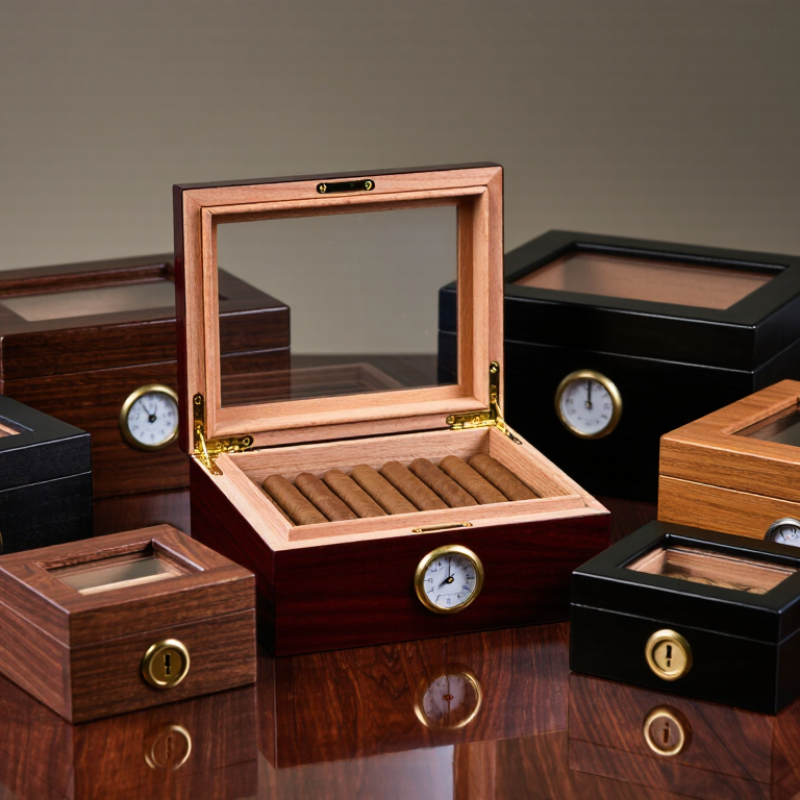
Define Ideal Storage Standards: 65–72% RH and 65–70°F
7 Best Humidor Boxes for Cigar Storage?
Define Ideal Storage Standards: 65–72% RH and 65–70°F
A dependable humidor should maintain 65–72% relative humidity and 65–70°F. These conditions help cigars preserve their aroma, texture, and steady burn. Stable readings matter more than chasing one perfect number. A digital hygrometer makes small changes easier to notice. Keep the box away from windows, heaters, kitchens, and direct sunlight. Heat can dry the contents quickly.
Tips: Calibrate the hygrometer before use. Season the interior gradually with distilled water or an approved humidification solution. Never pour liquid directly onto the wood. Leave space between cigars so air can circulate. Check the seal by closing the lid gently. A loose seal defeats an expensive setup.
My first mistake was opening the lid too often. The display looked fine, but the humidity kept drifting. Weekly checks are usually enough, unless the room changes sharply. Spanish cedar can support moisture balance, though it cannot repair poor ventilation or a damaged seal. Choose a humidor with sturdy hinges, accurate monitoring, and enough capacity for airflow. A box packed tightly may look efficient, but it can create uneven conditions. Some storage advice sounds exact; real homes are not laboratories. Adjust slowly, record readings, and question sudden changes before adding more humidity.
Compare Humidor Materials: Spanish Cedar, Acrylic, Glass, and Metal
7 Best Humidor Boxes for Cigar Storage?
Material often matters more than appearance when choosing a humidor box. Spanish cedar remains popular because it absorbs and releases moisture gradually. It also adds a distinct woody aroma. A tight lid, accurate hygrometer, and stable room temperature still matter. Cedar is not magic. Poor sealing can defeat its natural buffering ability.
Acrylic boxes offer clear visibility and simple cleaning. They usually hold humidity well when the seal is sound. However, condensation can appear after sudden temperature changes. Glass creates an attractive display and makes inspection effortless. It also exposes stored cigars to light and temperature swings. A shaded location is essential. I once assumed glass was easier, but daily monitoring proved more demanding.
Metal boxes provide strength, portability, and strong protection from impacts. Their surfaces do not regulate humidity, so an internal cedar tray or divider becomes useful. Metal can also feel cold, increasing condensation risks in damp rooms. For seven practical choices, compare the material, seal, humidification space, and hygrometer placement together. The largest box is not automatically the best. A smaller, well-sealed box may maintain steadier conditions, especially for occasional storage. Personal testing should include opening frequency, seasonal humidity, and how quickly readings stabilize. My own preference changes with the room; convenience sometimes wins over traditional materials.
7 Best Humidor Boxes for Cigar Storage? Compare Humidor Materials
This comparison uses a relative 1–5 suitability rating based on commonly recognized material characteristics for cigar storage. Spanish cedar scores highest for humidity buffering and aroma compatibility, while acrylic and glass provide better visibility.
Rating scale: 1 = lower suitability, 5 = higher suitability. These ratings are material-based comparisons rather than laboratory test results; actual performance also depends on sealing, humidification, temperature, and maintenance.
Assess Maintenance Needs: Seasoning, Hygrometer Accuracy, and 65–69% RH Packs
7 Best Humidor Boxes for Cigar Storage?
A good humidor needs more than attractive wood and a tight lid. Its maintenance routine matters daily. Seasoning prepares unfinished cedar before storage, but over-seasoning can create unstable moisture. Most boxes need several days to two weeks, depending on wood dryness and room conditions. I have learned that rushing this stage often causes sharp humidity swings.
The target range deserves attention. Many experienced collectors keep cigars between 65% and 69% relative humidity. A 65–69% RH pack offers steadier moisture than frequent liquid adjustments. Still, packs cannot correct a leaking seal or badly dried wood. The Cigar Association of America’s statistical reports describe annual U.S. premium-cigar shipments exceeding 300 million units, showing why consistent storage remains a serious quality concern. NIST Special Publication 250-74 also stresses traceable calibration for reliable humidity measurements. A cheap hygrometer may look precise while reading several points incorrectly.
Tips: Test the hygrometer with a saturated-salt method before trusting it. Check the reading after eight hours, then repeat after a week. Keep the sensor away from the humidification pack. Do not place the box beside a radiator or sunny window. Wipe spills immediately. I prefer small adjustments, although patience is difficult. A sealed box that holds 65–69% RH for seven days is more convincing than one perfect reading.