
2026 How to Choose a Transfer Tank and Pump?
Choosing a Transfer Tank And Pump in 2026 requires more than comparing tank capacity and advertised flow rate. A practical system must match the fluid, vehicle, operating temperature, duty cycle, and installation space. A 100-gallon tank may fit neatly in a service truck, yet its pump can struggle when the hose runs uphill. Small details matter.
Industry research supports this careful approach. Grand View Research identifies industrial pumps as a growing global market, driven by energy, construction, agriculture, and manufacturing demand. MarketsandMarkets also segments pump selection by technology, pressure, application, and end user. These reports show a changing market, but they cannot choose equipment for a specific truck or worksite. That decision still depends on measured conditions.
Pump engineer Michael Volk offers a useful reminder: “A pump is not selected in isolation; it is selected as part of a system.” This principle should guide every purchase. Check the liquid’s viscosity, contamination risk, required litres per minute, hose length, electrical supply, and emergency shutoff features. Confirm tank compatibility and secure mounting before installation. Do not trust a high-flow number without checking pressure at the nozzle.
The honest answer is uncomfortable. The cheapest package may become the most expensive after repeated downtime, leaks, or premature motor failure. A reliable choice may also look slightly oversized. That is not automatically wasteful. It can provide operating margin, easier maintenance, and safer daily use. This guide compares tank materials, pump technologies, controls, filtration, and lifecycle costs, while recognising that real-world conditions often defeat perfect specifications.
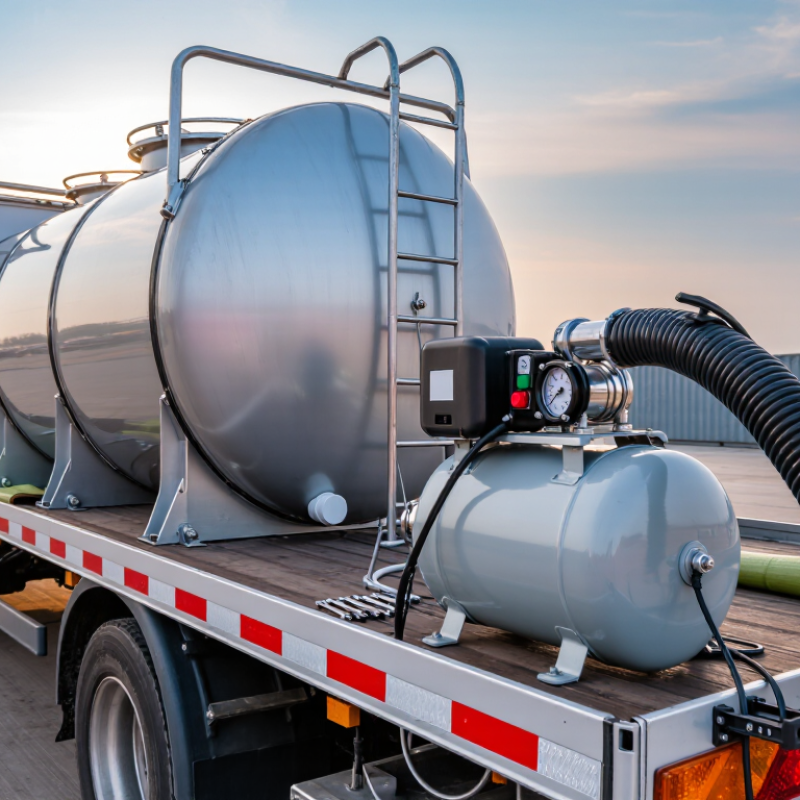
Transfer Tank Basics: Purpose, Types, and Common Applications
2026 How to Choose a Transfer Tank and Pump?
A transfer tank stores and moves fuel or approved fluids between locations. It supports tractors, construction equipment, service trucks, and backup generators. The tank is not merely a container. Its shape, material, baffles, vents, and pump must match the application. According to the U.S. Energy Information Administration’s Short-Term Energy Outlook, U.S. distillate fuel demand remains near 4 million barrels daily. That volume reflects continuing demand for dependable on-site fueling. It also exposes the cost of poor equipment selection.
Common types include rectangular truck-bed tanks, combination tank-and-toolbox units, and stationary tanks. Aluminum reduces weight and resists corrosion. Steel often offers stronger impact protection. A manual pump suits occasional use, while a 12-volt electric pump saves time during repeated refueling. Choose a baffled design for rough roads. Without internal baffles, liquid movement can affect vehicle stability and pump performance. Industry guidance from OSHA’s flammable-liquid standard emphasizes suitable containers, controlled dispensing, and safe ventilation. Local requirements still need verification. Assumptions can be expensive.
Tips: Confirm fluid compatibility before ordering. Check the tank’s usable capacity, not only its advertised volume. Match pump flow to the equipment’s fuel inlet. Install a filter and automatic shutoff where appropriate. Inspect hoses, seals, vents, and grounding points regularly. A flow meter may improve tracking, but it can drift without calibration. Keep a written inspection log, even for a small farm tank.
2026 How to Choose a Transfer Tank and Pump? - Transfer Tank Basics: Purpose, Types, and Common Applications
| Equipment Category | Specification or Feature | Typical Range or Standard Option | Common Applications | Selection Guidance |
|---|---|---|---|---|
| Transfer Tank | Primary purpose | Temporary or mobile storage and controlled fluid transfer | Fuel handling, water supply, lubricants, agricultural liquids, and industrial fluids | Choose a tank according to the fluid, required storage volume, transportation method, local regulations, and available installation space. |
| Tank Type | Portable auxiliary tank | Approximately 75–500 gallons | Service vehicles, mobile generators, construction equipment, and field maintenance | Suitable when additional fuel or fluid capacity is needed without installing a permanent storage system. Confirm vehicle payload and mounting requirements. |
| Tank Type | Intermediate bulk container | Commonly about 275–330 gallons | Water, non-hazardous chemicals, detergents, and bulk liquid distribution | Select a compatible cage, pallet base, valve arrangement, and material rating. Verify that the container is approved for the intended liquid. |
| Tank Type | Stationary day tank | Approximately 50–1,000 gallons | Backup generators, boiler systems, heating equipment, and process systems | Use when equipment needs a nearby supply reservoir. Include level monitoring, overfill protection, ventilation, secondary containment, and emergency shutoff provisions. |
| Tank Type | Double-wall tank | Inner tank plus secondary containment chamber | Fuel, oils, and regulated liquids where spill control is important | A double-wall design can reduce spill risk, but it does not replace required inspection, leak detection, grounding, or regulatory compliance measures. |
| Tank Material | Carbon steel | Common for diesel, fuel oil, and many industrial liquids | Heavy-duty mobile tanks, generator fuel systems, and industrial storage | Provides good mechanical strength. Use suitable coatings or corrosion protection when exposed to moisture, chemicals, or outdoor conditions. |
| Tank Material | High-density polyethylene | Lightweight, corrosion-resistant construction | Water, fertilizers, cleaning solutions, and selected non-corrosive or corrosive liquids | Confirm chemical compatibility, ultraviolet resistance, temperature limits, and structural support before use. |
| Tank Material | Stainless steel | Common grades include 304 and 316, depending on fluid compatibility | Food-related liquids, chemicals, washdown environments, and corrosive service | Select the stainless-steel grade, weld finish, gasket material, and fittings based on the fluid and required sanitation or corrosion resistance. |
| Tank Design | Capacity | Approximately 25–1,000+ gallons for common transfer systems | Small equipment refueling through industrial liquid distribution | Size the tank for the required operating time while allowing free space for thermal expansion and avoiding unnecessary transport weight. |
| Tank Design | Baffles | Internal partitions that reduce liquid movement | Vehicle-mounted and trailer-mounted tanks | Baffles improve stability by limiting surge during acceleration, braking, and turning. They are especially important for partially filled mobile tanks. |
| Tank Design | Connections | Fill port, vent, outlet, drain, gauge, and pump connection | All transfer tank configurations | Check thread type, connection size, hose routing, access clearance, and whether the fittings are compatible with the fluid and pump. |
| Pump Type | Diaphragm pump | Typical flow: about 5–30 gallons per minute | Water, chemicals, agricultural liquids, and fluids containing small particles | Useful for self-priming and intermittent service. Select diaphragm, valve, and seal materials for the specific chemical and temperature range. |
| Pump Type | Centrifugal pump | Typical flow: about 10–100+ gallons per minute | Water transfer, irrigation, cooling water, and low-viscosity liquids | Best for relatively clean, low-viscosity fluids and continuous flow. Confirm that the pump has adequate suction conditions and is suitable for the required lift. |
| Pump Type | Positive-displacement pump | Typical flow: about 1–60 gallons per minute | Diesel, lubricants, viscous liquids, and applications requiring metered delivery | Provides consistent volume per cycle but may require a relief valve. Check viscosity, maximum pressure, pulsation, and operating speed. |
| Pump Type | Vane pump | Typical flow: about 10–30 gallons per minute | Diesel and other relatively clean petroleum-based fluids | Choose a vane material and pump rating suitable for the fluid. Use filtration to reduce wear caused by dirt or water contamination. |
| Pump Drive | 12-volt or 24-volt electric pump | Common for mobile systems; often about 10–30 gallons per minute | Service trucks, agricultural equipment, generators, and emergency transfer systems | Match voltage, current draw, fuse size, cable length, battery capacity, duty cycle, and ignition-protection requirements where applicable. |
| Pump Drive | AC electric pump | Common motor supplies include 120 V or 230 V AC | Workshops, fixed tanks, industrial facilities, and maintenance areas | Confirm power availability, motor enclosure, hazardous-location requirements, duty cycle, and the need for a local disconnect or emergency stop. |
| Pump Drive | Manual hand pump | Typically about 0.1–10 gallons per minute, depending on design and operator effort | Small tanks, remote locations, low-frequency dispensing, and backup operation | A practical option where electricity is unavailable. Consider operator effort, delivery height, fluid viscosity, and required transfer time. |
| Pump Performance | Flow rate | Common transfer range: approximately 5–60 gallons per minute | Refueling, process supply, irrigation, and equipment filling | Choose flow based on acceptable filling time and receiving equipment limits. A higher flow rate is not always better if it causes splashing, foaming, or overfill risk. |
| Pump Performance | Pressure or head | Often about 10–60 psi for general transfer service | Long hoses, elevated outlets, spray systems, and pressurized delivery | Calculate static lift, hose friction, fittings, filters, and outlet pressure together. Select a pump that meets the required duty point rather than relying only on maximum pressure. |
| Fluid Compatibility | Fuel and petroleum liquids | Requires fuel-compatible tank, hose, seals, filter, and pump materials | Diesel, kerosene, fuel oil, and selected gasoline applications | Verify flammability classification, grounding and bonding, ventilation, anti-static precautions, spill containment, and applicable storage regulations. |
| Fluid Compatibility | Water and water-based liquids | Material selection depends on potable, clean, wastewater, or chemical content | Drinking water, irrigation, dust suppression, washdown, and process water | For potable water, use components certified for drinking-water contact. For wastewater or abrasive fluids, consider solids handling, corrosion resistance, and cleanout access. |
| Safety Feature | Overfill protection | Level gauge, automatic shutoff, high-level alarm, or fill limiter | Fuel storage, chemical handling, and unattended filling | Use a control method appropriate to the tank and fluid. Do not depend on a visual gauge alone when overfilling could create a safety or environmental hazard. |
| Safety Feature | Filtration | Coarse strainer or fine filter selected by fluid and equipment requirements | Fuel transfer, hydraulic oil, lubrication, and process liquid systems | Install filtration where contamination can damage the receiving equipment. Check micron rating, pressure drop, water separation, and replacement access. |
| Safety Feature | Secondary containment | Integral double wall or external containment system | Outdoor storage, regulated liquids, and spill-sensitive locations | Determine the required containment volume from local regulations and site risk. Inspect containment areas for leaks, rainwater accumulation, and damage. |
| Installation | Mounting and load capacity | Must support the tank, fluid weight, vibration, and dynamic loads | Truck beds, trailers, skids, platforms, and fixed foundations | Estimate full operating weight, verify the supporting structure, use suitable restraints, and account for braking and cornering forces on mobile installations. |
| Maintenance | Inspection schedule | Inspect before use; perform periodic checks based on service conditions | All tanks and pumps, especially mobile or outdoor equipment | Check tank seams, fittings, hoses, grounding, vents, filters, pump seals, wiring, gauges, leaks, corrosion, and signs of mechanical damage. |
Technical note: The ranges shown are typical design values for general transfer equipment, not universal limits. Final selection should be based on the fluid safety data, temperature, viscosity, required flow and pressure, tank certification, installation environment, and applicable local regulations.