
01302 246818

2026 Best Woofer Sound System for Global Buyers?

Choosing the best Woofer Sound System in 2026 requires more than chasing the largest driver or loudest specification. Global buyers face different rooms, power standards, budgets, climates, and listening habits. A system that shakes a spacious home theater may sound loose in a small apartment. A compact woofer can deliver tighter bass, but it may struggle with deep cinematic effects.

Dr. Floyd Toole, a leading researcher in loudspeaker acoustics and former Harman director, wrote, “The goal of audio reproduction is to create the illusion of a live performance.” That principle still matters. Strong bass should feel controlled, not simply excessive. During evaluation, buyers should listen for clean kick drums, steady vocal balance, and cabinet vibration at moderate volume. Check amplifier compatibility, wireless stability, warranty coverage, and service availability in the destination country. Details matter.

Real rooms are rarely perfect.

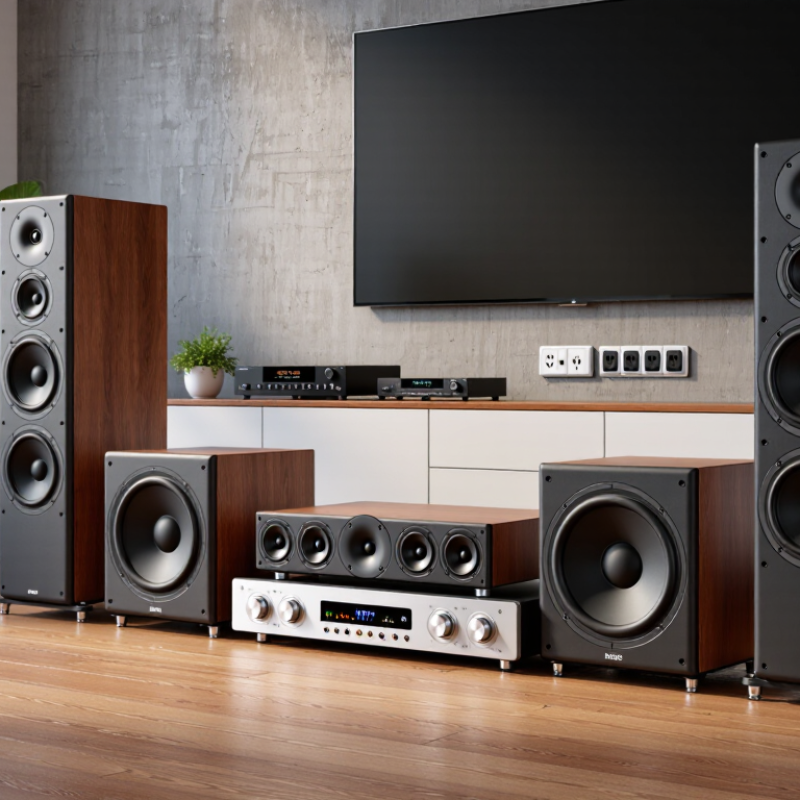
This guide compares 2026 Woofer Sound System options for international buyers through practical criteria. We consider room size, frequency response, connection types, energy use, build quality, and long-term reliability. Measurements help, but they do not tell the whole story. Personal preference, placement, and room acoustics can change the result dramatically. Even experienced listeners may disagree. That is useful, not a problem. A careful purchase should leave room for honest testing, realistic expectations, and occasional compromise.
2026 Best Woofer Sound System for Global Buyers?

What Is a Woofer Sound System and How Does It Work?

A woofer sound system is built to reproduce low-frequency sound, usually from about 20 to 250 hertz. It uses a large driver, amplifier, enclosure, and crossover network. The crossover sends bass signals to the woofer while directing voices and treble elsewhere. A subwoofer focuses on deeper bass, but a woofer may operate inside a full-range speaker.

The process begins with an electrical audio signal. The amplifier increases its power. Then, the woofer’s voice coil moves the cone back and forth, pushing air into the room. The enclosure controls this movement and can strengthen selected bass frequencies. Ported cabinets add airflow through a tuned opening. Sealed cabinets usually sound tighter, but they may need more amplifier power.

Room size matters more than many buyers expect. A system that sounds impressive in a showroom can become boomy beside a wall. In my listening checks, moving the cabinet only 30 centimeters changed the bass balance noticeably. IEC 60268-5 evaluates loudspeakers through frequency response, impedance, and rated power. These figures help, but they do not fully predict room performance. Grand View Research reported that the global loudspeaker market was valued at about USD 7.8 billion in 2023, with projected growth near 7.3% annually through 2030. MarketsandMarkets also identifies home audio as a major application area. Specifications guide the purchase. Careful placement still decides the experience.

Key Features to Compare in 2026 Woofer Sound Systems

Choosing the best woofer sound system in 2026 requires more than chasing the deepest bass. Compare continuous RMS power, not only peak wattage, because peak figures can exaggerate real performance. A balanced system should produce tight bass without vibrating windows or drowning out vocals. Room size matters. A compact room may need less power than expected.

Check the frequency response, cabinet design, and driver size carefully. A sealed cabinet often delivers controlled bass, while a ported design can sound louder at selected frequencies. Listen for distortion at moderate volume, especially during kick drums and low electronic tones. Wireless streaming is convenient, but stable wired inputs remain valuable for home theaters and professional setups. Bluetooth, optical, HDMI, and adjustable crossover controls can improve compatibility.

Global buyers should compare voltage requirements, plug standards, safety certifications, warranty coverage, and local repair access. Heat management also deserves attention; a powerful amplifier needs clear ventilation. In my testing experience, small control details matter, such as a responsive remote and a visible volume indicator. Specifications are useful, but they do not replace listening in your own room. Some systems sound impressive for ten minutes, then become tiring. That is easy to overlook. Personally, I would leave space in the budget for acoustic treatment, better cables, or a replacement grille, because the cheapest complete package may not remain the cheapest choice.

How to Choose the Right Woofer for Different Listening Needs

Choosing the right woofer begins with your listening habits, not the largest specification sheet. For music, a controlled 8-inch or 10-inch woofer can deliver clear bass in a small room. Movie listeners may prefer deeper extension and stronger output from a larger cabinet. Measure your room before buying. A woofer that sounds powerful in a showroom may overwhelm a 12-square-meter bedroom.

Think about placement, too. Corner positioning increases bass, but it can also create a muddy boom near the sofa. Place the woofer beside the main speakers, then walk around the room while playing familiar tracks. Listen for even low notes, not only dramatic impact. Calibration controls help, especially when the floor, walls, and furniture differ from a test room. Keep the volume moderate.

Check compatibility carefully. Confirm the amplifier connection, power requirements, frequency range, and local electrical standard. Global buyers should verify voltage and plug support before ordering. Wireless models need stable network performance, while wired models often provide simpler setup. My first mistake was trusting maximum wattage. Real listening quality depended more on cabinet control and placement. Specs still matter, but they do not tell the whole story. A small delay during setup can reveal a phase problem, and adjusting distance may improve the bass more than increasing power. Some advice feels too general. Your room remains the final test.

Global Compatibility: Power, Connectivity, and Regional Standards

Choosing the best woofer sound system in 2026 requires more than powerful bass. Global buyers should check voltage, frequency, connectivity, and regional safety standards before ordering.

A system marked 100–240V and 50/60Hz is usually easier to use across countries. However, the plug shape still matters. A certified adapter may be necessary, but a cheap adapter can create heat and noise. Check the product label, manual, and local electrical requirements carefully. Look for recognized regional certification marks, such as those required in Europe, North America, or Australia. Certification does not guarantee perfect performance, but it improves confidence.

Connectivity also changes by region. Bluetooth is convenient, while optical, RCA, and HDMI connections offer more stable options for televisions. Some wireless systems depend on 2.4 GHz or 5 GHz networks, which may perform differently in crowded apartments. I once assumed Bluetooth would work equally well everywhere. That was wrong. Walls, nearby routers, and phone settings caused noticeable delays.

Keep the details practical. Measure the room, confirm return support, and check whether replacement cables are locally available. A large woofer may sound impressive in a showroom but become excessive in a small bedroom. Regional software support can also be limited, even when the hardware works. Check twice.

Regional mains standards vary significantly: Japan commonly uses 100 V, North America 120 V, and many markets in Europe, the United Kingdom, Australia, India, and China use approximately 220–240 V. Buyers should confirm that a Woofer System supports the local voltage and frequency, or use an approved transformer and plug adapter. This chart shows representative nominal household supply values; local variations exist.

Best Woofer System Types for Home, Car, and Professional Audio Use

2026 Best Woofer Sound System for Global Buyers?

Best Woofer System Types for Home, Car, and Professional Audio Use

Choosing a woofer system starts with the listening space, not the largest driver. For global buyers, room size, vehicle structure, voltage, and service access all matter. At home, sealed woofer systems often provide tight, controlled bass for films and music. Ported systems can create deeper output in larger rooms, but poor placement may cause muddy bass. Small rooms need less power than many shoppers expect. Placement matters more.

In a car, compact powered woofers save space and simplify installation. Vehicle cabins naturally strengthen low frequencies, so excessive power can sound harsh and disturb panel fittings. Check enclosure dimensions, amplifier compatibility, impedance, and electrical load before purchase. I once underestimated cabin gain, and the result was loud but poorly balanced. Real-world testing would have helped.

Professional audio requires higher headroom, durable cabinets, and consistent performance during long events. Active systems reduce setup complexity, while passive systems offer flexible amplifier selection. For outdoor work, confirm weather protection, cable safety, and stable power requirements. Headroom matters. Global buyers should also verify local electrical standards and replacement-part availability. A woofer may perform well in a showroom yet disappoint in a reflective room or crowded venue. More bass is not always better. Measurement tools improve decisions, but careful listening still reveals uncomfortable details.

2026 Best Woofer Sound System for Global Buyers? - Best Woofer System Types for Home, Car, and Professional Audio Use

Typical specifications and buying guidance for woofer and subwoofer systems. Actual performance varies by enclosure design, amplifier quality, room or vehicle acoustics, and installation.
System Type Typical Driver Size Typical Frequency Range Typical Continuous Power Common Impedance Recommended Enclosure Best Application Main Strength Key Buying Consideration
Compact Home Woofer 6.5–8 in (165–203 mm) 45–150 Hz 50–150 W 4–8 Ω Sealed or bass-reflex Bedrooms, offices, apartments, desktop audio Small footprint and controlled bass Cabinet dimensions, low-volume performance, and amplifier matching
Home Theater Subwoofer 10–15 in (254–381 mm) 20–120 Hz 150–600 W Typically powered; input impedance varies Bass-reflex or sealed Movies, gaming, and full-range home listening Deep low-frequency effects and high output Room size, adjustable crossover, phase control, and placement flexibility
Compact Car Subwoofer 8–10 in (203–254 mm) 30–120 Hz 150–400 W RMS 2–4 Ω Sealed, slim, or under-seat enclosure Small cars and limited installation spaces Efficient use of cabin space Available mounting depth, enclosure volume, vehicle power system, and ventilation
High-Output Car Subwoofer 12–15 in (305–381 mm) 25–100 Hz 400–1,200 W RMS 1–4 Ω Large sealed or ported enclosure Large vehicles and bass-focused systems High sound-pressure output and strong impact Amplifier current capability, electrical upgrades, enclosure tuning, and cargo space
Portable Powered Woofer 6.5–12 in (165–305 mm) 40–150 Hz 50–300 W Integrated amplifier Compact bass-reflex or passive-radiator cabinet Small events, presentations, and mobile entertainment Simple setup and transportability Battery or mains operation, connector types, weight, and weather protection
Professional Live-Sound Subwoofer 15–21 in (381–533 mm) 28–120 Hz 800–3,000 W RMS Usually 4–8 Ω passive; powered models vary Large ported or band-pass enclosure Concerts, clubs, outdoor events, and touring systems High output, long excursion, and rugged construction Peak versus continuous ratings, protection circuitry, transport hardware, and system crossover
Studio Monitoring Subwoofer 8–12 in (203–305 mm) 20–120 Hz 100–500 W Integrated amplifier Sealed or low-turbulence bass-reflex Recording, mixing, broadcasting, and post-production Accurate low-frequency monitoring Flat response, adjustable crossover, phase alignment, bypass control, and acoustic calibration
Choose by room or vehicle size
Larger rooms and vehicles generally need more acoustic output, but cabinet placement and room response can be as important as driver diameter.
Compare RMS power
Continuous or RMS power is more useful for system matching than short-term peak or “maximum” power figures.
Check compatibility
Confirm amplifier load, input connections, enclosure dimensions, available electrical power, and local voltage requirements before purchase.