Top 2025 Trends in Robotic Process Automation You Need to Know
As we move towards 2025, the landscape of robotic process automation (RPA) is witnessing transformative trends that are set to redefine business operations across various industries. According to a recent report by McKinsey, organizations that implement RPA can see a potential productivity increase of up to 30%. This surge in efficiency is prompting companies to rethink not just their operational models but also the very nature of work itself. RPA is not merely a trend; it's a foundational technology fueling digital transformation by automating routine tasks, thereby allowing human employees to focus on higher-level functions.
Experts in the field, such as John McCarthy, a renowned RPA consultant, emphasize the importance of staying abreast of these trends. He stated, "The true potential of robotic process automation lies in its ability to adapt and scale within organizations, transitioning them into more agile and innovative entities." As we explore the top trends shaping RPA for 2025, it is essential to understand the strategic implications these developments hold for businesses striving to remain competitive in an increasingly automated world. The integration of advanced technologies like artificial intelligence alongside RPA is paving the way for more sophisticated automation solutions, promising enhanced decision-making capabilities and improved service delivery.

Emergence of Intelligent Automation in Robotic Process Automation
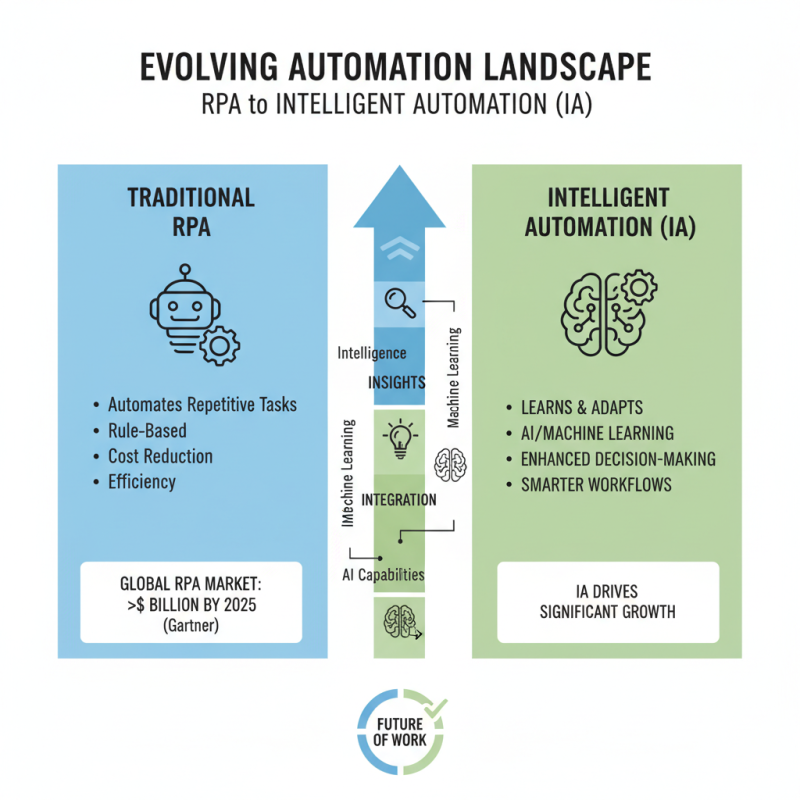
The landscape of Robotic Process Automation (RPA) is evolving rapidly, with the emergence of Intelligent Automation (IA) taking center stage. As organizations increasingly seek efficiencies and cost reductions, integrating intelligence into RPA has become a necessity. According to a recent report by Gartner, the global market for RPA is projected to exceed $2 billion by 2025, with Intelligent Automation expected to contribute significantly to this growth. By leveraging machine learning and artificial intelligence capabilities, RPA can not only automate routine tasks but also enhance decision-making processes, leading to more intelligent workflows.
The integration of IA into RPA allows businesses to analyze data in real-time, adapt to changes quickly, and increase overall productivity. A study by McKinsey indicates that organizations utilizing Intelligent Automation can achieve up to 30% efficiency gains within their operations. This paradigm shift means that RPA is no longer confined to simple, rule-based tasks; it now encompasses more complex scenarios that require cognitive functionalities. As we move towards 2025, businesses must be prepared to embrace these trends and invest in IA to stay competitive in a landscape driven by digital transformation and automation.
Integration of AI and Machine Learning with RPA Technologies
The integration of Artificial Intelligence (AI) and Machine Learning (ML) with Robotic Process Automation (RPA) is poised to redefine operational efficiency by 2025. According to a report by McKinsey, organizations that successfully merge AI with RPA can expect productivity improvements of 20 to 30%, significantly reducing manual intervention and optimizing workflows. This trend represents a paradigm shift where RPA not only automates repetitive tasks but also leverages AI and ML to make intelligent decisions based on data inputs. For example, AI-driven analytics can help RPA bots forecast potential bottlenecks in processes and proactively adjust their operations, leading to smoother overall performance.
Moreover, the potential market growth for AI and RPA integration is substantial, with Gartner projecting that by 2025, AI will be embedded into 30% of all new automation projects. This creates a compelling case for businesses to invest in technologies that enhance operational capabilities while lowering costs. With the continuous evolution of ML algorithms, RPA systems are becoming increasingly adept at handling complex tasks, including customer service inquiries and financial analysis. Emphasizing intelligent automation not only ensures greater accuracy but also frees human workers to focus on higher-value activities, thereby driving innovation and competitive advantage within organizations.
Key Industries Adopting RPA in 2025
In 2025, several key industries are set to adopt
Robotic Process Automation (RPA) at an accelerated rate, driven by the need for efficiency and cost reduction.
The financial services sector stands out as a prime candidate for RPA implementation, transforming traditional processes like
account reconciliation, customer onboarding, and fraud detection.
By automating these tasks, financial institutions can enhance accuracy, speed, and compliance while allowing human employees to focus on more strategic roles that require creativity and critical thinking.
Healthcare is another industry that is likely to embrace RPA extensively in 2025.
The demand for streamlined administrative tasks, such as patient scheduling, data entry, and billing processes, has never been higher.
RPA can help healthcare organizations reduce errors, increase productivity, and improve patient experiences.
Furthermore, by automating the handling of patient data and insurance claims, healthcare facilities can allocate more resources to direct patient care, ultimately leading to
better health outcomes and higher satisfaction rates.
Additionally, the retail sector is anticipated to leverage RPA to enhance
inventory management, order processing, and customer service.
Automation can facilitate real-time inventory tracking and streamline order fulfillment, significantly improving operational efficiencies.
As consumer expectations continue to rise, retailers adopting RPA can respond more swiftly to market demands, optimize supply chains, and create a more personalized shopping experience for their customers.
This strategic adoption of RPA will be crucial for maintaining competitiveness in an
ever-evolving market landscape.
Impact of RPA on Workforce Dynamics and Job Roles
As robotic process automation (RPA) continues to evolve, its impact on workforce dynamics and job roles becomes increasingly significant. RPA can improve efficiency by automating routine tasks, allowing employees to focus on more strategic activities. However, this shift also raises concerns about job displacement, as certain roles may become redundant. Organizations must balance automation with the need for a skilled workforce that can adapt to new technologies.
Tips for businesses navigating this change include investing in employee training programs that enhance digital skills and foster adaptability. This enables staff to transition into more complex roles that RPA cannot easily replicate. Additionally, involving employees in the automation journey can build trust and help them understand the benefits of RPA, ultimately leading to increased job satisfaction.
Moreover, companies should consider redefining job descriptions and roles to align with a more automated environment. This not only ensures that employees are engaged but also highlights the value of human skills in collaboration with RPA systems. Embracing a culture of continuous learning will help organizations stay ahead in an increasingly automated landscape, maintaining a competitive edge while developing their workforce for the future.
Top 2025 Trends in Robotic Process Automation
The following chart illustrates the projected adoption rates of various robotic process automation (RPA) trends by 2025. These trends highlight the increasing influence of RPA on workforce dynamics and job roles.